English
 Arabic
 French
 Spanish
 Portuguese
 Deutsch
 Turkish
 Dutch
Dutch
 Italiano
 Russian
 Romaian
 Portuguese (Brazil)
 Greek
Greek
The Unstoppable Surge: Decoding the Drivers of US Mobile Games Market Growth
Other |
2026-06-26 05:14:04
 Advertise With Us
 About Us
 Terms And Conditions
 Política de Privacidade
Ver Todos
Política de Privacidade
Ver Todos

Atualize para o Pro
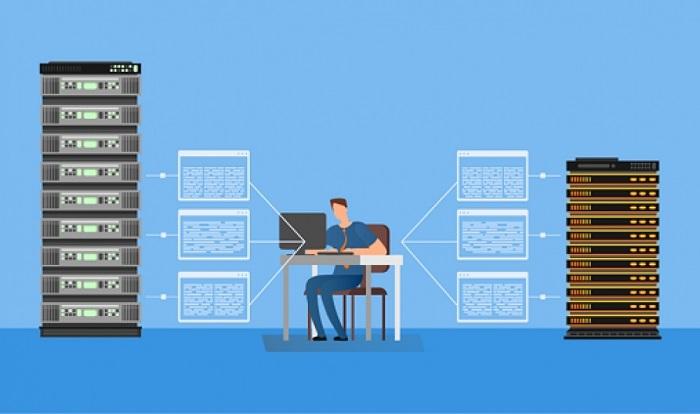
A comprehensive Server Virtualization Market Analysis requires a structured approach that examines the market from multiple perspectives, including its segmentation, competitive intensity, and regional dynamics. The most common segmentation is by hypervisor type, which reveals the market's core competitive structure. The proprietary hypervisor segment, dominated by VMware's ESXi and Microsoft's Hyper-V, constitutes the largest portion of the market by revenue, particularly within enterprise data centers. The open-source hypervisor segment, led by KVM, holds a smaller share of direct enterprise spending but is immensely significant as it forms the foundation of most major public cloud platforms and is favored in DevOps and cloud-native environments. Another key segmentation is by organization size. Large enterprises have historically been the primary market, but the small and medium-sized enterprise (SME) segment is now a major growth area, driven by the affordability and simplicity of solutions like Microsoft's Hyper-V bundled with Windows Server. Finally, analysis by industry vertical shows widespread adoption across all sectors, with IT & Telecom, BFSI, and Government being leading investors due to their large IT estates and stringent requirements for efficiency and resilience.
To analyze the competitive dynamics, Porter's Five Forces model provides an effective framework. The Intensity of Rivalry is high, especially between the two main commercial players, VMware and Microsoft. They compete fiercely on features, performance, and, most importantly, on management capabilities and ecosystem integration. The open-source community, championed by Red Hat (an IBM company), also adds a significant competitive pressure. The Threat of New Entrants is relatively low. While anyone can download an open-source hypervisor, the development of a competitive, enterprise-grade virtualization platform with a full management suite, a global support organization, and a robust partner ecosystem requires massive investment and years of development, creating high barriers to entry. The Bargaining Power of Buyers is moderate. While there are several viable options, the high switching costs associated with migrating a large virtualized environment from one platform to another (e.g., from VMware to Hyper-V) can create a degree of vendor lock-in, reducing buyer leverage once a platform is chosen. The Bargaining Power of Suppliers is low. The primary suppliers are the hardware vendors (Dell, HPE, etc.), and the virtualization software is designed to run on this commoditized x86 hardware. The Threat of Substitute Products is moderate and growing. The most significant substitute is container technology (Docker/Kubernetes), which offers a more lightweight and agile alternative for many application workloads, though it is often deployed on top of a virtualized infrastructure.
A geographical analysis of the market shows a pattern typical of mature technology sectors. North America is the largest and most mature market, home to the key vendors and the earliest adopters of virtualization technology. The region has a high density of data centers and a strong drive for IT optimization, continuing to fuel demand for advanced virtualization and cloud management solutions. Europe is the second-largest market, with a strong emphasis on data privacy and security (driven by regulations like GDPR) and energy efficiency. European companies are keen adopters of virtualization technologies that can help them meet these stringent requirements. The Asia-Pacific (APAC) region is the fastest-growing market. Rapid economic development, widespread digitalization, and the massive build-out of new data center infrastructure in countries like China, India, and across Southeast Asia are creating enormous opportunities. This region is also more likely to leapfrog directly to newer technologies, with a strong interest in open-source and cloud-native solutions.
In conclusion, a SWOT analysis provides a concise summary of the market's strategic position. The market's Strengths lie in its proven and substantial ROI, its role as a foundational technology for cloud computing, and its ability to deliver significant improvements in business agility and resilience. Its primary Weaknesses include the potential for vendor lock-in, the increasing complexity of managing large virtualized estates (VM sprawl), and the introduction of new security vulnerabilities. The most significant Opportunities lie in the integration with container management, the growth of hyper-converged infrastructure, the expansion into edge computing environments, and the application of AI for automated operations. The main Threat is the long-term architectural shift towards serverless computing and pure container-based platforms (like Kubernetes running on bare metal), which could potentially reduce the reliance on traditional server virtualization for a growing number of cloud-native applications. However, for the foreseeable future, virtualization's role remains secure and central to enterprise IT.
Top Trending Reports: