English
 Arabic
 French
 Spanish
 Portuguese
 Deutsch
 Turkish
 Dutch
Dutch
 Italiano
 Russian
 Romaian
 Portuguese (Brazil)
 Greek
Greek
Don't Start Spice Exports Without Spice Board Registration – Learn Why
Other |
2026-06-26 04:44:43
 Advertise With Us
 About Us
 Terms And Conditions
 Privacy Policy
Mostra tutti i risultati
Privacy Policy
Mostra tutti i risultati

Passa a Pro
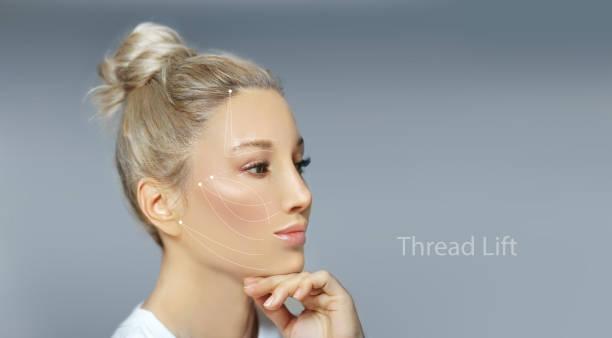
Most patients arrive at the thread lift conversation the same way. They've noticed the change — a jawline that's less defined, cheeks that sit slightly lower than they used to, a heaviness around the mouth that wasn't there five years ago. They've looked into fillers. They've looked into surgery. And they've landed somewhere in the middle, wondering whether thread lift is genuinely the right answer — or just the most convenient one.
This article won't sell you a thread lift in Dubai. It will tell you honestly who it works for, who it doesn't, what it delivers, and where it falls short. Because the most important outcome of any consultation isn't a booking — it's the right decision.
Before weighing pros and cons, the framing matters. Thread lift is not a non-surgical facelift in the sense that it replicates what surgery achieves. It is a minimally invasive lifting procedure that physically repositions mild to moderately descended tissue using dissolvable sutures — while simultaneously stimulating collagen production in the surrounding skin.
It works. For the right patient, the results are genuinely meaningful. But it works within a defined scope — and understanding that scope is what separates satisfied patients from disappointed ones.
Yes — and this is where it genuinely distinguishes itself. The lift is immediate, visible on the table, and reads as refreshed rather than operated. Patients consistently describe looking like themselves, only better rested. For patients who fear looking overdone — which is a common and reasonable concern in Dubai's image-conscious social environment — this is a significant advantage.
The lift follows natural anatomical vectors. An experienced practitioner maps the face before a single thread is placed, identifying where tissue has descended and plotting the correct upward trajectory to restore it. When done correctly, no one can identify the procedure. They simply notice you look well.
What patients gain:
For patients who are not surgical candidates — due to health conditions, medications, or personal preference — thread lift offers a clinically meaningful alternative with a significantly lower risk profile. There is no general anaesthetic, no surgical theatre, no post-operative monitoring required.
Complications from thread lift, when performed by a qualified and experienced practitioner, are uncommon and typically minor. Temporary bruising, swelling, and mild asymmetry are the most frequently reported outcomes — all of which resolve without intervention in the majority of cases.
Serious complications such as infection, thread migration, or visible dimpling are rare but not impossible — and are almost always linked to incorrect technique or unsuitable patient selection. This is precisely why candidacy assessment matters as much as the procedure itself.
One of thread lift's underappreciated strengths is its compatibility with other aesthetic treatments. It does not preclude future surgical intervention. It does not interfere with Botox or most filler treatments when sequenced correctly. And for patients already on a multi-treatment aesthetic journey, it slots in as a structural foundation that other treatments build upon.
Practitioners commonly combine thread lift with:
The sequencing of these treatments matters. Your practitioner should plan the order and timing — not improvise it.
This is where most promotional articles go quiet. Thread lift has real limitations — and patients who understand them before committing make better decisions and report higher satisfaction.
This is the most important limitation to understand. Thread lift lifts tissue that has descended. It does not remove excess skin. If a patient has significant skin redundancy — loose, folded skin around the jowls, neck, or lower face — thread lift cannot correct this. Attempting to do so risks visible puckering, bunching of skin at the entry points, and an unnatural result.
Patients with moderate to severe skin laxity are more appropriately assessed for surgical facelift, where skin is physically excised and repositioned. Thread lift in this group is not a safer alternative — it is simply the wrong tool.
Thread lift results last 12 to 18 months for most patients, with some reaching 24 months under optimal conditions. This is a meaningful duration — but it is not permanent. Patients who choose thread lift need to factor in the likelihood of a maintenance session or repeat procedure to sustain their results.
For some patients, this is entirely acceptable. For others — particularly those expecting a one-time intervention — it becomes a source of frustration. The conversation about longevity should happen at consultation, not six months after the procedure.
Age-related facial change involves three separate processes: skin laxity, structural descent, and volume loss. Thread lift addresses the second of these — and only the second. It does not restore volume to hollowed temples, flat cheeks, or deflated lips.
Patients who present with primarily volume loss — where the face looks gaunt or tired rather than structurally fallen — often see limited benefit from thread lift alone. Filler treatment is more appropriate in these cases, sometimes in combination with a thread lift once tissue position is corrected.
Thread lift outcome is deeply technique-dependent. The same suture placed along an incorrect vector — or in tissue that is too thin or too superficial — produces a very different result than one placed correctly. In Dubai's large and varied aesthetics market, practitioner skill and training varies considerably.
Patients considering thread lift in Dubai should verify that their practitioner has specific, documented training in thread lift technique — ideally with Silhouette Soft or equivalent premium systems — and should not make the decision based on price alone. Revision of a poorly performed thread lift is significantly more complex than the original procedure.
Based on consistent clinical observation, the patients who achieve the most satisfying thread lift results share several characteristics:
The right candidate typically:
Thread lift in Dubai is less likely to be the right choice if you:
The consultation process for thread lift in Dubai often focuses on the result — how much lift, how long it lasts, what areas are treated. These are important questions. But the questions that most directly predict satisfaction are the ones patients often don't think to ask:
Practitioners who answer these questions openly, without deflection, are the ones worth trusting with your face.
"My consultant actually told me thread lift wasn't the right option at my first appointment. She recommended fillers first and then reassessed. That honesty made me trust everything that followed." — Amira, 48, Business Bay
"I'd had consultations at two other clinics before Tajmeels. The first two told me I was a perfect candidate without really examining my skin. Here, they took time — and the result showed it." — Sara, 53, Mirdif
Tajmeels Clinic does not offer a thread lift to every patient who requests it. Candidacy is assessed individually by board-certified specialists who understand that the wrong treatment — even a safe and popular one — produces the wrong result. Every consultation includes an honest assessment of whether thread lift in Dubai is the most appropriate option for that specific patient's anatomy, age, and goals.
The most frequent reason is significant skin laxity — where excess skin exists beyond what threads can physically lift. Patients in this category are typically referred for surgical assessment. Attempting thread lift in unsuitable candidates increases the risk of visible bunching, poor lift, and patient dissatisfaction.
Threads cannot be reversed the way filler can be dissolved. However, most thread lift results settle into a natural position within 2 to 3 weeks as swelling resolves. In cases of visible irregularity, gentle massage under practitioner guidance — or in rare cases, manual thread adjustment — can correct minor asymmetry. Severe complications requiring thread removal are rare.
The answer depends on what's actually changed in your face. If tissue has descended — your cheeks sit lower, your jawline has softened structurally — thread lift is likely appropriate. If the face looks hollow or deflated but hasn't significantly fallen, filler is usually the better first step. Many patients benefit from both, in the correct sequence.
Yes — particularly for early signs of facial descent or for preventative collagen stimulation. Younger patients tend to have better skin elasticity, which supports a stronger and longer-lasting thread lift result. Early intervention can slow the pace of visible ageing progression.
Specific training in thread lift technique — not just general aesthetics. Experience with the suture system being used. A consultation process that includes honest candidacy assessment, not just pricing and booking. And a clear protocol for follow-up and managing complications if they arise.
Most patients report that thread lift is more uncomfortable than filler — but significantly less so than they anticipated. Local anaesthesia makes the procedure well-tolerated. The most common sensations described are pressure during insertion and tightness immediately after — both of which are temporary and manageable.