English
 Arabic
 French
 Spanish
 Portuguese
 Deutsch
 Turkish
 Dutch
Dutch
 Italiano
 Russian
 Romaian
 Portuguese (Brazil)
 Greek
Greek
Tea Franchise: A Growing Business Opportunity for Tea Entrepreneurs
Other |
2026-08-03 16:47:50
 Advertise With Us
 About Us
 Terms And Conditions
 Politique de confidentialité
Tout voir
Politique de confidentialité
Tout voir

Mise à niveau vers Pro
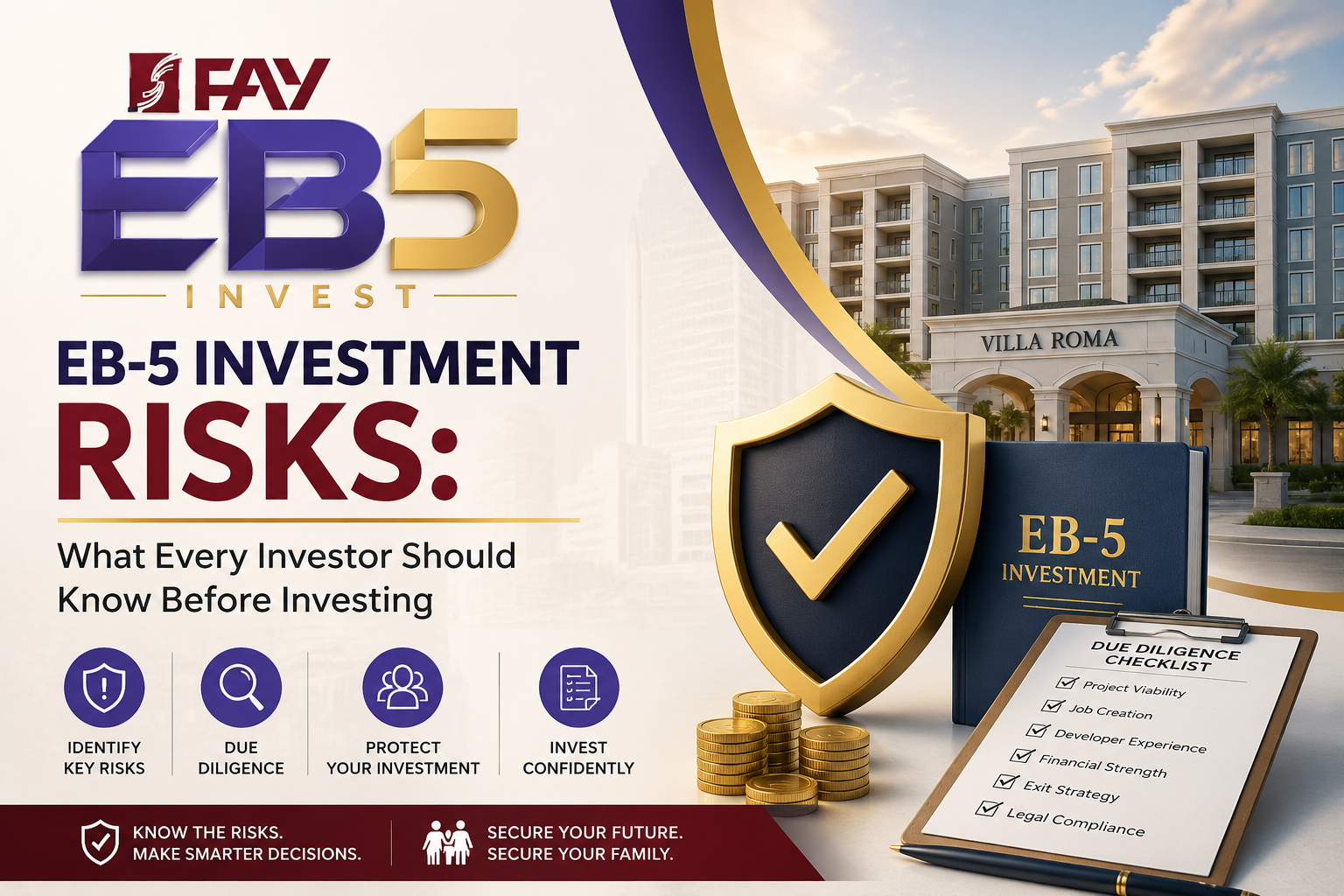
EB-5 investments can provide a pathway to U.S. permanent residency, but they are not risk-free. Investors face immigration risks, project performance risks, job creation risks, and capital repayment risks. Proper due diligence and selecting experienced project sponsors can significantly reduce these risks.
For many families around the world, the EB-5 program represents more than an investment.
It's a pathway to opportunity.
Access to American education.
Business expansion.
Long-term residency.
But here's what many investors discover too late:
The biggest mistake in EB-5 is focusing only on getting a Green Card while ignoring investment risk.
I've seen investors spend months comparing processing times and visa categories while spending only a few hours evaluating the project itself.
That's backward.
A strong project is often the foundation of a successful EB-5 journey.
Let's unpack the risks every investor should understand before making an $800,000 commitment.
The EB-5 Immigrant Investor Program allows eligible foreign investors to apply for U.S. permanent residency by investing in qualifying projects that create jobs for American workers. Current Rural TEA projects qualify under the $800,000 minimum investment threshold.
To qualify, investors must:
Many investors assume government approval means investment safety.
It doesn't.
USCIS approval confirms immigration eligibility requirements.
It does not guarantee:
Understanding this distinction is critical.
Immigration approval is never guaranteed.
Potential issues include:
Mitigation:
Every EB-5 investment involves business risk.
Projects can experience:
A hospitality project may perform differently from projections due to economic conditions or market demand.
Each investor must be credited with at least 10 qualifying jobs.
If job creation falls short, immigration outcomes may be affected.
Projects with strong job cushions typically offer additional protection.
For example, the Villa Roma project projects significantly more jobs than the minimum required, creating an additional cushion for investors.
A project is only as strong as its leadership team.
Evaluate:
Ask:
How many projects have they successfully delivered?
Past performance doesn't guarantee future results, but it provides important insight.
Real estate and hospitality markets fluctuate.
Factors include:
A project in a strong market with established demand may have advantages over speculative developments.
Even with Rural TEA priority processing, timelines can change.
Factors include:
Investors should prepare for flexibility.
|
Factor |
Rural TEA |
Urban Project |
|
Investment Threshold |
Lower |
Higher |
|
Priority Processing |
Possible |
Less common |
|
Competition |
Lower |
Higher |
|
Visa Availability |
Reserved Category |
More competition |
|
Development Risk |
Project specific |
Project specific |
Analyze:
Confirm:
Higher cushions can provide additional comfort.
Ask:
How will investors potentially receive repayment?
Consult:
Before investing, verify:
When investors conduct thorough due diligence, they often gain:
Faster processing means little if the project struggles.
Job creation remains a core EB-5 requirement.
Track record matters.
Investors should understand capital repayment expectations.
Projects willing to share documentation generally inspire greater confidence.
Good sponsors welcome scrutiny.
Review independent reports.
Execution often determines outcomes.
Yes. EB-5 investments must remain "at risk" under program rules, meaning capital loss is possible.
No. Neither immigration approval nor investment return can be guaranteed.
Project performance and insufficient job creation are among the most significant risks.
Not automatically. Safety depends on project fundamentals, sponsor experience, and market conditions.
Investment sustainment periods vary by project structure and immigration timelines.
The EB-5 program remains one of the most attractive pathways to U.S. permanent residency for global investors.
But successful investors approach it with both immigration and investment perspectives.
The smartest investors don't ask only:
"Will I get a Green Card?"
They also ask:
"Is this a well-structured project managed by experienced professionals?"
That combination often makes the difference.