English
 Arabic
 French
 Spanish
 Portuguese
 Deutsch
 Turkish
 Dutch
Dutch
 Italiano
 Russian
 Romaian
 Portuguese (Brazil)
 Greek
Greek
Winadda App Updates: Why They Matter
Games |
2026-08-11 17:25:21
 Advertise With Us
 About Us
 Terms And Conditions
 Privacy Policy
Afiseaza-i pe toti
Privacy Policy
Afiseaza-i pe toti

Upgrade to Pro
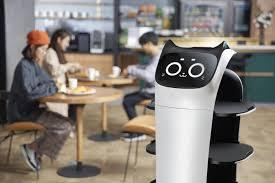
Recent academic and corporate studies within the restaurant delivery robot market have highlighted the incredible complexity of the software driving these autonomous units. Developing a robot that can safely navigate a crowded sidewalk involves solving some of the most difficult problems in robotics, including simultaneous localization and mapping (SLAM) and real-time path planning. Modern research is focused on improving the "social intelligence" of these robots, enabling them to understand human intent and yield the right of way in a natural, non-disruptive manner. For instance, a robot must be able to distinguish between a stationary trash can and a child who might suddenly dart across its path. This requires massive amounts of training data and sophisticated machine learning algorithms. Furthermore, the integration of 5G technology is enabling low-latency communication between the robots and a central control center, where human operators can step in remotely if the robot encounters a situation it cannot resolve on its own. This hybrid approach ensures high reliability and safety, which are paramount for widespread adoption.
In addition to navigation, researchers are exploring ways to improve the physical versatility of delivery robots. This includes developing modular cargo holds that can be heated or cooled to maintain the ideal temperature for different types of cuisine, from piping hot pizza to chilled sushi. The materials used in construction are also evolving, with a focus on lightweight yet durable composites that can withstand the rigors of daily outdoor use. Market research indicates that as these technologies become more refined, the barriers to entry for restaurant owners are dropping, leading to a more competitive landscape. The data-driven nature of these robots also allows for better inventory management and demand forecasting, as every delivery provides a wealth of information about transit times and customer behavior. As we look at the findings from the Restaurant Delivery Robot Market research, it is clear that the future of dining is being shaped by a commitment to precision, safety, and a seamless blend of hardware and software excellence.
Can these robots operate in the dark or low-light conditions? Yes, they use a combination of infrared sensors, LiDAR, and specialized cameras that allow them to see and navigate perfectly in total darkness or during foggy weather.
How long does a typical delivery robot's battery last? Depending on the model and the terrain, most delivery robots can operate for 8 to 12 hours on a single charge, often returning to a central hub for automated recharging during off-peak times.
➤➤➤Explore MRFR’s Related Ongoing Coverage In Semiconductor Industry:
Platform Screen Door System Market
Position Proximity Sensor Market
Positive Material Identification Market