English
 Arabic
 French
 Spanish
 Portuguese
 Deutsch
 Turkish
 Dutch
Dutch
 Italiano
 Russian
 Romaian
 Portuguese (Brazil)
 Greek
Greek
AC Maintenance Services: Why Regular HVAC Care Matters for Every Business in India
Other |
2026-07-20 11:36:28
 Advertise With Us
 About Us
 Terms And Conditions
 Politique de confidentialité
Tout voir
Politique de confidentialité
Tout voir

Mise à niveau vers Pro
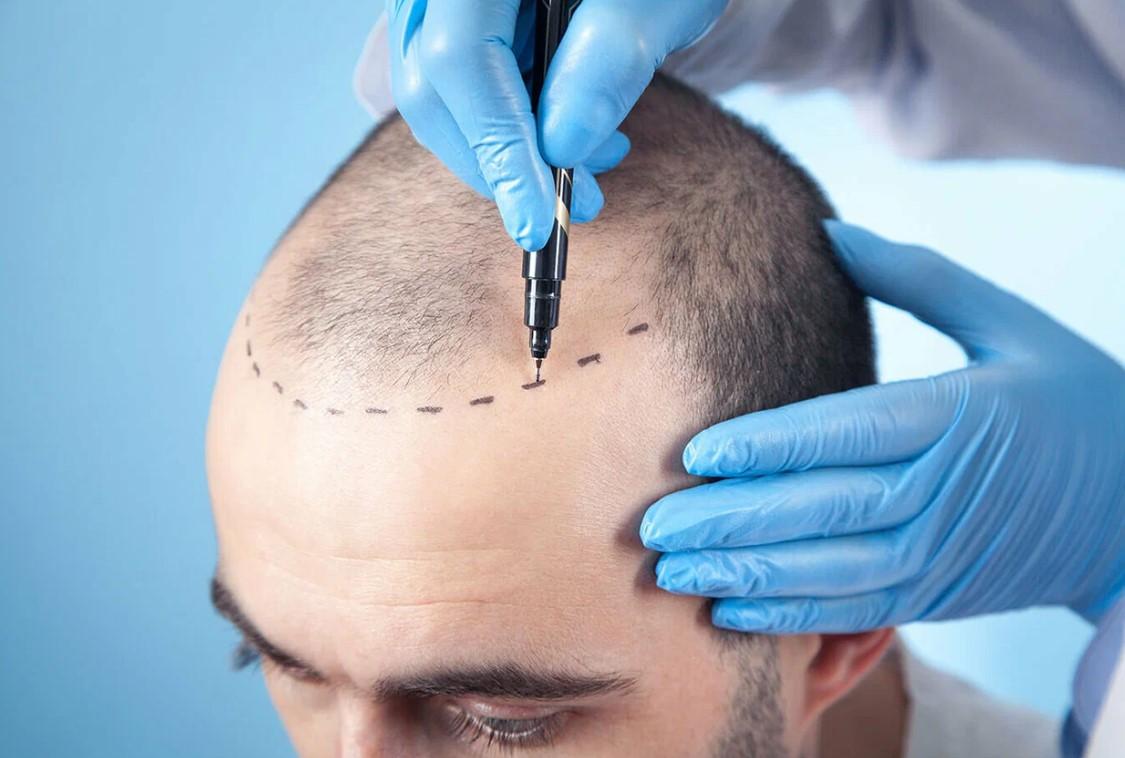
Not every hair transplant delivers the expected outcome on the first attempt. While modern techniques like FUE, FUT, and DHI have high success rates, some patients still experience unsatisfactory or “failed” hair transplant results due to poor planning, low graft survival, or unnatural aesthetics. Hair transplant in Riyadh is a popular solution for people looking to restore natural hair growth and improve their overall appearance.
Fortunately, correction procedures—also called hair transplant repair surgery—can significantly improve appearance, density, and hairline design. In advanced clinics, especially in major medical hubs like Riyadh, corrective hair restoration has become a specialized field.
A hair transplant is generally considered “failed” when the results do not meet medical or aesthetic expectations.
It is important to note that “failure” can be partial. Many cases involve correctable cosmetic issues rather than total graft failure.
Understanding why a transplant fails helps determine the correct repair strategy.
This is the most common cause.
Even with modern methods, poor execution can lead to unnatural results.
Not all transplanted follicles survive.
This results in thin or patchy coverage.
A poorly designed hairline is one of the most visible failures.
This can significantly affect facial aesthetics.
In aggressive or poorly planned procedures:
This is difficult but sometimes partially correctable.
Although rare, complications can impact results.
Yes—most failed hair transplants can be improved or corrected.
However, correction depends on:
In some cases, full restoration may not be possible, but significant improvement is usually achievable.
Different problems require different repair strategies.
Used to fix unnatural or poorly designed hairlines.
More natural facial balance and improved aesthetics.
Used when the first procedure did not provide enough coverage.
Used when the donor region is overharvested or uneven.
Restore a more even and natural donor appearance.
Used to reduce visible scarring, especially from FUT procedures.
In severe cases, poorly placed grafts may be removed.
This is often used for badly designed hairlines.
Complex cases often require multiple techniques.
This approach is common in advanced repair clinics.
Modern correction procedures typically use advanced methods:
Success depends on the extent of damage and donor availability.
Most patients experience significant aesthetic improvement, even if perfection is not fully achievable.
Timing is critical for correction procedures.
Correction surgery is more complex than primary transplants.
This is why repair procedures require highly experienced surgeons.
Prevention is always better than correction.
Patients may experience:
Repair procedures often restore not only hair but also self-confidence.
Correction procedures for failed hair transplants offer an effective solution for patients who are dissatisfied with previous results. While not all cases can be fully reversed, modern techniques like FUE, DHI, and Sapphire FUE allow significant improvements in density, hairline design, and overall appearance.
The success of repair surgery depends on proper diagnosis, realistic expectations, and the skill of the surgeon handling complex reconstruction.