English
 Arabic
 French
 Spanish
 Portuguese
 Deutsch
 Turkish
 Dutch
Dutch
 Italiano
 Russian
 Romaian
 Portuguese (Brazil)
 Greek
Greek
Hi-Fi Speaker System Market: Opportunities Emerging from Next-Generation Audio Solutions
Other |
2026-08-12 04:59:16
 Advertise With Us
 About Us
 Terms And Conditions
 Política de Privacidade
Ver Todos
Política de Privacidade
Ver Todos

Atualize para o Pro
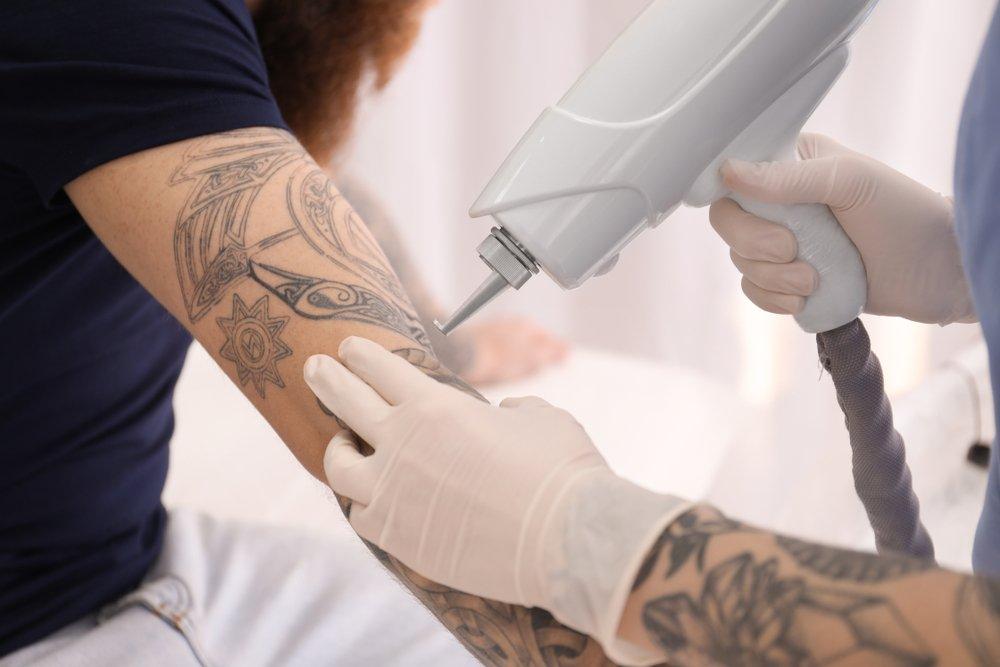
Tattoo removal has become much more advanced in recent years, especially with the use of modern laser technologies in cities like Riyadh. Despite this progress, there are still many misconceptions and myths that create unrealistic expectations or unnecessary fear about the process. Tattoo removal in Riyadh has become increasingly popular as more people seek safe and effective ways to fade or completely remove unwanted ink from their skin.
Understanding what is true and what is not helps people make better decisions and approach treatment with realistic expectations. In this article, we’ll break down the most common myths about tattoo removal and explain the reality behind them.
One of the biggest misconceptions is that laser tattoo removal does not hurt at all.
Tattoo removal is not pain-free. Most people describe the sensation as:
However, the pain is temporary and manageable, especially with numbing creams and cooling systems used in modern clinics.
While it is not painless, it is usually well-tolerated.
Many people believe that a single laser session can completely erase a tattoo.
Tattoo removal is a gradual process, not an instant fix.
Most tattoos require:
The body needs time to naturally remove broken ink particles after each treatment.
It is often assumed that every tattoo can be fully erased without a trace.
While many tattoos can fade significantly or disappear almost completely, full removal is not guaranteed.
Factors affecting results include:
Some tattoos may only fade enough for cover-up rather than full removal.
Many people avoid treatment because they believe scarring is unavoidable.
When performed correctly, laser tattoo removal rarely causes permanent scarring.
Scarring usually occurs only when:
Modern laser systems used in Riyadh are designed to target ink without damaging surrounding skin tissue.
There are many over-the-counter creams claiming to remove tattoos at home.
Tattoo removal creams are not effective for removing real tattoo ink.
Reasons:
In some cases, they may even cause irritation or allergic reactions.
Laser treatment remains the only scientifically proven method for meaningful tattoo removal.
Some people believe laser tattoo removal is unsafe for darker skin tones.
Tattoo removal can be safely performed on all skin types when done correctly.
However:
Modern picosecond and Q-switched lasers allow safe treatment across a wide range of skin tones when handled by experienced professionals.
It is commonly believed that older tattoos are more difficult to remove.
In most cases, the opposite is true.
Older tattoos often:
However, professionally done old tattoos may still be dense and require multiple sessions.
Many assume that black ink is the most difficult color to treat.
Black ink is actually the easiest color to remove because:
Colors like green, yellow, and light blue are usually more resistant than black.
Some people expect identical results for all individuals.
Results vary widely based on:
Even two people with similar tattoos can have different outcomes.
Some believe they can start removal right after getting a tattoo.
New tattoos need time to heal completely before removal begins.
Most dermatologists recommend:
Starting too early can increase irritation and reduce treatment efficiency.
There is a fear that lasers permanently harm surrounding skin.
Modern lasers are designed to target only ink particles, not healthy skin.
When performed properly:
Safety depends heavily on correct settings and professional expertise.
Many expect immediate fading after one session.
While some fading may be visible early, full results appear gradually.
Patience is a key part of the process.
Tattoo removal is a highly effective and scientifically advanced procedure, but it is often misunderstood due to common myths. Beliefs such as “instant removal,” “pain-free treatment,” or “guaranteed complete erasure” are not accurate in most cases.
In reality, modern laser tattoo removal—especially in clinics in Riyadh—offers safe and reliable results when performed by qualified professionals. However, outcomes depend on multiple factors including ink color, skin type, tattoo age, and treatment consistency.