English
 Arabic
 French
 Spanish
 Portuguese
 Deutsch
 Turkish
 Dutch
Dutch
 Italiano
 Russian
 Romaian
 Portuguese (Brazil)
 Greek
Greek
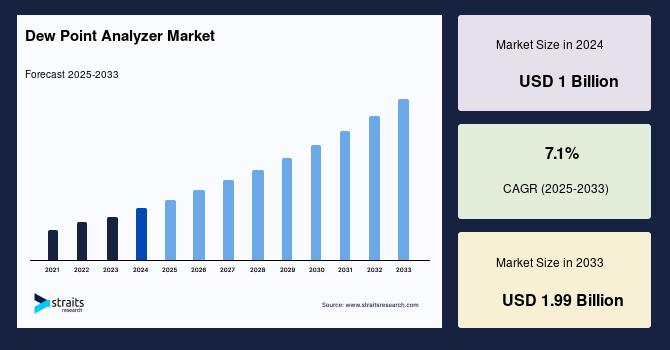
Dew Point Analyzer Market Size to Reach USD 1.99 Billion by 2033, Driven by Rising Demand for Moisture Control and Industrial Process Precision
Drinks |
2026-04-22 07:34:26
 Advertise With Us
 About Us
 Terms And Conditions
 Datenschutzbestimmungen
Alle anzeigen
Datenschutzbestimmungen
Alle anzeigen

Upgrade auf Pro

The distribution of the Ltl Freight Market Share in North America reveals a market that is surprisingly concentrated, with a relatively small number of large, national carriers commanding a significant majority of the industry's revenue and tonnage. Companies like FedEx Freight, Old Dominion Freight Line, XPO, and TFI International (which acquired UPS Freight) are the titans of the industry. Their dominant market share is a direct result of the enormous barriers to entry in the LTL business. Building and operating a national hub-and-spoke network requires an immense capital investment in a vast portfolio of real estate (terminals), a massive fleet of trucks and trailers, and sophisticated sorting technology. This creates a powerful competitive moat that is nearly impossible for new entrants to overcome at a national scale. These large carriers leverage their network density to create operational efficiencies, offer comprehensive nationwide coverage, and invest heavily in the technology and service quality needed to attract and retain large corporate accounts, thereby solidifying their commanding share of the market.
While the national landscape is concentrated, the competitive dynamics for market share are much more vibrant and fragmented at the regional level. A healthy ecosystem of strong regional LTL carriers holds a significant share of the freight moving within their specific geographic footprints (e.g., the Southeast, the Northeast, the West Coast). Companies like Saia, Estes Express Lines, and Averitt Express, while having large networks, often exhibit strong regional dominance. These carriers often compete by offering superior service and faster transit times for shorter-haul freight within their core territory. Because the freight doesn't have to travel through as many terminals as it might in a larger national network, regional carriers can often provide a one- or two-day service that a national carrier might struggle to match. They also tend to have a reputation for more personalized customer service and greater operational flexibility. This allows them to capture a significant share of the intra-regional market, coexisting and competing with the national giants.
A crucial and often overlooked component of the market share discussion revolves around the influence of non-asset-based third-party logistics providers (3PLs) and freight brokers. While these companies do not own the trucks or terminals, they control a massive and growing share of the total freight spend in the LTL market. Companies like C.H. Robinson, Echo Global Logistics, and a vast number of smaller brokers act as intermediaries, connecting thousands of shippers with a wide array of LTL carriers. They leverage their technology platforms and their aggregated shipping volume to negotiate favorable pricing from the carriers, which they then offer to their customers. For many small and medium-sized businesses, using a 3PL is the most efficient way to manage their LTL shipping. By controlling the customer relationship and directing the flow of freight, these 3PLs exert enormous influence over which asset-based carriers actually get the business, effectively controlling a large portion of the market's demand side.
Looking forward, the battle for market share will be fought on the battlefield of service quality and technological integration. In a market where pricing is often competitive, carriers are increasingly differentiating themselves based on performance metrics. The carriers with the best on-time service records and the lowest claims ratios (a measure of how infrequently they damage freight) are best positioned to win and retain the most desirable, high-value freight. Old Dominion Freight Line, for example, has built a leading market share in part through its long-standing reputation for superior service quality. Furthermore, the ease of doing business through technology will be a key determinant of market share. The carriers and 3PLs that offer the most robust and user-friendly APIs, the most accurate real-time tracking, and the most seamless digital booking and invoicing experiences will capture the loyalty of modern shippers. The future of market share belongs to those who can combine operational excellence with a superior digital customer experience.
Top Trending Reports:
Harbor And Marina Management Software Market
Prokaryotic Expression System Market
Yeast Protein Expression Service Market
Big Data And Artificial Intelligence Market