English
 Arabic
 French
 Spanish
 Portuguese
 Deutsch
 Turkish
 Dutch
Dutch
 Italiano
 Russian
 Romaian
 Portuguese (Brazil)
 Greek
Greek
Automated Storage Retrieval System Trends: Innovations Shaping Modern Warehouses
Visa |
2026-02-04 11:04:41
 Advertise With Us
 About Us
 Terms And Conditions
 Datenschutzbestimmungen
Alle anzeigen
Datenschutzbestimmungen
Alle anzeigen

Upgrade auf Pro
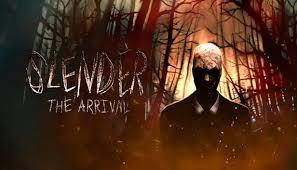
One of the funniest things about horror games is how they change player behavior without ever explicitly asking for it.
Give someone a racing game and they'll push for speed.
Give someone an action game and they'll charge into danger.
Give that same person a horror game, and suddenly they're creeping down hallways at half pace, checking every corner twice, and staring suspiciously at doors that probably lead nowhere.
The strange part is that many horror games don't actually force this behavior.
Players choose it.
I've done it countless times myself. The game gives me a perfectly functional sprint button, yet I spend half the experience moving cautiously as if running might somehow make things worse.
In a way, that's one of the genre's greatest achievements.
It changes how players think.
When people feel safe, efficiency becomes important.
We focus on reaching goals quickly.
We make decisions with confidence.
We assume things will work out.
Fear introduces doubt.
The moment uncertainty enters the equation, behavior changes.
Players start gathering more information before acting.
They pause more often.
They pay closer attention to their surroundings.
In horror games, this often manifests as slower movement.
Not because moving slowly is always the smartest choice.
Because moving slowly feels safer.
Whether that feeling is accurate doesn't necessarily matter.
The psychology is already doing its job.
One thing horror games do remarkably well is transform ordinary spaces into sources of uncertainty.
A corner shouldn't be frightening.
It's just architecture.
Yet in the right context, approaching a corner can feel surprisingly stressful.
What's beyond it?
Is something waiting there?
Did I hear a sound from that direction?
The lack of information encourages caution.
Players naturally reduce their speed because they want more control over what happens next.
The environment becomes a series of questions rather than a series of locations.
And questions tend to slow people down.
In many games, rushing forward is encouraged.
The faster you move, the faster progress happens.
Horror often creates different incentives.
Observation becomes valuable.
A note on a table might reveal important information.
An unusual sound might provide a warning.
A small environmental detail might explain part of the story.
Because players know details can matter, they begin paying attention.
That attention naturally reduces speed.
You can't carefully examine your surroundings while sprinting through them.
The genre quietly teaches players that observation is worthwhile.
Before long, they're moving cautiously without even realizing it.
A fascinating thing happens when players enter an unfamiliar environment.
Their imagination starts working.
An empty hallway becomes a potential threat.
A closed door becomes a mystery.
A dark room becomes a source of possibilities.
Most of those possibilities never become reality.
That doesn't stop players from considering them.
In fact, uncertainty often makes imagination more active.
The less information we have, the more our minds attempt to fill the gaps.
This process creates tension even when nothing dangerous is happening.
And tension encourages caution.
If visuals define the appearance of horror, sound often defines the feeling.
Good horror audio changes the way players move.
A strange noise in the distance causes hesitation.
A sudden silence creates suspicion.
An unfamiliar sound effect encourages investigation.
I've had moments where I stopped moving entirely because I wasn't sure what I had heard.
The game never instructed me to stop.
Curiosity did.
That's an important distinction.
The best horror games often influence behavior indirectly.
They create situations that encourage caution rather than demanding it.
What's interesting is that cautious behavior often feels realistic.
If you were exploring an abandoned building in real life and heard a strange noise nearby, you probably wouldn't sprint toward it.
You'd slow down.
You'd listen.
You'd assess the situation.
Horror games tap into those instincts.
The environments may be fictional, but the emotional reactions feel familiar.
That's one reason the genre can be so immersive.
Players aren't merely following mechanics.
They're responding to situations in ways that feel natural.
The less powerful players feel, the more carefully they tend to behave.
When resources are limited, caution increases.
When threats seem dangerous, hesitation increases.
When survival feels uncertain, observation becomes more important.
Horror games often rely on vulnerability to create tension.
That vulnerability doesn't just affect emotions.
It affects movement.
A player who feels vulnerable experiences environments differently from a player who feels invincible.
The same hallway can feel completely different depending on your confidence level.
Over time, I've come to appreciate how much horror depends on pacing.
Not just narrative pacing.
Player pacing.
The speed at which players choose to move through the world.
Those slow walks through dark environments aren't interruptions to the experience.
They are the experience.
The anticipation.
The uncertainty.
The observation.
The imagination.
All of these elements flourish when players take their time.
Rushing often weakens them.
That's why so many memorable horror moments happen before anything actually occurs.
The tension has room to grow.
Looking back, it's amusing how consistently horror games influence behavior.
Players who normally rush through levels suddenly become cautious explorers.
Players who confidently confront danger start second-guessing every decision.
Players who know they're sitting safely at home begin treating virtual hallways with remarkable respect.
That transformation isn't caused by difficulty alone.
It's caused by atmosphere, uncertainty, and psychology working together.
The game convinces players that slowing down makes sense.
And once that feeling takes hold, the pace becomes part of the fear.
After all, if you truly believed nothing was waiting around the next corner, would you still be moving quite so carefully?