English
 Arabic
 French
 Spanish
 Portuguese
 Deutsch
 Turkish
 Dutch
Dutch
 Italiano
 Russian
 Romaian
 Portuguese (Brazil)
 Greek
Greek
YOLO247 Club: A Complete Guide for Online Sports Betting in 2026
Games |
2026-06-30 05:33:58
 Advertise With Us
 About Us
 Terms And Conditions
 Privacy Policy
Ver Todo
Privacy Policy
Ver Todo

Upgrade to Pro
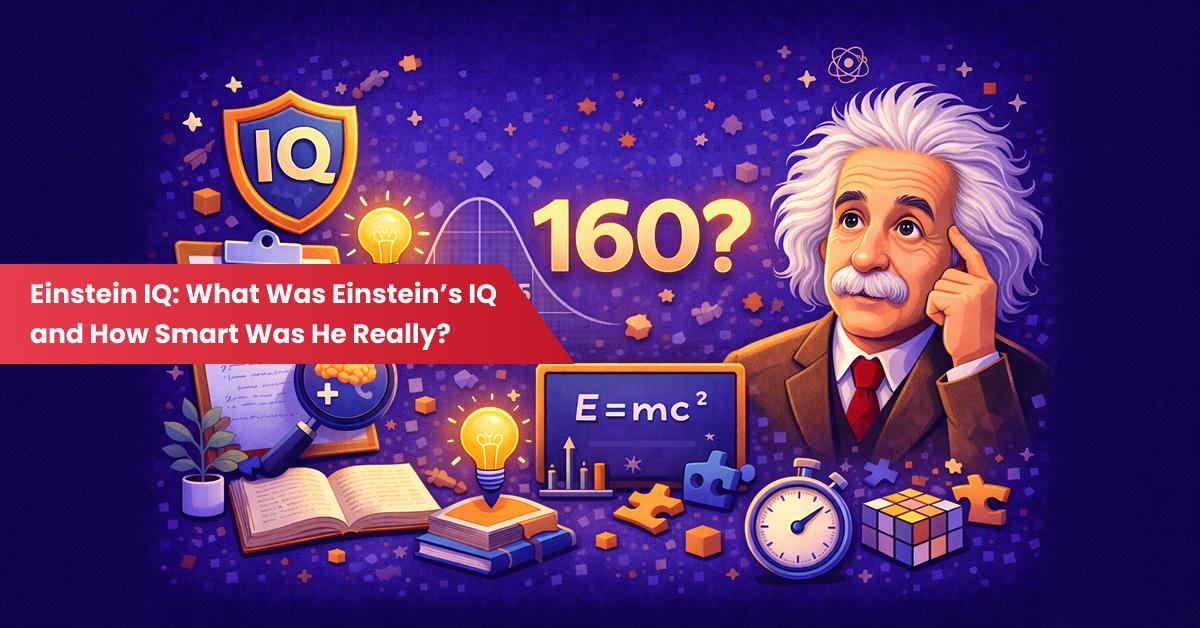
When people talk about genius-level intelligence, one name appears more than any other: Albert Einstein. His theories reshaped modern physics, especially the concepts of relativity and energy. Because of his legendary status, many people ask a simple but fascinating question: what is Einstein’s IQ?
The answer is not as straightforward as most internet claims suggest. In fact, there is no verified record of Einstein ever taking an official IQ test. Despite this, numbers are often circulated online that attempt to estimate his intelligence score. These claims range from 160 to even 300, but they are mostly speculation rather than fact.
Understanding the truth behind Einstein’s IQ requires separating myth from reality, and looking at what IQ actually measures versus what Einstein achieved in his scientific career.
The most commonly repeated claim is that Einstein had an IQ of around 160. This number has been repeated so frequently that many people assume it is historically accurate. However, there is no evidence that Einstein ever took a standardized IQ test.
IQ testing as we know it today was still developing during Einstein’s early life in the late 19th and early 20th century. While intelligence testing existed in basic forms, modern standardized IQ tests such as the Stanford Binet were not widely used in a way that would have produced a verified score for him.
This means that any number assigned to Einstein is a posthumous estimate, not a recorded result. When people ask what is einstein's iq, they are usually encountering a cultural myth rather than a scientific measurement.
Einstein lived from 1879 to 1955. During this period, psychology was still an emerging discipline. IQ testing was not as globally standardized or widely administered as it is today. Even if Einstein had taken a test, it would not necessarily match modern scoring systems.
More importantly, Einstein himself was not focused on measuring intelligence in numerical form. His work centered on theoretical physics, mathematical reasoning, and conceptual thinking. He valued creativity and imagination more than standardized testing metrics.
It is also worth noting that IQ tests are designed to compare individuals within a population. Einstein’s abilities were so exceptional that they would not necessarily be meaningfully captured by a single score.
Assigning IQ scores to historical figures is a popular internet habit, but it is scientifically unreliable. These estimates are usually based on achievements, biographies, and academic success rather than actual test results.
In Einstein’s case, people often point to his groundbreaking scientific contributions as evidence of extremely high intelligence. While this is reasonable, it does not translate directly into a numerical IQ score.
IQ tests measure specific cognitive abilities such as pattern recognition, working memory, and verbal reasoning. They do not measure creativity, long term scientific insight, or the ability to revolutionize entire fields of knowledge.
Einstein’s work required deep imagination and abstract thinking, qualities that are not fully captured by standard IQ testing.
Instead of focusing on what is einstein's iq it is more meaningful to look at what he actually achieved.
Einstein developed the theory of special relativity in 1905, which changed how scientists understand space and time. Later, he expanded this into the general theory of relativity, which describes gravity as a curvature of spacetime.
He also made significant contributions to quantum theory, particularly through his explanation of the photoelectric effect. This work earned him the Nobel Prize in Physics in 1921.
These achievements required extraordinary levels of abstract reasoning, mathematical insight, and persistence. Unlike IQ scores, which are limited snapshots, Einstein’s contributions demonstrate intelligence applied over decades in original and transformative ways.
The question what is einstein's iq is popular because people like to quantify intelligence. Numbers feel concrete and easy to compare. Saying someone has an IQ of 160 feels more understandable than discussing abstract intellectual abilities.
Einstein’s fame also makes him a reference point for genius. People want to know how they compare to someone widely regarded as one of the smartest humans in history.
However, this desire for a simple number oversimplifies both intelligence and Einstein’s legacy. Intelligence is not a single measurable trait. It includes creativity, problem solving, emotional understanding, and the ability to connect ideas across disciplines.
To understand why Einstein’s IQ is uncertain, it helps to understand what IQ tests actually measure.
Modern IQ tests are designed to assess cognitive abilities such as logical reasoning, spatial awareness, mathematical thinking, and verbal comprehension. They are useful for identifying learning abilities and cognitive strengths in educational and professional settings.
However, they do not measure creativity, curiosity, or scientific originality. These are the qualities that defined Einstein’s contributions.
A person could have a very high IQ score and still not produce groundbreaking scientific theories. Conversely, someone with an average score could potentially make important discoveries if they have the right combination of creativity, persistence, and opportunity.
The commonly cited IQ score of 160 for Einstein is largely a symbolic estimate. It is often based on the idea that genius level IQ begins around 140, so Einstein must be significantly above that threshold.
Some sources attempt to reconstruct his IQ based on childhood performance, academic records, and intellectual achievements. However, these methods are not scientifically valid. They are retrospective interpretations rather than actual measurements.
In reality, there is no verified dataset that allows psychologists to calculate Einstein’s IQ with accuracy.
One of the biggest misconceptions behind the question what is einstein's iq is the assumption that intelligence can be fully captured by a number. Einstein himself challenged this idea indirectly through his work.
His theories required imaginative thought experiments, such as imagining what it would be like to travel alongside a beam of light. This kind of thinking goes beyond traditional problem solving and enters the realm of conceptual creativity.
Modern psychology recognizes that intelligence is multi dimensional. The theory of multiple intelligences and research in cognitive science both suggest that human ability cannot be reduced to a single score.
Einstein’s genius likely came from a combination of strong mathematical reasoning, deep curiosity, and an unusual ability to visualize abstract concepts.
Today, Einstein’s name is often used in online IQ tests, motivational content, and social media posts. Many websites claim that scoring high on their test means you are close to Einstein’s level of intelligence.
These claims are misleading. They use Einstein as a benchmark because his name is widely recognized, not because his IQ was ever scientifically measured.
This creates unrealistic expectations and can distort how people view their own abilities. Intelligence is not a competition against historical figures. It is a personal and contextual trait that develops differently in every individual.
So, what is einstein's iq? The honest answer is that no one actually knows, and no reliable measurement exists. The commonly cited number of 160 is an estimate rather than a fact, and it should not be treated as a historical record.
What is certain is that Albert Einstein demonstrated an extraordinary level of intellectual ability through his groundbreaking contributions to physics. His legacy is defined not by a test score but by ideas that fundamentally changed our understanding of the universe.
In the end, focusing too much on a hypothetical IQ number misses the real story. Einstein’s intelligence was not just about solving puzzles or scoring high on tests. It was about seeing reality in a completely new way and having the courage to follow that vision.