English
 Arabic
 French
 Spanish
 Portuguese
 Deutsch
 Turkish
 Dutch
Dutch
 Italiano
 Russian
 Romaian
 Portuguese (Brazil)
 Greek
Greek
(Unlocking the World of) Cabin Head and Tree Head by Scott Campbell
Dance |
2026-06-22 03:01:33
 Advertise With Us
 About Us
 Terms And Conditions
 Политика конфиденциальности
Смотреть все
Политика конфиденциальности
Смотреть все

Обновить до Про
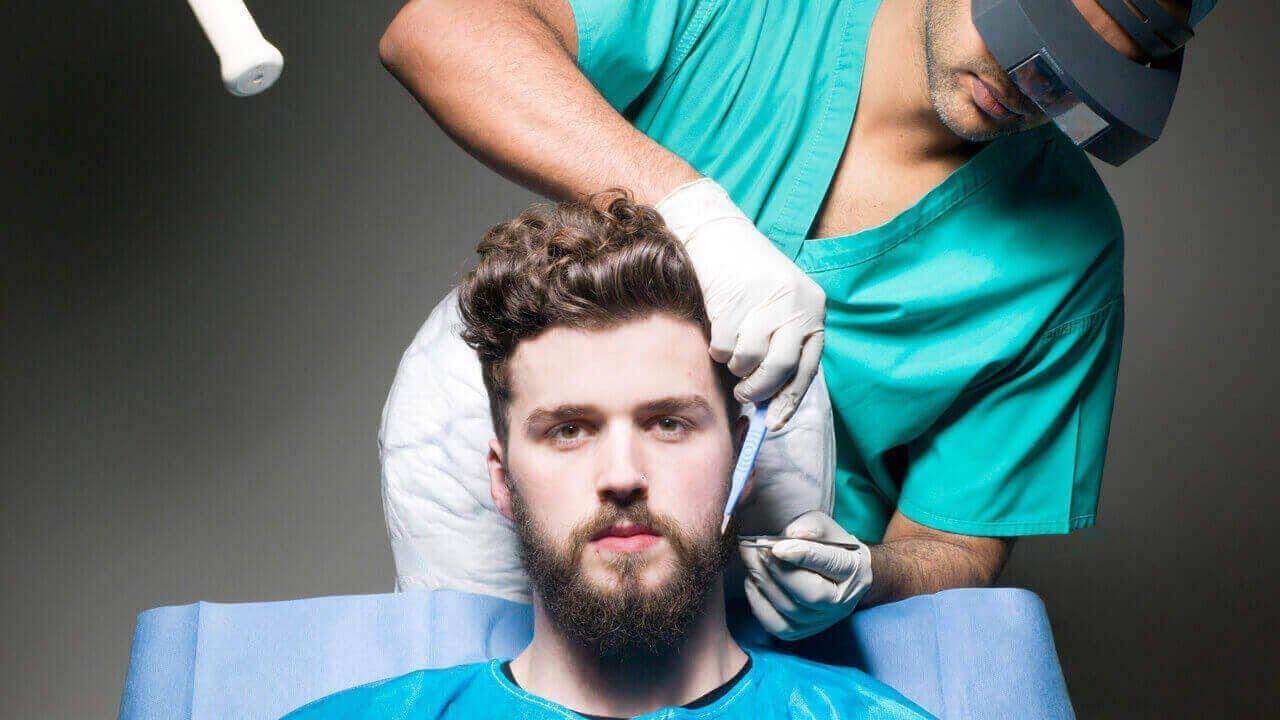
A well-defined mustache is a key facial feature that enhances masculinity, balance, and overall appearance. However, not every man is naturally able to grow a thick or evenly distributed mustache. Some experience thin growth, patchy areas, or slow development due to genetics or hormonal sensitivity. Beard hair transplant in Riyadh is a popular cosmetic procedure for men seeking to improve facial hair density and achieve a fuller, more defined beard.
In such cases, a beard hair transplant for mustache enhancement offers a permanent and natural-looking solution. It restores density, fills gaps, and improves the shape of the mustache using your own healthy hair follicles.
Before understanding the transplant process, it is important to know why mustache hair may be weak or uneven.
Genetics is the most common reason for poor mustache growth. If family members have thin facial hair, similar patterns are often inherited.
Even with normal testosterone levels, some hair follicles in the upper lip area may not respond strongly to hormones, resulting in sparse growth.
Mustache development may continue into the mid-20s for some men. In younger individuals, growth may still improve naturally over time.
Injuries, acne, or burns in the upper lip area can damage follicles permanently, leading to patchy growth.
Certain skin or autoimmune conditions can affect hair growth and cause uneven mustache density.
A mustache hair transplant is a cosmetic procedure where healthy hair follicles are taken from a donor area (usually the back of the scalp) and implanted into the upper lip region.
The most commonly used method is Follicular Unit Extraction (FUE), which allows precise placement of individual hair follicles for natural-looking results.
Once transplanted, the hair grows like normal mustache hair and can be shaved, trimmed, or styled freely.
The procedure is carefully designed to match the natural direction and pattern of mustache hair.
A mustache transplant is suitable for individuals who have:
A proper consultation is necessary to evaluate donor hair and expected results.
The number of grafts depends on the level of enhancement required:
Since the mustache area is smaller than the beard, it usually requires fewer grafts.
Results develop gradually over several months:
Patience is important, as final density takes time to develop.
Transplanted hair continues growing for life.
Hair is placed according to natural mustache direction and density.
You can choose different mustache styles, such as:
FUE allows careful placement of individual hairs for symmetry.
A fuller mustache enhances facial structure and confidence.
Many people try topical solutions or supplements before considering surgery.
For significant patchiness, transplant is more reliable.
Proper care is essential for successful mustache growth.
Yes. After full healing:
Once matured, transplanted hair behaves like natural facial hair.
Most side effects are mild and temporary:
Serious complications are rare when performed by experienced surgeons.
A beard transplant for mustache enhancement is an effective and permanent solution for men struggling with thin or patchy upper lip hair. By carefully transplanting healthy follicles into the mustache area, it restores density, improves symmetry, and allows full styling flexibility.