English
 Arabic
 French
 Spanish
 Portuguese
 Deutsch
 Turkish
 Dutch
Dutch
 Italiano
 Russian
 Romaian
 Portuguese (Brazil)
 Greek
Greek
Trending Read A Violent Masterpiece by Jordan Harper
Sports |
2026-06-17 07:17:56
 Advertise With Us
 About Us
 Terms And Conditions
 Privacy Policy
TOON ALLES
Privacy Policy
TOON ALLES

Upgrade to Pro
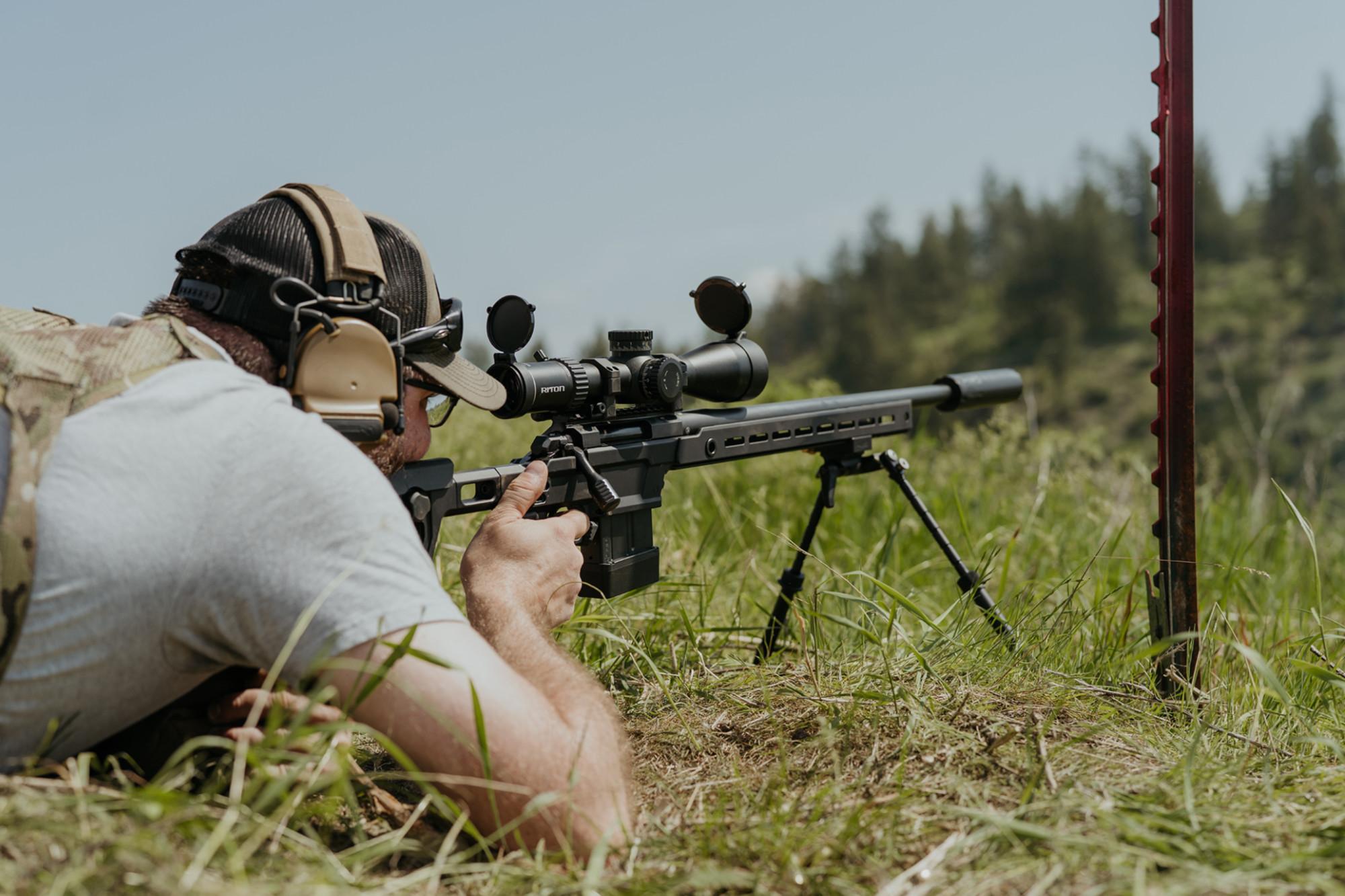
Building a complete precision shooting system is more than selecting a rifle and a scope. Every component in the system influences every other component, and gaps in any area limit overall performance regardless of how well other areas are optimized. This guide provides a structured approach to building a complete kit around a quality bolt action rifle that delivers consistent long-range performance at every stage of development.
Before purchasing anything, define what you intend to accomplish. Are you building for bench rest competition, precision rifle series competition, big-game hunting, military-style precision events, or general long-range recreational shooting? Each discipline has specific equipment requirements, weight constraints, caliber considerations, and accessory needs. A hunting build optimized for packability differs fundamentally from a bench rest build optimized for mechanical stability. Know your purpose before committing budget.
The bolt action rifle is the system's foundation, and it must be chosen to match the intended purpose. For competition formats with no weight restrictions, a heavy-barreled bolt action in a chassis stock provides the mechanical accuracy and ergonomic adjustability that serious competition demands. For hunting, a lighter profile barrel and synthetic or composite stock reduce carried weight while still delivering acceptable precision for field distances.
Caliber selection should match the longest distances you intend to engage regularly. For most practical precision shooting under 1,000 yards, 6.5 Creedmoor remains the most balanced choice — it offers excellent ballistic coefficient bullets, mild recoil, wide ammunition availability, and good barrel life. For extreme long range beyond 1,200 yards, larger cases like .300 PRC or .338 Lapua Magnum are appropriate.
Optics represent the most performance-critical investment after the rifle itself. At minimum, a precision shooting scope should offer first-focal-plane (FFP) reticle for accurate ranging and holdovers at all magnifications, exposed capped turrets with audible and tactile clicks, a reliable zero-stop, and sufficient eye box for consistent eye relief across positions. Optical clarity determines how well you can read mirage and observe bullet impacts downrange — variables that directly affect your ability to make accurate corrections.
Budget at least as much for optics as for the rifle. A quality mid-range scope on a good rifle outperforms an entry-level scope on a premium rifle almost universally.
Quality shooting bags are not optional accessories — they are integral system components that determine whether the rifle and scope combination achieves its mechanical potential. Without stable support, no amount of rifle or optic quality produces repeatable precision. Plan bag selection at the system design stage, not as an afterthought.
For a bolt action rifle build oriented toward bench rest or prone precision shooting, invest in a quality front bag matched to your stock's forend width and a rear bag designed for your stock's toe geometry. For a more versatile competition or hunting build, add a compact field bag to the kit for supported field positions. Each bag type serves a specific function that others cannot easily substitute.
Factory premium ammunition from reputable manufacturers delivers consistent performance for most shooters until they develop the skill level where ammunition variability becomes measurable. When handloading becomes appropriate, develop loads specifically for your barrel using a systematic ladder test approach, working up from minimum charge weights and identifying the velocity node that produces minimum extreme spread across a ten-shot string.
Maintain a single batch of developed ammunition for competition or critical use. Switching lots mid-season introduces velocity variations that require rezero and updated ballistic data.
A modern ballistic calculator — whether a dedicated unit or a smartphone application — takes the mathematical complexity of long-range trajectory out of the shooter's head and puts it into an accurate real-time tool. Input your specific ballistic data from measured muzzle velocity and bullet manufacturer specifications, then verify against actual observed impacts at known distances before trusting the solution in competition or in the field.
Equipment cannot substitute for training. A precision shooting kit only performs to its potential when the operator has developed consistent trigger technique, natural point of aim discipline, wind reading skills, and data management habits through dedicated practice. Dry fire training at home, organized around the same positions and bag setups used in live fire, builds the procedural consistency that carries over to the range.
A complete precision shooting system built around a quality bolt action rifle with purpose-selected optics, quality shooting bags, consistent ammunition, and deliberate training creates a platform capable of exceptional long-range performance. Build each component with intent, train consistently, and the system will reward that investment with accuracy and reliability that develops steadily over time.