English
 Arabic
 French
 Spanish
 Portuguese
 Deutsch
 Turkish
 Dutch
Dutch
 Italiano
 Russian
 Romaian
 Portuguese (Brazil)
 Greek
Greek
Round Compact 2-8 Core Watertight Connectors: Reliable Connectivity for Subsea and Marine Systems
Other |
2026-07-30 09:37:18
 Advertise With Us
 About Us
 Terms And Conditions
 Privacy Policy
See All
Privacy Policy
See All

Upgrade to Pro
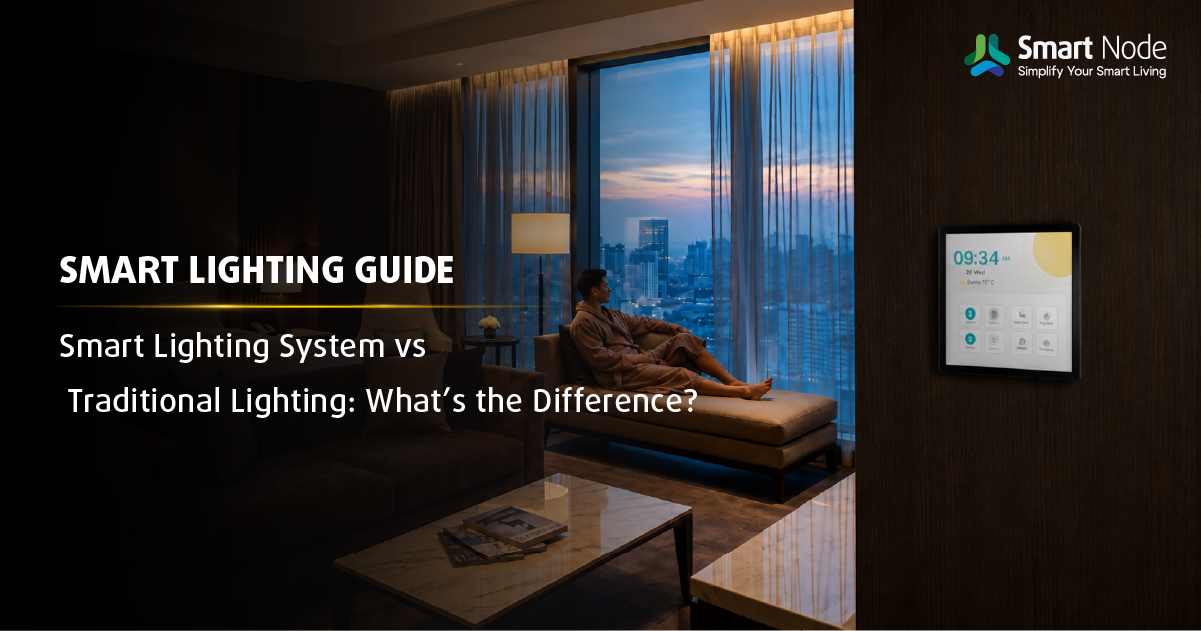
Think about the last time you walked into a dark room and fumbled for a switch. Or the time you left home and spent the whole day wondering if you'd left a light on. These small moments are part of daily life with traditional lighting. But homes today are changing, and lighting is changing with them.
So, what's the real difference between old-style lighting and smart lighting system? Let's break it down in simple terms.
Traditional lighting has been around for over a century, and it does exactly one job well: it turns on, and it turns off. You flip a switch, and the bulb responds. That's it.
There's no way to schedule it, control it from a distance, or change its mood. If you want dim light for a movie night, you either buy a separate dimmer or just live with whatever brightness you have. If you're away from home and forgot to switch off a light, there's nothing you can do about it until you get back.
Traditional lighting gives you visibility. It doesn't give you control, and it doesn't adapt to how you actually live.
A smart lighting system connects your lights to an app, a voice assistant, or a set schedule, so your home responds to you instead of the other way around. It's not about complicated wiring or expensive gadgets. It's about everyday convenience.
Here's how it changes daily routines:
Control from anywhere. Forgot to switch off the bedroom light before leaving for work? Open the app and turn it off from wherever you are. No more guessing, no more turning the car around.
Lighting that matches the moment. Bright light works for cooking. Warm, soft light feels better at dinner. Dim lighting helps you wind down before bed. With smart light solutions, you can set these as "scenes" and switch between them with one tap, instead of manually adjusting bulb by bulb.
Automatic schedules. Lights can turn on at sunset and off at a set time, without you touching a switch. This is especially useful for entryways, gardens, or rooms you don't use every day.
Better home security. Leaving one light on all night doesn't really fool anyone into thinking someone's home. A smart system can turn lights on and off in random, natural patterns while you're away, making the house look lived-in and reducing the chances of a break-in.
Energy savings. Since lights only run when they're actually needed, this kind of setup can noticeably cut down electricity waste compared to bulbs left running out of habit or forgetfulness.
This is the question most people ask, and the honest answer is: not anymore. Modern smart light solutions are built to fit into homes without any major disruption.
No wall-breaking rewiring. Most systems fit behind your existing switches.
Your switches still work. Even if the Wi-Fi goes down, you can operate lights manually, just like before.
You can start small. There's no need to automate the whole house on day one. Try it in one room first, see how it feels, and expand at your own pace.
That flexibility is a big reason more Indian households are moving toward automation without feeling overwhelmed by it.
If you had to sum it up in one line, it would be this: traditional lighting helps you see, while a smart lighting system helps you live more comfortably.
|
Feature |
Traditional Lighting |
Smart Lighting System |
|
Control |
Manual switch only |
App, voice, or automatic schedule |
|
Remote access |
Not possible |
Yes, from anywhere |
|
Mood/scene setting |
Limited or none |
Customizable scenes |
|
Energy efficiency |
Depends on habits |
Optimized through automation |
|
Security benefit |
Minimal |
Vacation mode, random patterns |
|
Installation |
Standard wiring |
Fits existing switches, minimal disruption |
Homes are no longer just places we live in passively. We expect them to respond to us, save us time, and reduce daily stress in small but meaningful ways. That's exactly the gap traditional lighting can't fill on its own.
A smart setup does not just replace a bulb. It replaces a habit of forgetting, adjusting manually, and wasting electricity, with something that runs quietly in the background and just works.
Traditional lighting is not going away overnight, and it still has its place for simple needs. But as more homes look for comfort, safety, and efficiency, smart light solutions are becoming less of a luxury and more of a practical upgrade. Whether you start with just one room or plan a full home setup, the shift from the smart switch panel is one of the easiest ways to make daily life a little smoother.