English
 Arabic
 French
 Spanish
 Portuguese
 Deutsch
 Turkish
 Dutch
Dutch
 Italiano
 Russian
 Romaian
 Portuguese (Brazil)
 Greek
Greek
Future of Mobility: Growth Trends in the Exoskeleton Market
Other |
2026-04-13 09:42:07
 Advertise With Us
 About Us
 Terms And Conditions
 Privacy Policy
Mostra tutti i risultati
Privacy Policy
Mostra tutti i risultati

Passa a Pro
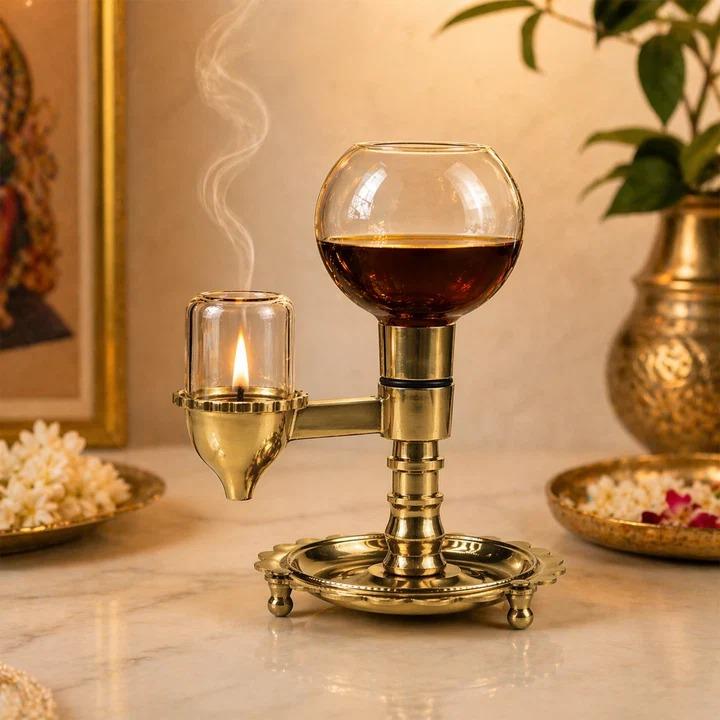
In the quiet corner of a home altar or the grand halls of a temple, one small flame often carries the weight of an entire family's faith. This is the essence of the Akhand Brass Diya — a lamp that burns without interruption, symbolizing a devotion that does not waver, even as the world around it changes. For generations, this sacred object has been central to Hindu worship, connecting the physical act of lighting a flame to something far deeper and more spiritual.
To truly appreciate the significance of an Akhand Brass Diya, it helps to understand the meaning behind the word "Akhand" itself. Derived from Sanskrit, "Akhand" means whole, complete, or unbroken. When applied to a diya, it refers to a flame that is never allowed to extinguish — one that is carefully tended, refilled, and protected so it continues burning for hours, days, or even longer, depending on the occasion.
This is different from a regular diya, which is typically lit for a short period during daily prayers. An Akhand Brass Diya demands ongoing attention and care, making the act of keeping it lit a form of devotion in itself.
Brass has long been considered a metal of purity and auspiciousness in Hindu tradition, which is why it's the material of choice for many ritual items, including the Akhand Diya. But beyond tradition, brass offers practical advantages that make it particularly suited for this purpose.
Brass conducts and retains heat well, allowing the diya to maintain a stable, consistent flame over extended periods. It's also resistant to corrosion and wear, meaning a well-maintained Akhand Brass Diya can last for years, even generations, becoming a cherished heirloom passed down within families.
Additionally, brass has an inherent aesthetic quality — its warm, golden tone complements the glow of the flame, creating a visually harmonious and spiritually resonant object for worship spaces.
The decision to light an Akhand Brass Diya is rarely casual. It often accompanies specific spiritual intentions or significant life events.
During Major Festivals
Festivals like Diwali and Navratri are among the most common occasions for lighting an Akhand Diya. During Navratri, in particular, many households light what's known as an "Akhand Jyoti" for all nine days, symbolizing continuous devotion to the Goddess throughout the festival.
As Part of a Vow or Sankalp
Many devotees take a "sankalp," or spiritual vow, before undertaking an important task, prayer, or life decision. Lighting an Akhand Brass Diya during this time is believed to lend strength and divine support to the fulfillment of that vow.
In Times of Personal Difficulty
Some families choose to light an Akhand Diya during challenging periods, seeking guidance, protection, or resolution through sustained prayer and devotion.
For Ongoing Worship
In some temples and dedicated home shrines, an Akhand Brass Diya remains a permanent fixture, continuously lit as a constant symbol of divine presence within the space.
There's a reason the image of an unbroken flame resonates so deeply within Hindu philosophy. Fire, or "Agni," has always held a special place as a purifying and transformative force — one that bridges the earthly and the divine.
An Akhand Brass Diya, with its continuous flame, becomes a living metaphor for consistency in faith. It suggests that devotion shouldn't be occasional or convenient, but steady — much like the flame that refuses to go out, regardless of external circumstances like wind, time, or fatigue.
This symbolism extends beyond religious contexts too. Many people find personal meaning in the idea of an unbroken flame, viewing it as a reminder to stay committed to their goals, values, or inner peace, even during difficult times.
Successfully keeping an Akhand Brass Diya lit for extended periods requires some practical knowledge:
Choose the Right Fuel
Pure ghee is traditionally preferred for its clean burn and pleasant aroma, though many also use sesame or mustard oil, depending on personal or regional customs.
Use a Sturdy, Well-Sized Wick
A thicker cotton wick tends to burn more steadily and requires less frequent adjustment compared to thinner alternatives.
Keep It Away from Drafts
Placing the diya in a sheltered spot, away from open windows or fans, helps prevent the flame from flickering out unexpectedly.
Refill Before It Runs Low
Rather than waiting until the oil or ghee is nearly depleted, refilling a little early helps maintain a consistent flame without risking interruption.
Clean Regularly
Over time, brass can develop a natural patina. Gentle cleaning with a soft cloth helps maintain both its shine and its function as a reliable vessel for the flame.
Not all diyas are built to handle the demands of continuous burning. When choosing an Akhand Brass Diya, a few considerations can make a meaningful difference:
At The Divine Tales, every Akhand Brass Diya in our collection is created with a deep respect for tradition, paired with attention to practical design. We understand that this isn't just a ritual object — it's a piece meant to hold space for your devotion, sometimes for hours, sometimes for days at a time.
Our diyas are crafted from quality brass, built with stability and durability in mind, ensuring they can reliably support continuous use without compromising on traditional aesthetics or spiritual authenticity.
An Akhand Brass Diya is far more than a simple lamp — it's a vessel for sustained devotion, a symbol of unwavering faith, and often, a quiet companion during some of life's most significant moments. Whether lit during a festival, a personal vow, or as part of everyday worship, its continuous flame carries meaning that extends well beyond its physical glow.