English
 Arabic
 French
 Spanish
 Portuguese
 Deutsch
 Turkish
 Dutch
Dutch
 Italiano
 Russian
 Romaian
 Portuguese (Brazil)
 Greek
Greek
Why Hydrafacial Is a Popular Choice for Event-Ready Skin in Riyadh
Health |
2026-05-22 06:35:18
 Advertise With Us
 About Us
 Terms And Conditions
 Política de Privacidade
Ver Todos
Política de Privacidade
Ver Todos

Atualize para o Pro
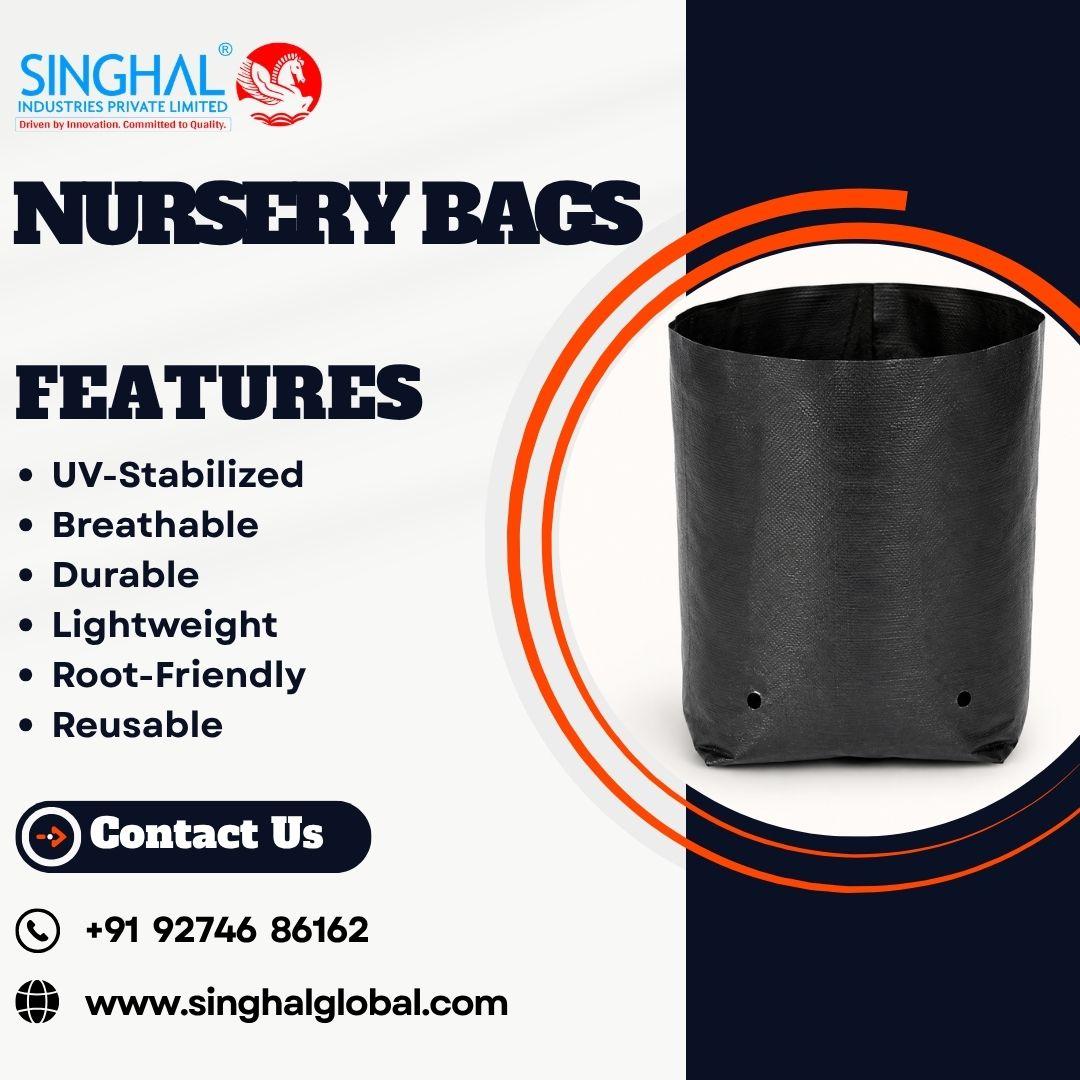
The nursery bags are handy containers that are useful in growing of seedlings, saplings, ornamental plants, vegetables, fruit plants, shrubs, and young trees prior to planting. They are commonly used in horticulture, agriculture, landscaping, forestry, and even commercial nurseries owing to their lightness, flexibility, ease of arrangement, and availability in various sizes. Contrary to hard pots, nursery bags occupy less storage place when empty, as they are capable of being packed flat, and transportation becomes simpler. However, after filling them up with the appropriate growth medium, they become the containers providing controlled environment for root development with the opportunity to move plants around.
The materials used for Nursery Bags will have a considerable influence on their durability, flexibility, and lifespan. The Nursery Bags may experience soil, water, fertilizers, sunlight, transportation, and manual handling, so the materials should stand such conditions well. Polyethylene is widely used for these products due to the possible combination of flexibility and strength under outdoor conditions. But still, the thickness of the material should be adjusted depending on the application. A too thin bag may tear if you fill it with soil, whereas a too thick one will increase the cost and weight of the product. Does it mean that the thicker bag is better? Certainly not. The ideal product is the one which has enough strength without extra material consumption.
Drainage is among the most essential properties of a Nursery Bag because the plants need water as well as enough air around the roots. Accumulation of water in the bag will negatively affect the roots, hence the importance of drainage holes that will enable the water excess to flow out. It is essential to consider the dimensions of the bag, kind of plants being grown, growing media, and irrigation method while choosing the number, size, and placement of the drainage holes. A small seedling bag needs a different drainage scheme from a large one used to grow a tree sapling. The growing medium is also an important factor. Mixture of cocopeat, compost, sand, perlite, soil, among other materials will retain water differently. Thus, the two should be considered together. Drainage does not mean complete disappearance of water from the bags immediately after watering.
The right choice of a Nursery Bags Supplier Ahmedabad will enable you to ensure regular supply of containers used for planting in your nurseries. When choosing a supplier, you should consider such factors as product quality, available sizes, thicknesses, possibility of customization, minimum order quantity, packing, transportation, lead time, and customer service. As a customer, you should state your needs clearly without requesting for just a generic nursery bag. Planting method, bag size, thickness, requirements in terms of drainage system, quantity, colour, and the required delivery date are some of the aspects you should specify. Samples would be of great help in ensuring the desired product quality prior to bulk ordering.
The Nursery Bags come in different widths, depths, capacities and thickness. The smaller ones are suitable for seedlings and young plants, while the bigger ones are suitable for fruit plants, ornamental shrubs, flowering plants and developing trees. Choosing the right size is important since the container should offer enough room for root development without using excess growing media. If the bag is smaller, it may restrict the roots as the plant grows. If it is much bigger than the needed size, then extra soil will be required. Commercial nurseries use different sizes as the plants develop from seedling stage to saplings.
Companies looking for a Nursery Bags Manufacturer Ahmedabad should look into quality, manufacturing capability, material, customization, drainage, and delivery capabilities. One should start by checking whether the supplier can make bags according to the required specifications. The specifications may include the width, height, thickness, material, color, drainage holes arrangement, and quantity. Sample testing is recommended prior to placing larger orders. It would help you to check whether the bags can carry growing media well, whether the drainage holes are consistent, and how the material withstands transportation.
The benefits of the use of Nursery Bags lie in their ability to make plants' arrangement, transportation, inspection and transplanting easier. The plants will be arranged in an organized manner depending on their variety, age, size, or growth stages. Watering and fertilizing, as well as pest inspection and other maintenance activities, can thus become more systematic. Unused empty bags occupy a lot less space compared to rigid containers. Filled bags will be as heavy as the quantity of the soil used or the plant grown and the size of the bag. Larger bags can be rather heavy, which means that special care should be taken when handling them. Staff should avoid lifting them from the weakest spots and should properly manage larger plants.
Nursery Bags offer an adjustable and convenient way to produce plants for subsequent transplantation. It is necessary to pay attention to the material quality too since nursery bags can be exposed to soil, water, fertilizers, sunshine, and frequent handling. Companies searching for a Nursery Bags Manufacturer Ahmedabad must consider such criteria as material quality, manufacturing capabilities, samples, customization opportunities, quality control procedures, and reliability of deliveries. At the same time, a choice of a reliable Nursery Bags Supplier Ahmedabad will help to guarantee constant supply under regular and seasonal demands.
Q1. How are Nursery Bags used ?
Nursery Bags are used for raising seedlings, saplings, vegetables, fruit plants, ornamental plants, shrubs, and young trees before transplanting them.
Q2. Why are Drainage Holes necessary in Nursery Bags ?
Drainage Holes are necessary for draining out extra water from Nursery Bags in order to keep the rightamount of moisture and air around the roots of plants.
Q3. How can Businesses select the appropriate Nursery Bag size ?
The size of Nursery Bag should be chosen on the basis of the type of plant, root development, growing medium, growth period, irrigation system, and transplanting needs.
Q4. How can Businesses choose a reputable Nursery Bags Manufacturer Ahmedabad ?
There are several aspects which businesses need to consider while selecting a good Nursery Bags Manufacturer like the material quality, strength, samples, customization, capacity, quality management, prices, and reliability in delivery.
Q5. Who is the largest manufacturer of Nursery Bags ?
Singhal Industries Private Limited is the largest manufacturer of manufacturer and supplier of PP Woven Bags.