English
 Arabic
 French
 Spanish
 Portuguese
 Deutsch
 Turkish
 Dutch
Dutch
 Italiano
 Russian
 Romaian
 Portuguese (Brazil)
 Greek
Greek
Office Space Electronic City Bangalore - The Smart Choice for Growing Businesses
Other |
2026-07-10 11:20:43
 Advertise With Us
 About Us
 Terms And Conditions
 Politique de confidentialité
Tout voir
Politique de confidentialité
Tout voir

Mise à niveau vers Pro
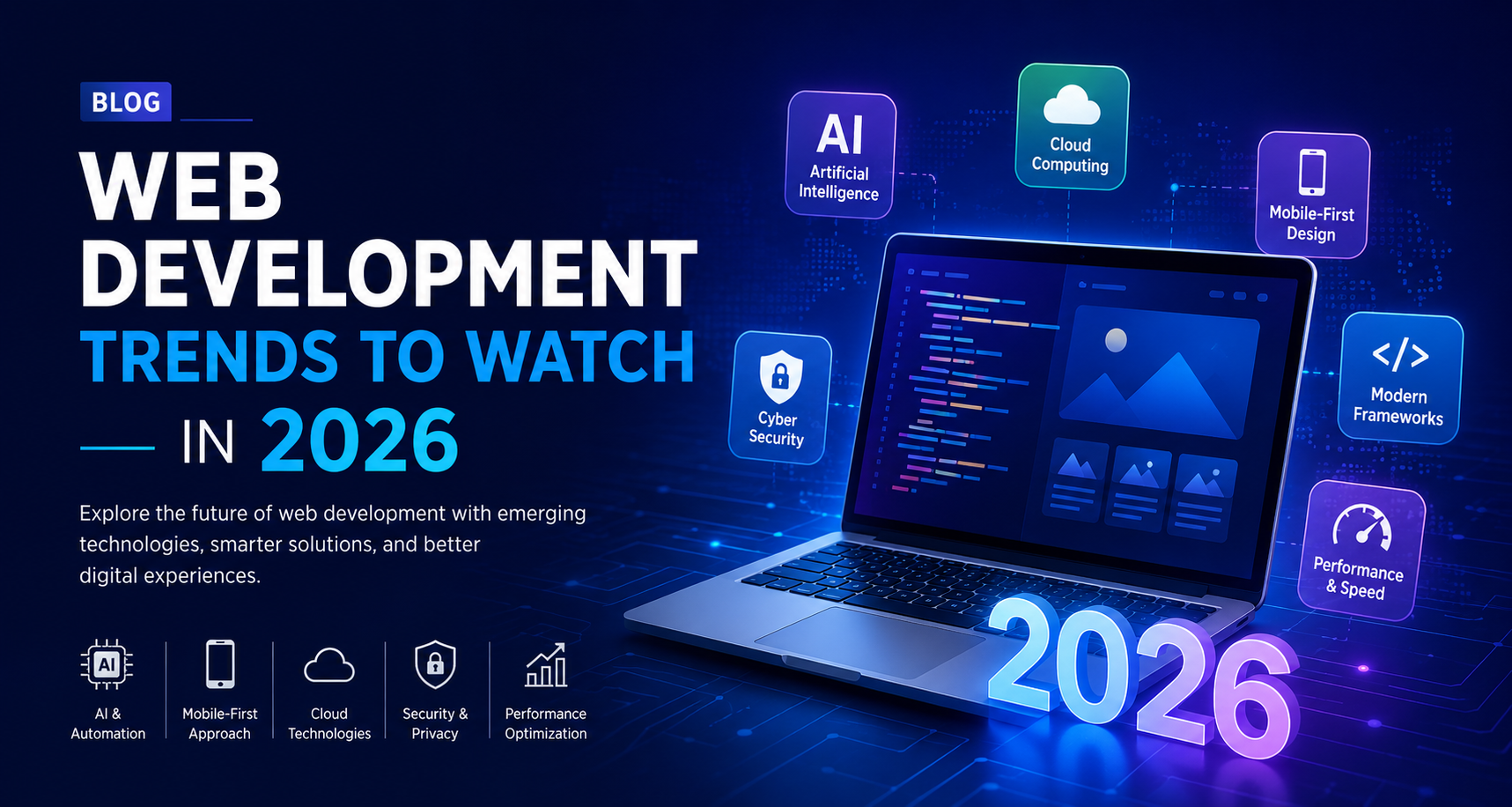
The web development industry continues to evolve rapidly as businesses, users, and technologies demand faster, smarter, more secure, and more engaging digital experiences. In 2026, having a website is no longer enough. Businesses need websites that are responsive, accessible, optimized for search, secure, fast, and capable of delivering personalized experiences across devices.
Emerging technologies such as artificial intelligence, advanced web applications, modern JavaScript frameworks, serverless architecture, and improved browser capabilities are changing how websites are designed and developed. At the same time, users expect websites to load quickly, work seamlessly on mobile devices, protect their data, and provide relevant information without unnecessary complexity.
For businesses planning a new website or considering a redesign, understanding the latest Web Development Trends can help them make better technology and investment decisions.
In this guide, we explore the major web development trends to watch in 2026 and explain how they can influence modern websites and digital experiences.
Artificial intelligence is one of the most important technologies influencing web development in 2026.
AI is increasingly being used throughout the development process, from generating code and identifying bugs to creating personalized user experiences. Website development company can use AI-powered tools to speed up repetitive tasks, analyze code, generate documentation, and identify potential problems.
AI can also become part of the website itself.
Businesses can use AI for:
For example, an eCommerce website can analyze user behavior and recommend products based on browsing patterns. A service website can use an AI chatbot to answer common questions and collect lead information.
AI does not necessarily replace developers. Instead, it can help development teams work more efficiently while allowing them to focus on architecture, user experience, strategy, and complex problem-solving.
AI is also changing how developers write and maintain code.
AI coding assistants can help developers generate code snippets, explain existing code, identify errors, suggest improvements, and automate repetitive development tasks.
This can improve development efficiency, particularly for routine tasks.
However, human expertise remains essential. Developers still need to review generated code for:
The future of web development is therefore likely to involve stronger collaboration between developers and AI-powered development tools.
Progressive Web Apps, commonly known as PWAs, continue to provide an attractive alternative for businesses that want app-like experiences through the web.
A PWA can provide features such as:
For businesses that do not want to build and maintain separate native applications for every platform, progressive web technologies can provide a practical solution.
PWAs can be particularly useful for eCommerce platforms, news websites, booking systems, content platforms, and customer portals.
Mobile-first development remains one of the most important principles of modern website development.
Users increasingly access websites from smartphones and tablets, which means websites must provide excellent experiences on smaller screens.
Mobile-first development starts with designing the core experience for mobile devices before expanding it for larger screens.
Important considerations include:
A website that works beautifully on desktop but performs poorly on mobile can lose visitors and potential customers.
In 2026, mobile responsiveness should be considered a fundamental requirement rather than an optional feature.
Website speed has become a major consideration for both users and businesses.
Visitors expect websites to load quickly and respond smoothly to interactions. Slow websites can create frustration and increase the likelihood that users will leave.
Modern web development therefore focuses heavily on performance.
Developers can improve performance through:
Performance optimization should be considered from the beginning of a project rather than treated as an afterthought.
Google's user experience metrics have encouraged developers to think more carefully about how websites perform for real users.
Modern web development should consider important performance factors such as:
A website can look visually impressive while still providing a poor experience if pages load slowly or elements shift unexpectedly.
Developers should therefore combine attractive design with technical performance to create websites that feel fast and stable.
Headless architecture is another important trend for businesses that need flexible digital experiences.
Traditional websites often connect the frontend and backend closely together. In a headless setup, the presentation layer can be separated from the backend or content management system.
This allows content and data to be delivered through APIs to different platforms.
For example, the same content could potentially be used across:
Headless development can provide greater flexibility for organizations managing content across multiple channels.
It can be particularly valuable for large eCommerce businesses, publishers, enterprises, and organizations with complex digital ecosystems.
APIs play a critical role in modern web applications.
API-first development means designing application interfaces and data connections as an important part of the development process rather than treating them as an afterthought.
APIs allow different systems to communicate with each other.
A modern website may connect with:
API-first architecture can make applications more modular and easier to integrate with other technologies.
Serverless computing continues to influence how modern applications are built.
Despite the name, serverless applications still run on servers. The difference is that developers do not have to manage traditional server infrastructure in the same way.
Cloud providers can handle much of the infrastructure management, allowing development teams to focus on application functionality.
Serverless architecture can be useful for:
For businesses, serverless technologies can provide scalable infrastructure for certain types of web applications.
Cloud technologies are becoming increasingly important for modern web development.
Cloud-native applications can be designed to take advantage of scalable infrastructure, distributed services, automated deployments, and flexible resources.
Businesses can benefit from cloud-based development through:
Cloud-native architecture can be particularly useful for websites and applications that experience changing levels of traffic.
Cybersecurity is becoming increasingly important as websites collect more user information and connect with more external services.
Security should be built into the development process from the beginning.
Important security practices include:
Developers should also pay attention to vulnerabilities in third-party plugins, libraries, frameworks, and integrations.
A secure website protects both the business and its customers.
Users are becoming more aware of how their data is collected and used.
Businesses need to provide transparent privacy practices and avoid collecting unnecessary information.
Modern websites should clearly communicate:
Privacy-conscious design can help build trust between businesses and customers.
Web accessibility is becoming an increasingly important part of professional web development.
A website should be usable by as many people as possible, including users with disabilities.
Accessibility practices can include:
Accessibility should be integrated into the development process rather than added at the very end.
An accessible website can also provide a better experience for users generally.
Animations and interactive elements can make websites more engaging, but excessive animation can negatively affect performance and usability.
In 2026, developers are likely to focus more on purposeful motion.
Examples include:
The goal is not to add animation everywhere. Instead, motion should help users understand interactions and navigate the website more naturally.
Component-based development has become a standard approach for building scalable interfaces.
Instead of creating every page from scratch, developers can build reusable components such as:
These components can then be reused throughout the website.
This approach can improve consistency and make future updates easier.
It can also help development teams work more efficiently when building large websites and web applications.
JavaScript remains a major technology for interactive web experiences.
Modern frameworks and libraries continue to evolve, helping developers build sophisticated interfaces and applications.
Framework-based development can provide:
The right framework depends on the project's requirements rather than simply following popularity.
Developers should consider performance, scalability, maintainability, team expertise, and long-term support when selecting a technology.
Voice interaction continues to influence how people search for and interact with digital services.
Websites can prepare for conversational search by creating clear, useful, naturally written content that answers common user questions.
Conversational interfaces can also be integrated into websites through:
For service businesses, these technologies can make it easier for customers to find information and receive quick answers.
Visitors increasingly expect digital experiences that are relevant to their needs.
Website personalization can use information such as:
For example, an eCommerce website might display recommendations based on previous purchases.
A travel website could highlight destinations based on user interests.
However, personalization should be implemented responsibly and with appropriate privacy considerations.
Online shopping continues to evolve beyond traditional product grids.
Modern eCommerce websites are increasingly focused on creating interactive and personalized experiences.
Features may include:
The goal is to reduce friction throughout the customer journey.
Environmental considerations are also influencing digital development.
Websites consume energy through servers, networks, and user devices. Developers can reduce unnecessary resource consumption by creating efficient websites.
Sustainable web development can include:
Performance and sustainability often work together because efficient websites typically require fewer resources.
Search engine optimization should be considered during development rather than after the website is launched.
SEO-friendly development includes:
Developers and SEO specialists should work together to ensure that the technical structure supports search visibility.
A visually impressive website is much more valuable when potential customers can actually find it.
No-code and low-code platforms are also becoming more capable.
These tools allow businesses and teams to create certain applications and workflows with less traditional coding.
They can be useful for:
However, complex websites still require professional development when businesses need custom functionality, advanced integrations, scalability, performance optimization, or specialized security.
Technology alone does not make a website successful.
The strongest websites combine technology with user experience.
Developers and designers need to understand:
A website should make it easy for users to complete their goals.
Whether the goal is purchasing a product, booking a hotel, requesting a quote, contacting a business, or subscribing to a service, every part of the experience should support that objective.
Businesses do not need to adopt every new technology simply because it is trending.
Instead, focus on technologies that solve real business problems.
Start by evaluating your existing website.
Ask:
After identifying weaknesses, prioritize improvements based on business impact.
For example, improving website speed and mobile usability may provide more value than adding unnecessary animations or experimental technologies.
Binary Techno helps businesses build modern websites focused on performance, usability, responsiveness, and business growth.
Our web development approach can combine modern development practices with a clear understanding of your brand, audience, and goals.
Our solutions can include:
Whether you are launching a new website or upgrading an existing one, choosing the right development strategy can help create a stronger foundation for long-term online growth.
The web development landscape in 2026 is being shaped by artificial intelligence, performance optimization, mobile-first experiences, cybersecurity, accessibility, cloud technologies, personalization, and increasingly sophisticated web applications. CMS platforms such as WordPress, Joomla, Drupal, and other content management systems are also playing an important role by helping businesses manage, update, and scale their websites more efficiently.
The most successful businesses will not necessarily be those that use the most technologies. They will be the businesses that choose the right CMS platform, development technologies, and digital solutions to create better experiences for their customers.
From AI-powered functionality and headless architecture to fast-loading websites, accessible interfaces, and flexible WordPress CMS development, today's Web Development Trends provide many opportunities for businesses to improve their digital presence.