English
 Arabic
 French
 Spanish
 Portuguese
 Deutsch
 Turkish
 Dutch
Dutch
 Italiano
 Russian
 Romaian
 Portuguese (Brazil)
 Greek
Greek
Phonak Hearing Aids: Advanced Hearing Solutions for a Better Quality of Life
Other |
2026-06-20 09:25:45
 Advertise With Us
 About Us
 Terms And Conditions
 Política de privacidade
Ver todos
Política de privacidade
Ver todos

Atualizar para Plus
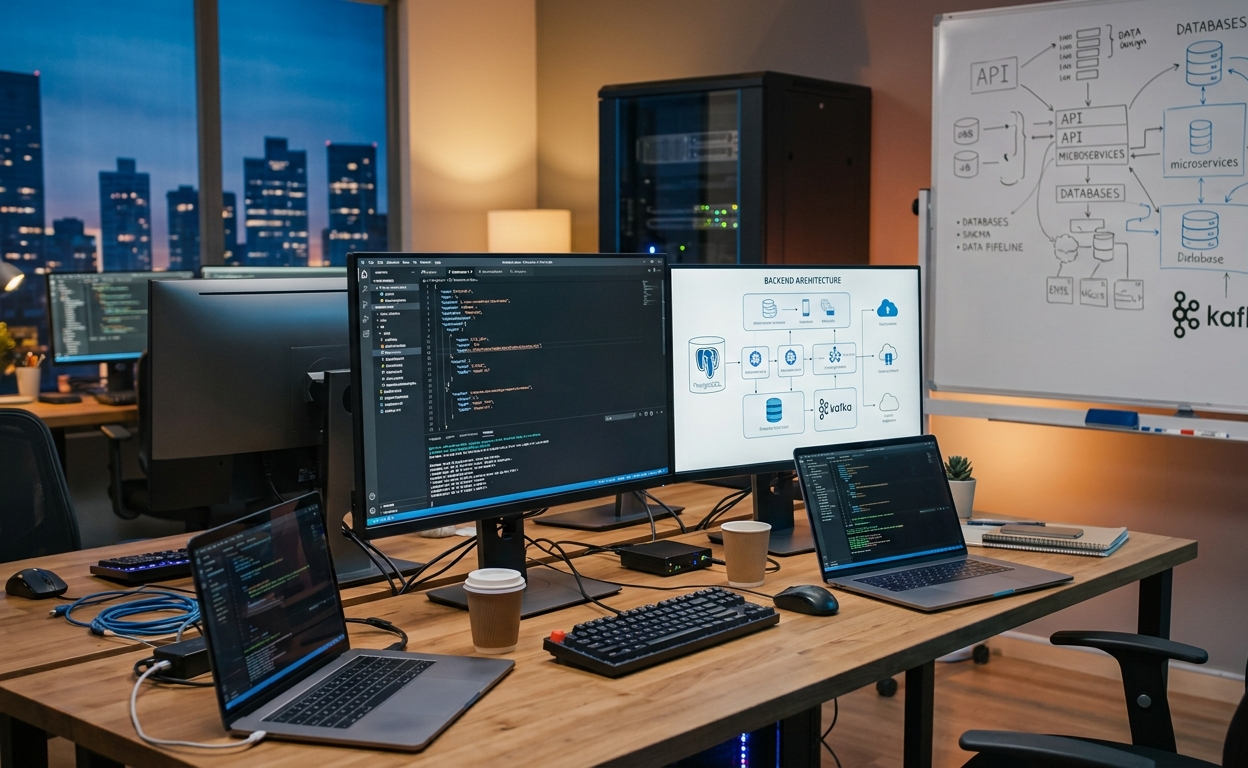
Many businesses rely on legacy applications that have supported their operations for years, but outdated technologies can eventually create performance, security and scalability challenges. Backend development solutions can help organisations modernise the underlying architecture while preserving important business logic and data. Instead of replacing an entire application at once, businesses can gradually improve APIs, databases, integrations and server-side components. This approach can make legacy systems more reliable, adaptable and prepared for future growth.
Legacy software is not necessarily ineffective simply because it is old. Many legacy applications continue to perform important business functions. However, ageing technology can become increasingly difficult to maintain as business requirements change.
Older systems may depend on outdated programming languages, databases, frameworks or infrastructure. Finding developers with the right expertise can also become more difficult, increasing maintenance costs and slowing down development.
Common challenges associated with legacy software include:
Limited scalability as user and transaction volumes increase
Difficulty integrating with modern applications and APIs
Higher security risks caused by outdated technologies
Slow application performance and inefficient data processing
Increasing maintenance and infrastructure costs
Limited flexibility when introducing new features
Technical debt caused by years of modifications and workarounds
These issues can affect both internal operations and customer experiences. Modernising the backend can provide a practical way to address these limitations without immediately rebuilding the entire application.
The backend is responsible for important functions such as business logic, data processing, authentication, APIs and communication between different systems. Modernising these components can significantly improve the overall capability of a legacy application.
A structured backend modernisation strategy may involve replacing outdated components with modern frameworks, creating APIs around existing functionality or separating tightly connected services into more manageable components.
For example, an organisation may have a legacy application where customer information, orders and payment processing are handled within a single system. Developers can gradually introduce APIs and modern services around these functions. This allows newer applications to communicate with the existing system while individual backend components are improved over time.
Modern backend development can also introduce technologies such as cloud platforms, containerisation, microservices and automated deployment pipelines where appropriate. The objective is not simply to use newer technology, but to create an architecture that is easier to maintain, secure and scale.
Before making major changes to a legacy application, businesses need to understand what they already have. A software audit can provide insight into the application's architecture, dependencies, security vulnerabilities, performance limitations and technical debt.
Working with a software audit company can help businesses evaluate which parts of an application require immediate attention and which components can continue operating safely.
A comprehensive audit may examine:
Backend architecture and code quality
Database structure and performance
API design and integrations
Authentication and access controls
Security vulnerabilities
Infrastructure and hosting requirements
Third-party dependencies
Application performance
Scalability limitations
Technical debt and maintenance risks
The findings can then be used to create a prioritised modernisation roadmap. This is particularly important for businesses that cannot afford extended downtime or a complete application replacement.
Rather than making assumptions about what needs to be rebuilt, businesses can use audit findings to determine where backend improvements will deliver the greatest value.
There is no single approach to modernising legacy software. The right strategy depends on the application's architecture, business importance, technical condition and available resources.
One common approach is incremental modernisation. Instead of replacing the entire application, businesses gradually update specific backend components. This can reduce disruption and allow teams to test improvements before expanding the modernisation programme.
Another approach is API enablement. APIs can create a connection between legacy functionality and newer applications, allowing businesses to introduce modern frontends, mobile applications or third-party integrations without immediately replacing the core system.
Database modernisation can also be important. Legacy databases may have inefficient structures, limited scalability or compatibility issues with newer applications. Optimising queries, restructuring data models or migrating to a modern database platform can improve performance and reliability.
For more complex environments, businesses may consider breaking large monolithic applications into smaller services. However, this should be done carefully. Moving to microservices without a clear architectural reason can introduce additional operational complexity.
Businesses may also use legacy system upgrade services to improve outdated components while retaining essential functionality. This can include framework upgrades, API development, database optimisation, cloud migration and security improvements.
A well-planned backend modernisation strategy can deliver benefits beyond technical improvements. It can create a stronger foundation for future digital initiatives and reduce the limitations associated with ageing systems.
Improved scalability: Modern backend architectures can be designed to handle increasing workloads, users and transactions more efficiently.
Better security: Updating outdated frameworks, dependencies, authentication mechanisms and infrastructure can help reduce security risks.
Easier integration: Modern APIs allow legacy applications to communicate more effectively with cloud platforms, third-party applications and newer digital products.
Improved performance: Database optimisation, efficient APIs and modern infrastructure can reduce processing delays and improve application responsiveness.
Lower maintenance burden: Replacing outdated components can make applications easier for development teams to maintain and extend.
Greater business flexibility: A modern backend makes it easier to introduce new features, services and integrations as business requirements evolve.
Most importantly, modernisation does not always require abandoning an existing application. Businesses can protect valuable data and established business processes while gradually improving the technology supporting them.
Legacy software can become a barrier to growth when outdated architecture, security limitations and integration challenges make applications difficult to maintain. Backend development provides a practical pathway for addressing these challenges by improving APIs, databases, architecture, security and system performance.
However, modernisation should begin with a clear understanding of the existing environment. A software audit can identify technical risks and prioritise areas for improvement, while a phased upgrade strategy can help businesses modernise critical components without unnecessary disruption.
With the right combination of assessment, planning and backend development, organisations can transform legacy applications into more secure, scalable and maintainable systems while continuing to benefit from the business processes and data they already rely on.