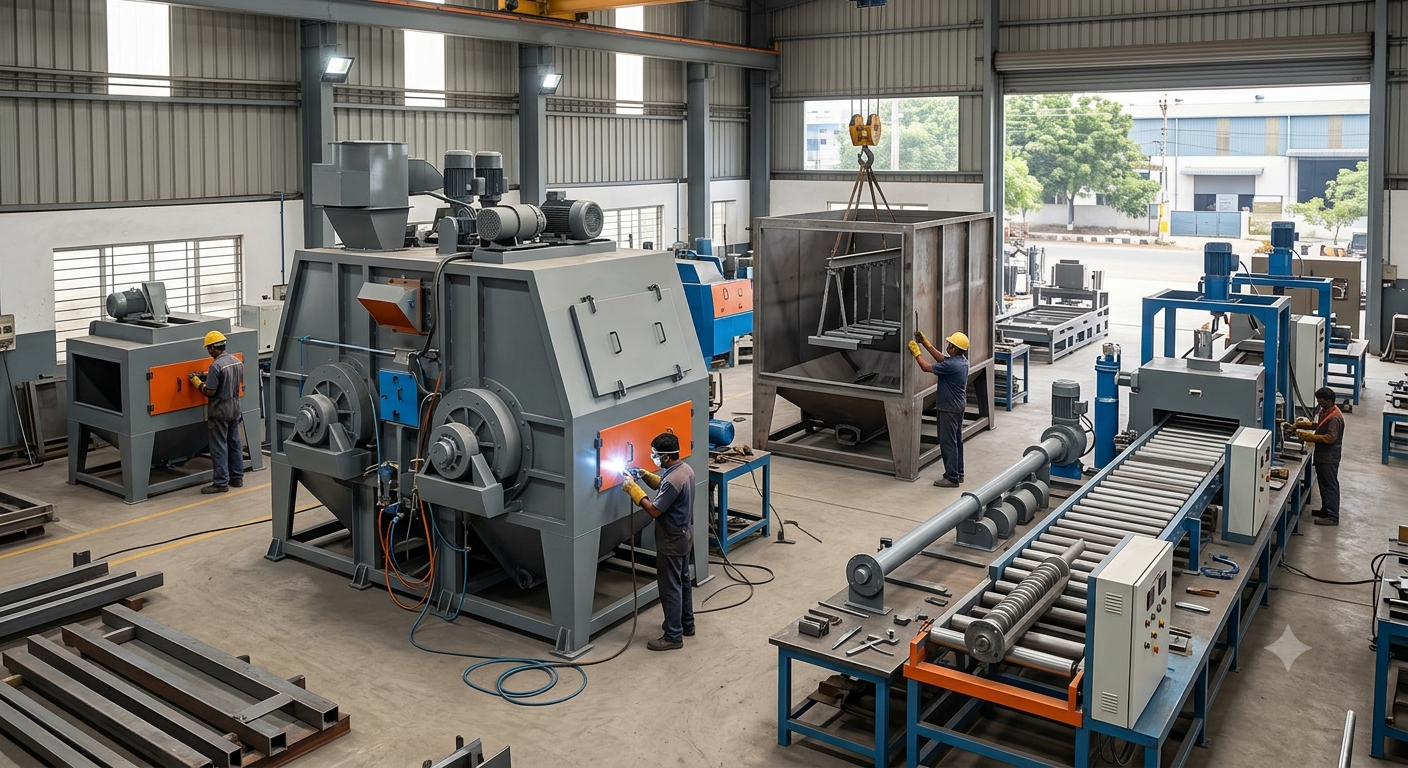
Understanding Powder Coating in Modern Manufacturing
Powder coating has become an important finishing method for metal components because it can provide a durable and attractive protective surface. The process involves applying dry powder to a prepared component and then curing the coating under controlled conditions.
However, achieving a consistent finish depends on more than the powder itself. The application environment, airflow, recovery system, operator technique, and equipment configuration all influence the final result.
A properly designed Powder Coating Booth provides a controlled area for coating application. It can help contain overspray, improve powder recovery, maintain a cleaner production environment, and support more consistent finishing results.
What Is a Powder Coating Booth?
A powder coating booth is an enclosed or partially enclosed industrial structure designed to contain and manage powder overspray during the coating process. It typically works alongside spray guns, powder recovery systems, filtration equipment, and other finishing equipment.
During application, not all powder particles reach the workpiece. Excess powder can remain suspended in the booth or settle on internal surfaces. A suitable booth helps manage this overspray and directs it toward a recovery or filtration system.
The design should be selected according to component dimensions, production volume, coating requirements, and the type of powder being applied.
Why Booth Design Matters
Booth design has a direct impact on coating efficiency. Poor airflow or inadequate containment can allow powder to escape into surrounding production areas, while unsuitable dimensions can make component handling difficult.
An effective booth should provide:
• Controlled airflow
• Appropriate powder containment
• Efficient overspray management
• Easy access for cleaning
• Suitable visibility for operators
• Adequate working space
• Compatibility with recovery equipment
The booth should also integrate smoothly with the broader production workflow rather than creating additional handling difficulties.
Supporting Consistent Coating Application
Consistency is one of the most important objectives in industrial powder coating. Uneven application can result in differences in film thickness, surface appearance, and curing performance.
A controlled booth environment can help operators maintain a more predictable spraying process. Air movement should be managed carefully so that powder is directed toward the intended recovery and filtration areas without unnecessarily disturbing the coating pattern.
The positioning of components, spray guns, operators, and extraction points should also be considered during booth planning.
Powder Recovery and Material Efficiency
Overspray management is an important part of powder coating operations. Recovering suitable excess powder can reduce material waste and improve overall process efficiency when the recovery system is designed and operated appropriately.
A well-integrated booth can direct overspray toward collection points, where suitable recovery equipment can separate reusable powder from contaminants.
When evaluating a Powder Coating Booth, manufacturers should therefore examine not only the booth structure but also how it connects with powder collection, filtration, and recovery systems.
Efficient recovery can be particularly valuable in high-volume production environments where powder consumption represents a significant operating cost.
Airflow and Ventilation Considerations
Airflow is a fundamental part of booth performance. The movement of air needs to support overspray containment while maintaining suitable coating conditions.
Poorly controlled airflow may cause powder to move away from the intended surface, resulting in uneven application or unnecessary material loss.
An appropriate ventilation arrangement can help direct airborne powder toward filtration or recovery equipment. The design should consider booth dimensions, extraction capacity, component size, and the operational requirements of the coating process.
Booth Size and Component Handling
The physical dimensions of the booth should correspond to the components being coated. Operators need sufficient space to move spray equipment around the workpiece without creating unnecessary restrictions.
When planning booth dimensions, consider:
• Maximum component size
• Component weight
• Loading method
• Operator movement
• Spray gun access
• Conveyor requirements
• Production volume
• Cleaning access
A booth that is too small can restrict spraying and handling, while an unnecessarily large booth may increase energy and maintenance requirements.
Cleaning and Maintenance Requirements
Powder accumulation can affect coating operations if cleaning is not performed correctly. Regular housekeeping is essential for maintaining a controlled production environment and reducing the risk of contamination.
Booth interiors should be designed to allow convenient access for routine cleaning. Areas where powder can accumulate excessively should be minimized through appropriate design.
Maintenance requirements should also include filters, extraction systems, recovery equipment, lighting, and other components associated with the booth.
Easy maintenance can reduce downtime and help maintain consistent production performance.
Safety in Powder Coating Operations
Safety should be a fundamental consideration when designing a powder coating area. Fine powder particles can become airborne during application, making appropriate containment, ventilation, filtration, equipment grounding, and housekeeping important.
Operators should follow established safety procedures for powder handling, equipment operation, cleaning, and maintenance.
The installation should also be planned according to applicable industrial safety requirements and the characteristics of the coating materials being used.
Choosing Equipment for Different Production Needs
Powder coating operations vary considerably between industries. Some facilities process small batches of components, while others operate continuous production lines with high throughput.
The equipment selection should therefore account for:
• Production capacity
• Component dimensions
• Coating frequency
• Powder type
• Recovery requirements
• Automation level
• Available floor area
• Future production expansion
A properly planned booth can support both current production requirements and potential future changes.
Benefits of a Well-Planned Coating Environment
A suitable powder coating booth can contribute to several operational improvements. Better overspray containment can help maintain cleaner surrounding areas. Efficient recovery can reduce powder wastage, while appropriate airflow can support more consistent application.
Other potential benefits include:
• Improved workplace organization
• Better coating process control
• Reduced overspray contamination
• More efficient material handling
• Easier routine cleaning
• Improved production consistency
The overall value depends on how well the booth is designed around the actual application.
Conclusion
A powder coating operation requires a controlled environment that supports coating quality, material efficiency, operator safety, and production consistency. Booth dimensions, airflow, powder recovery, filtration, maintenance access, and component handling should all be considered before installation.
Wewin Finishing Equipments Pvt. Ltd provides industrial finishing equipment solutions designed for different manufacturing requirements. Businesses evaluating a Powder Coating Booth should focus on application suitability, efficient overspray management, reliable airflow, ease of maintenance, and long-term operational performance.
 English
 Arabic
 French
 Spanish
 Portuguese
 Deutsch
 Turkish
 Dutch
Dutch
 Italiano
 Russian
 Romaian
 Portuguese (Brazil)
 Greek
Greek
 Advertise With Us
 About Us
 Terms And Conditions
 Privacy Policy
Mostra tutti i risultati
Privacy Policy
Mostra tutti i risultati