English
 Arabic
 French
 Spanish
 Portuguese
 Deutsch
 Turkish
 Dutch
Dutch
 Italiano
 Russian
 Romaian
 Portuguese (Brazil)
 Greek
Greek
Advanced Sonar Technologies Driving Anti Submarine Warfare Market
Other |
2026-04-30 07:07:24
 Advertise With Us
 About Us
 Terms And Conditions
 Datenschutzbestimmungen
Alle anzeigen
Datenschutzbestimmungen
Alle anzeigen

Upgrade auf Pro
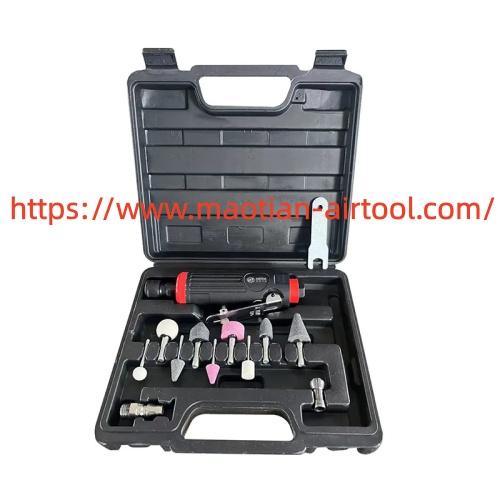
Straight Air Die Grinder selection requires more than checking a speed figure on a product sheet. Buyers should consider the workpiece, accessories, compressor capacity, operating environment, handling requirements, and expected frequency of use. A suitable pneumatic tool can support tasks such as deburring, polishing, weld cleanup, surface preparation, and detailed material shaping, while the wrong configuration may create unnecessary interruptions during routine work.
The intended task should come before technical specifications. A fabrication shop may need equipment for removing burrs from metal components, while an automotive repair workshop may use it for cleaning weld areas, smoothing edges, or preparing surfaces. Mold and machinery maintenance can require controlled access around small or complicated sections.
The position of the workpiece also matters. A straight body can provide direct access when the operator needs to approach a surface along a relatively open path. For restricted corners or angled areas, another configuration may provide more convenient access. Choosing according to the working position can make everyday operation easier.
Speed is an important specification, but a larger number does not automatically mean a better match. Current products cover different speed ranges, with commercial models commonly available around 15,000 to 28,000 RPM and some configurations extending beyond that range. The suitable figure depends on the material, attachment, and operation being performed.
Buyers should also check the rated speed of every attachment. Mounted points, abrasive accessories, polishing components, and other attachments can have their own operating limits. The accessory rating should be compatible with the equipment output, and the attachment should be installed correctly before operation. This simple check is important when planning regular production work.
The collet determines which accessories can be used. A 1/4 inch capacity is widely used for workshop applications, while 6 mm and smaller metric options are also available. Buyers should identify the shank dimensions of their existing accessories before selecting a model.
A 1/4 inch shank and a 6 mm shank are not identical, even though their dimensions are close. They should not be treated as interchangeable. Correct sizing helps provide proper attachment fit and supports controlled operation.
Compressed air capacity deserves the same attention as rotational speed. Different products can have significantly different consumption figures. Before ordering, buyers should compare the stated CFM requirement with compressor output, hose dimensions, fittings, and other pneumatic equipment sharing the same system. If several tools operate simultaneously, the total demand should also be considered.
Pressure should be checked against the manufacturer specification. Some industrial models specify approximately 90 PSI as the dynamic working pressure. Following the stated operating range helps maintain appropriate working conditions and reduces unnecessary stress on components.
Specifications on paper do not tell the whole story. Weight, body length, grip shape, trigger design, exhaust position, and vibration can affect how comfortable a tool feels during repeated operations. A compact housing may be useful when the operator needs greater control around smaller workpieces.
Maintenance should also be included in the purchasing discussion. Clean compressed air, suitable lubrication, regular inspection, and proper storage can help maintain consistent operation. Collets, moving components, air inlets, and exhaust areas should be checked periodically for contamination or wear.
For purchasing teams, the manufacturer can matter as much as individual specifications. A supplier with several configurations can make it easier to compare speed ranges, body designs, collet options, and application requirements within one product category.
Maotian provides pneumatic tool options for automotive repair, metalworking, fabrication, polishing, and finishing applications. Its product range includes compact models and different configurations intended to accommodate varied workshop requirements.
A practical buying decision comes from matching the equipment with the actual job. Start with the material and application, then check accessory compatibility, rotational speed, airflow, pressure, dimensions, handling, and maintenance requirements. This approach gives buyers a clearer basis for comparing products without relying on a single specification.
For workshops and distributors reviewing pneumatic equipment for different applications, product information and available configurations from Maotian can be viewed at https://www.maotian-airtool.com/ Reviewing the range alongside actual workshop requirements can help purchasing teams identify a suitable option for their intended use.