English
 Arabic
 French
 Spanish
 Portuguese
 Deutsch
 Turkish
 Dutch
Dutch
 Italiano
 Russian
 Romaian
 Portuguese (Brazil)
 Greek
Greek
Trending on BookTok The Stranger in My Bed by Amanda McKinney
Travel |
2026-06-11 05:30:10
 Advertise With Us
 About Us
 Terms And Conditions
 Privacy Policy
Ver Todo
Privacy Policy
Ver Todo

Upgrade to Pro
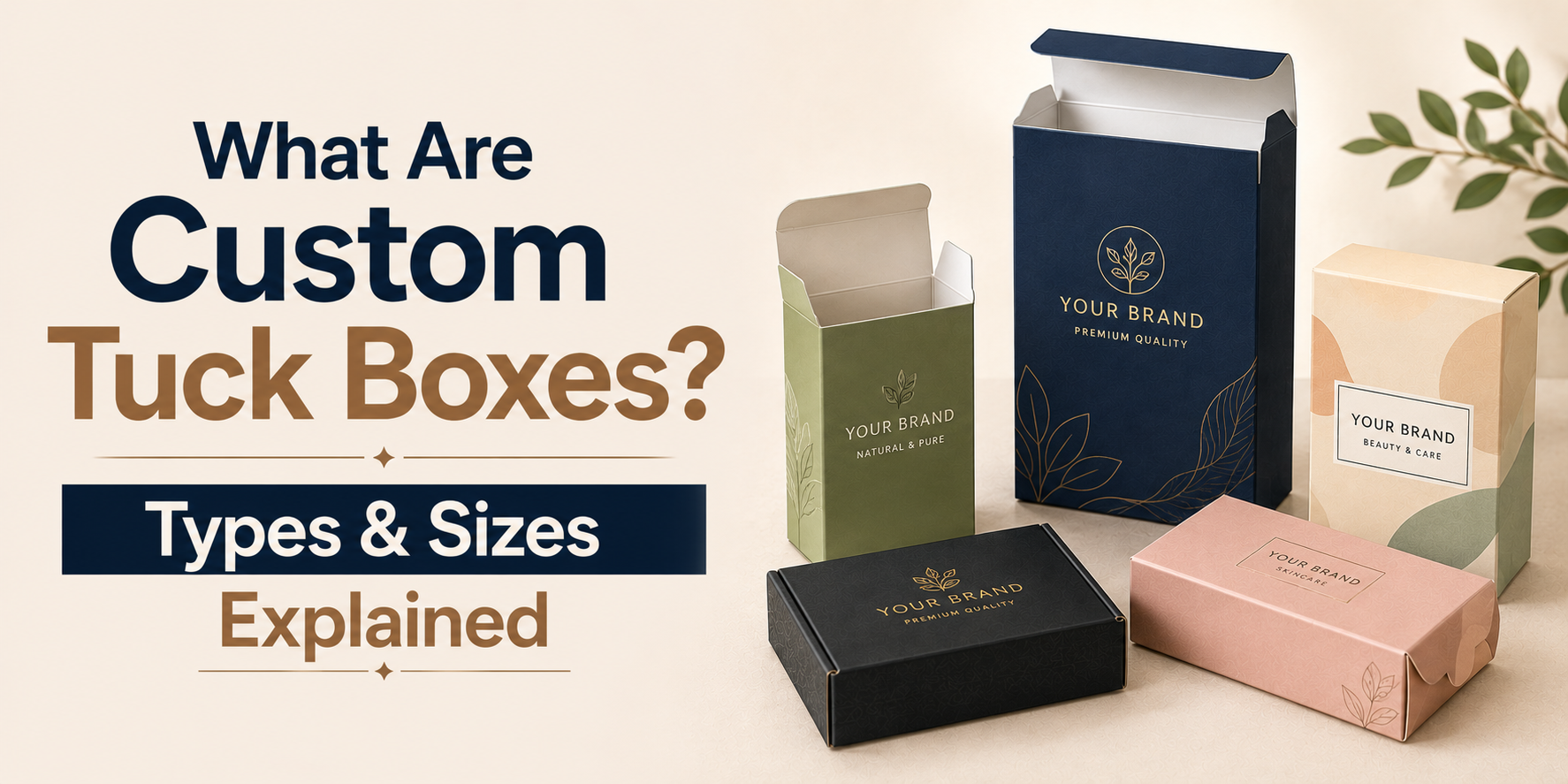
Meta Description: Don't let flimsy packaging undersell your product on the shelf. Find out why top brands choose custom tuck boxes, and how straight tuck as well as reverse tuck designs can help you find the right fit and also scale to wholesale printing.
Whether you're shopping in a store or opening an online purchase, the quality of the packaging makes an impression before you even see the product. If you're selling electronics, cosmetics, supplements, or other lightweight products, it is essential to have packaging that can be assembled quickly and has a high-quality physical appearance. The solution is a custom-designed tuck box.
Tuck boxes are made from paperboard or light corrugated materials and fold into shape. They come with two flaps on the top and bottom which "tuck" inside the frame of the box to secure it. They form the backbone of retail packaging as they're shipped flat (saving significantly on shipping costs) and can be opened and assembled in a matter of moments without the need for tape or glue during assembly.
If you're looking to expand your options for customized packaging solutions, knowing the differences in structure between the most popular tuck boxes is the first step in improving your supply chain as well as reducing the price per item.
The world of folding cartons relies heavily on two particular structures. Knowing the distinction between them can affect the cost of die cutting, assembly time, and the final display on the shelf.
In a straight tuck box, both the top and bottom flaps are attached to the same panel, and then fold in the same direction (usually towards the back of the box).
The Benefit: It presents a perfectly clean front face. Since the flaps fold inwards to the rear, there's no visible raw edge on the front, which is where the main brand's logo sits. This type of structure is great for premium cosmetics, high-end retail products, or anything that requires a clean front-facing design.
With a reverse tuck box, the top and bottom flaps fold in opposite directions, with one usually folding toward the front and the other toward the back.
The advantages: This is the most popular and economical design in the market. The opposite flap orientation allows the dielines to be nested more efficiently on the sheet of board, reducing material waste and lowering the cost of wholesale production.
For a better understanding of how structural orientations affect how the packaging is arranged during manufacturing, take a look at this layout comparison:
Important information: If your priority is maximizing cost efficiency and minimising the amount of waste that is generated, a Reverse Tuck design is the more widely used option. If you want the transparent front-facing display, go with a Straight Tuck design.
Most startups take a hands-on approach. If you're launching a new product from home, you may find yourself looking up ways to build your own packaging box or working out the best way to create an inexpensive cardboard box to test your designs.
If you're trying to figure out how to design customized boxes to ship by hand in small batches:
Calculate Clearance: Measure the length, width, and thickness. Allow enough clearance for the product to slide in without damaging the box.
Score before folding: Use a bone folder (or the back of a butter knife) and a ruler when working with standard kraft paper. An accurate score line can make the difference between a crisp edge and a messy or crushed fold.
Cut the Tucks: When trimming the flaps, make sure the tuck tabs have smooth corners, so that they can easily slide into the box without getting caught on the side flaps.
Although this DIY method can be extremely useful in determining your exact specifications for sizing and making prototypes for testing, it's an absolute pain to expand. Cutting and scoring boxes by hand will not be a long-term way to run a business when your orders start going beyond a few dozen units.
After you have completed your prototype phase, your focus shifts away from hand-cutting cardboard and toward producing customized packaging for your business at scale. That's where you move into professionally designed custom printed boxes.
Making the switch to wholesale tuck-top boxes transforms your business economics. Professional printing can open the door to top-quality finishes that even DIY packaging cannot duplicate:
CMYK Offset Printing: For photorealistic images and accurate brand colors.
Soft-Touch Lamination: For a luxurious, soft tactile experience.
Spot UV Gloss: For making your logo or other text glossy and eye-catching against a matte background.
If you decide to go with personalized tuck containers in a straight or reverse design, partnering with a reliable packaging manufacturer ensures that your boxes are structurally sound. They take care of the intricate die cutting and gluing of the side seams and logistics optimization, allowing you to concentrate on selling and marketing your products rather than building your packaging.