English
 Arabic
 French
 Spanish
 Portuguese
 Deutsch
 Turkish
 Dutch
Dutch
 Italiano
 Russian
 Romaian
 Portuguese (Brazil)
 Greek
Greek
Custom Face Mask Boxes | Face Mask Boxes Wholesale
Shopping |
2026-06-22 09:56:24
 Advertise With Us
 About Us
 Terms And Conditions
 Πολιτική Ιδιωτικότητας
δες τα όλα
Πολιτική Ιδιωτικότητας
δες τα όλα

Upgrade to Pro
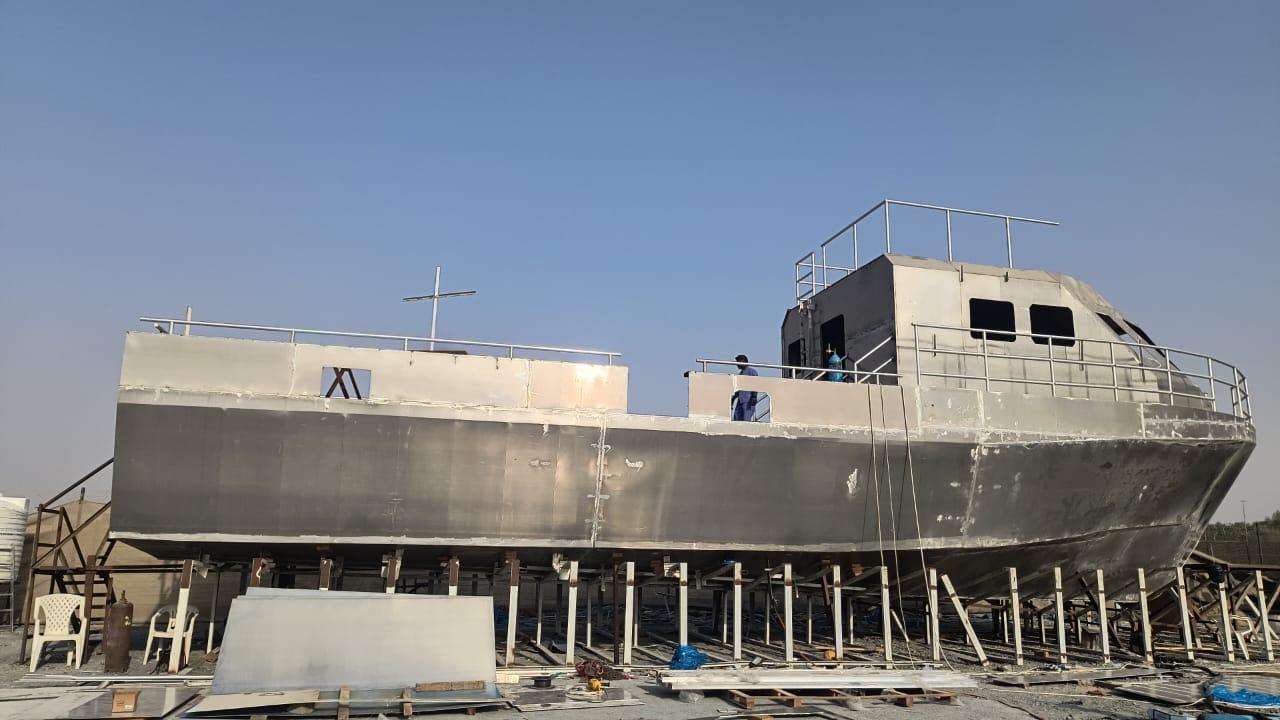
Marine construction has come a long way from the days when boats were designed mainly through hand-drawn plans and built almost entirely through manual fabrication. Today, a boat building company can use digital design, advanced materials, automated machinery, smart monitoring systems, and energy-efficient technologies to build vessels that are safer, lighter, stronger, and more economical to operate.
This transformation is not happening simply because new technology is available. Growing environmental concerns, higher fuel costs, stricter regulations, and changing customer requirements are all encouraging the marine industry to adopt better construction methods.
One of the most important developments in modern marine construction is digital design. Computer-Aided Design (CAD), 3D modeling, and engineering simulation software allow designers to create a detailed virtual model of a vessel before physical construction starts.
Engineers can examine hull shapes, structural components, weight distribution, machinery placement, and stability during the design stage. If something needs to be changed, modifications can be made digitally instead of after construction has already begun.
This approach can save both time and materials. It also makes communication easier between designers, engineers, fabricators, and customers because everyone can work from the same digital model.
Material selection has always been important in boat construction, but modern technology has made it possible to use materials more efficiently. Aluminum is particularly popular for vessels where weight, speed, and durability are important.
Modern aluminium boat builders use marine-grade aluminum alloys to create strong structures without adding unnecessary weight. A lighter vessel generally needs less power to move through the water, which can contribute to lower fuel consumption and better performance.
Aluminum also provides good corrosion resistance, making it suitable for many commercial and specialized applications. It is commonly used for workboats, patrol vessels, passenger boats, crew boats, and offshore support vessels.
Automation is another major change in modern boatbuilding. Advanced CNC cutting equipment, automated fabrication systems, and improved welding technologies allow components to be produced with greater accuracy.
Machines can follow digital designs and cut or shape materials according to precise measurements. This reduces the possibility of dimensional errors and makes assembly easier.
However, automation does not mean that skilled workers are becoming unnecessary. Experienced welders, fabricators, engineers, and technicians remain essential. Modern marine construction works best when skilled human knowledge is combined with advanced machinery.
Technology is not limited to the construction yard. Modern vessels are becoming smarter as well.
Sensors and digital monitoring systems can collect information about engines, fuel consumption, temperature, vibration, electrical systems, and other important components. Operators can use this information to understand how their vessel is performing and identify potential problems at an early stage.
This is particularly useful for commercial vessels because unexpected breakdowns can result in lost working hours and expensive repairs. Predictive maintenance can help operators plan servicing before a small issue develops into a major failure.
Marine customers today often require vessels designed for very specific jobs. A boats manufacturer in UAE may need to build vessels for offshore operations, passenger transportation, port activities, marine security, tourism, or other specialized purposes.
Modern design software makes customization easier. Hull dimensions, deck layouts, seating arrangements, machinery spaces, storage areas, and other features can be adjusted according to the vessel's intended use.
This means customers do not necessarily have to compromise with a standard design. Technology allows manufacturers to create vessels around the actual requirements of the operator.
Environmental performance is now a major consideration in marine construction. The International Maritime Organization has set a long-term goal of reaching net-zero greenhouse gas emissions from international shipping by or around 2050. It also has an indicative target of reducing the carbon intensity of international shipping by at least 40% by 2030 compared with 2008.
These targets are encouraging the industry to look for practical ways to reduce fuel consumption and emissions.
Modern boat designs can use optimized hull forms, lightweight structures, efficient propulsion systems, and improved energy management. Hybrid and electric propulsion are also gaining attention for certain types of vessels, particularly those operating shorter routes or in ports and coastal areas.
A vessel's hull has a direct effect on its performance. Water resistance can influence speed, fuel consumption, stability, and overall operating efficiency.
Modern computer simulations allow engineers to study water flow around a hull before the vessel is constructed. This makes it easier to compare different hull shapes and select a design that offers an appropriate balance between speed, stability, payload, and efficiency.
Even relatively small improvements in hydrodynamic performance can become valuable when a vessel operates for thousands of hours over its lifetime.
The use of aluminum is expected to remain important in the construction of many small and medium-sized commercial vessels. Its lightweight nature, corrosion resistance, and recyclability make it attractive for operators who want a practical combination of performance and durability.
Modern aluminium boat building also benefits from improved welding techniques, digital fabrication, and better structural engineering. These developments allow builders to use aluminum more effectively while maintaining the required strength and safety.
For operators, the objective is not simply to build a lighter boat. The real goal is to create a vessel that performs efficiently throughout its working life.
VU Marine reflects the changing requirements of today's marine industry through its involvement in vessel construction, aluminum boat building, tug and barge construction, ship repair, retrofitting, maintenance, and other marine services.
The company's approach highlights an important trend in modern marine engineering: construction, maintenance, and technology are increasingly connected. A vessel must be designed not only to meet its initial specifications but also to remain reliable and efficient during years of operation.
The future of marine construction is likely to become even more digital and data-driven. Artificial intelligence, digital twins, robotics, autonomous systems, advanced sensors, and alternative propulsion technologies are expected to influence how vessels are designed and operated.
The IMO's 2023 greenhouse-gas strategy demonstrates the direction of the industry, with targets for reducing total annual greenhouse-gas emissions from international shipping by at least 20% by 2030, at least 70% by 2040, and reaching net-zero emissions by or around 2050.
For builders and operators, this means technology will increasingly become a necessity rather than an optional feature.
Modern technology is changing marine construction from the design office to the workshop and finally to the water. Digital engineering improves accuracy, lightweight materials enhance performance, automation increases manufacturing consistency, and smart systems help operators maintain their vessels more effectively.
At the same time, sustainability is becoming an important part of vessel design. As the marine industry continues to respond to environmental targets and customer expectations, advanced technology will play an even bigger role.
The future of boatbuilding is therefore not simply about building vessels faster. It is about building them smarter—using better materials, better engineering, better data, and more efficient technologies to create vessels that are reliable, economical, and ready for the changing demands of modern marine transportation.