English
 Arabic
 French
 Spanish
 Portuguese
 Deutsch
 Turkish
 Dutch
Dutch
 Italiano
 Russian
 Romaian
 Portuguese (Brazil)
 Greek
Greek
How to Merge PDF Files: The Complete Guide for 2026
Games |
2026-07-05 06:03:12
 Advertise With Us
 About Us
 Terms And Conditions
 Privacy Policy
Afiseaza-i pe toti
Privacy Policy
Afiseaza-i pe toti

Upgrade to Pro
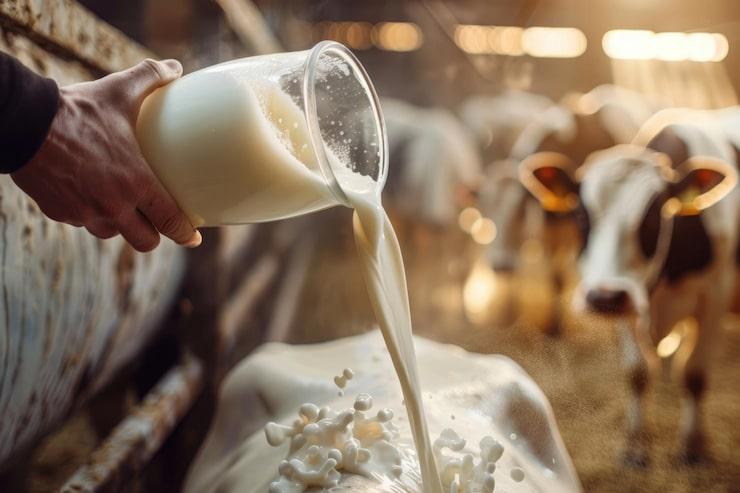
Farmer's market, Saturday, barely past sunrise. A hand-lettered sign says "raw milk, straight from the cow," and somebody picks up the jar, turns it over like the glass itself is going to explain the whole thing. Then the question slips out, half under their breath — is this even legal? Safe? Why's it nearly double what the grocery store charges for the same amount? Texas raw milk has turned into one of those topics that doesn't explode into arguments so much as simmer politely over coffee, everyone trying to sound reasonable while quietly holding pretty firm opinions.
Texas allows more room for raw milk sales than a lot of states do, and that's probably why the conversation keeps circling back around here specifically. Not banned, not exactly mainstream either. Somewhere in between, which is where most interesting food debates tend to live. Figuring out what actually separates raw milk from pasteurized — past the Facebook comment sections — takes a little digging. Worth it, though, especially for anyone standing in that parking lot trying to decide whether to spend the extra money.
Heat it up, hold that temperature for a set stretch, cool it back down. That's the whole process, more or less. It got developed because raw dairy used to cause real outbreaks — a different era of sanitation, a different era of farming, before anyone had modern refrigeration or testing standards.
Pasteurization kills bacteria. Mostly the harmful kind, though it's not a perfectly surgical process — some naturally occurring enzymes get knocked out along the way too, and a portion of certain heat-sensitive nutrients take a hit. Not obliterated. Just reduced. That's the trade everyone's making without necessarily thinking about it: a safer product in exchange for a slightly altered nutritional makeup.
Skip that heating step entirely and milk keeps its native enzymes, a fuller mix of naturally occurring bacteria (assuming a clean operation), and — depending who's pouring the glass — a flavor a lot of people describe as fuller. Grassier, even, particularly if the herd's pasture-raised, which plenty of small Texas dairies lean on pretty hard as a selling point.
People who prefer raw milk often talk about better digestibility, especially folks who've had trouble tolerating regular milk for years. The lactase enzymes still present in raw milk might help with that somewhat. Might. The research here isn't settled, not even close, and anyone claiming otherwise is probably overselling it a bit.
This part deserves more than a passing mention, honestly. Raw milk carries a real, documented risk of harboring pathogens — E. coli, Listeria, Salmonella, Campylobacter, the whole unpleasant list. Pasteurization exists specifically to wipe those out. Public health agencies, the CDC included, have flagged raw milk repeatedly as a higher-risk product, particularly dangerous territory for kids, pregnant women, older adults, and anyone whose immune system isn't operating at full strength.
That's not the same as saying every jar on every shelf is a ticking time bomb. Small dairies that test rigorously and handle milk carefully cut that risk down considerably. But cutting risk isn't erasing it, and that distinction gets lost way too often in the online back-and-forth. Anyone buying Texas raw milk should be asking real questions — how often does the farm test, what do the herd health records look like, how's the milk actually handled from cow to jar. Not just trusting a nice label and a friendly farmer's smile.
State law here permits direct farm sales of raw milk, along with some limited retail options too, putting Texas in a smaller group of states compared to places where raw milk sits either heavily restricted or flat-out banned for retail. That legal breathing room let a small, fairly devoted market grow up around it — mostly small family operations, not massive commercial dairies chasing volume.
Ever notice how these choices tend to cluster together? Someone who trusts a particular raw milk farm often ends up buying other minimally processed stuff from that same web of local producers — free range eggs, grass-fed butter, honey from three counties over, that kind of thing. Raw milk rarely stands alone. It's usually one piece of a bigger relationship somebody's built with how their food actually gets to them.
Depends entirely what's being weighed. Safety, shelf life, predictable consistency — pasteurized milk takes those categories without much of a fight. Flavor complexity, a broader enzyme and nutrient profile, a tighter connection to where the milk actually came from — raw milk holds its own there, assuming it's coming from a farm that treats hygiene like it actually matters.
Neither side wins outright, and pretending this is simple does a disservice to a genuinely complicated choice. Families weighing it should look closely at the specific farm, understand the local legal landscape, and be honest about their own risk tolerance — especially where kids or older relatives are involved. Strange, how something as ordinary as milk ends up carrying this much weight once anyone actually stops to look.