English
 Arabic
 French
 Spanish
 Portuguese
 Deutsch
 Turkish
 Dutch
Dutch
 Italiano
 Russian
 Romaian
 Portuguese (Brazil)
 Greek
Greek
Retinol Market: Rising Skincare Awareness Fuels Demand for High-Performance Retinol
Other |
2026-08-12 09:47:33
 Advertise With Us
 About Us
 Terms And Conditions
 Privacy Policy
Mostra tutti i risultati
Privacy Policy
Mostra tutti i risultati

Passa a Pro
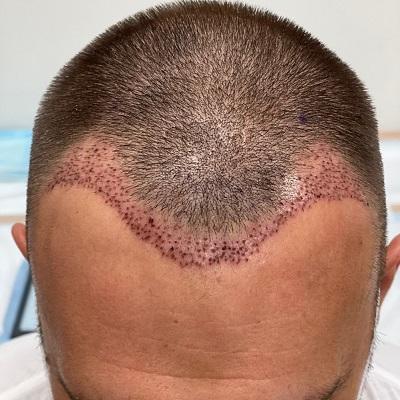
Hair is an important part of personal appearance, and noticeable thinning can affect confidence and everyday styling choices. Women may experience hair loss differently from men, with thinning often appearing across the top of the scalp, around the hairline, or in specific areas. Because female hair loss can have many possible causes, identifying the reason for thinning is an important first step.
For women with certain types of permanent hair loss, Hair Transplant in Dubai can be a potential option for restoring density in carefully selected areas. Modern hair restoration focuses on using healthy follicles from a suitable donor area and placing them where additional coverage is needed.
The aim is not simply to add as many hairs as possible. A successful approach should consider natural density, facial proportions, existing hair, donor availability, and the possibility of future hair changes.
Female hair thinning can occur for many reasons. Genetics, hormonal changes, nutritional deficiencies, stress, certain medical conditions, scalp problems, and medications may all contribute to hair loss.
Some women notice gradual thinning across the crown and top of the scalp, while others experience a more defined change around the frontal hairline. In some cases, hair loss can be temporary and may improve once the underlying cause is addressed.
This is why an assessment before transplantation is important. A transplant is generally considered for areas where hair loss is permanent and where sufficient donor follicles are available.
Yes, selected women can be candidates for hair transplantation. However, suitability depends on the pattern and cause of hair loss.
Women with a clearly defined area of permanent thinning and a healthy donor supply may benefit from transplantation. On the other hand, women experiencing widespread or diffuse thinning may require additional evaluation because the donor area can also have reduced density.
The objective is to determine whether transplanted follicles can provide meaningful improvement without unnecessarily using limited donor hair.
The donor area plays an important role in hair restoration. Healthy follicles are usually taken from areas where hair growth is stronger and more resistant to common patterns of hair loss.
Before treatment, donor density and follicle quality can be assessed. The available supply should be managed carefully because there is a finite number of follicles that can be safely harvested.
A thoughtful treatment plan considers both current hair loss and possible future changes.
Hairline design is particularly important for women because even a small change in the frontal region can affect the overall appearance of the face.
A natural-looking hairline should not appear perfectly straight or artificially dense. Fine follicles can be used toward the front, with greater density gradually developing behind them.
The shape of the hairline should complement facial proportions and existing hair growth.
Different techniques may be considered depending on individual needs.
Follicular Unit Extraction, or FUE, involves collecting individual follicular units from the donor area. The grafts are then prepared and placed into areas requiring additional density.
Because follicles are extracted individually, there is no need to remove a continuous strip of scalp.
Direct Hair Implantation, commonly called DHI, involves placing prepared follicles into the recipient area using a specialized implantation instrument.
This approach may allow detailed control over follicle placement and direction.
Follicular Unit Transplantation, or FUT, involves removing a strip of scalp containing hair follicles before the grafts are separated and transplanted.
The appropriate technique depends on the patient's hair characteristics, donor supply, treatment goals, and professional assessment.
The purpose of transplantation is not necessarily to create maximum density everywhere. Strategic placement can create the appearance of fuller hair while conserving donor follicles.
For women with thinning hair, grafts may be distributed carefully across areas where reduced density is most noticeable.
The direction, angle, and spacing of transplanted follicles should also blend with existing hair.
Recovery varies from person to person. Temporary redness, swelling, sensitivity, or small crusts may occur around treated areas.
Patients should handle the scalp gently and follow all post-treatment instructions. Washing, sleeping positions, exercise, and scalp-care recommendations may be adjusted during the early healing period.
It is important not to judge the final result immediately after treatment.
One of the most important things to understand about hair transplantation is that transplanted hairs may temporarily shed after treatment.
This can be part of the normal growth cycle. The follicle can remain within the scalp even when the visible hair shaft falls out.
New hair growth develops gradually as the follicles enter active growth phases.
Hair restoration is a gradual process. New hairs may initially appear fine and become thicker as they mature.
The final outcome can take many months to develop. Patience is therefore essential during the recovery and growth stages.
Comparing progress with photographs taken at different stages can provide a more realistic understanding of gradual improvement.
A transplant restores follicles to selected areas, but it does not necessarily prevent future thinning of untreated hair.
Depending on the cause of hair loss, additional hair-care or medical approaches may be discussed during consultation. Protecting existing hair can be an important part of a long-term restoration strategy.
Healthy scalp care, balanced nutrition, gentle styling, and professional monitoring can also support overall hair health.
Women considering a hair transplant should think about several factors before making a decision:
Understanding these factors can help create realistic expectations.
No two women's hair-loss patterns are exactly the same. A treatment plan should therefore be individualized rather than based on a standard graft number or fixed hairline design.
The amount of donor hair, the location of thinning, facial proportions, and existing density all influence the final strategy.
A personalized approach can also help preserve donor follicles for potential future needs.
Hair thinning can be frustrating, but women with suitable patterns of permanent hair loss may have effective restoration options. Hair Transplant in Dubai can provide long-term follicular restoration when carefully selected and properly planned. Understanding the cause of hair loss, evaluating donor availability, choosing an appropriate technique, and maintaining realistic expectations are all important parts of the process.
Tajmeels Clinic can help women explore personalized hair restoration options based on their individual hair-loss concerns, scalp characteristics, and aesthetic goals. With thoughtful planning and patience throughout recovery, hair transplantation can help create a fuller, more balanced, and natural-looking appearance.