English
 Arabic
 French
 Spanish
 Portuguese
 Deutsch
 Turkish
 Dutch
Dutch
 Italiano
 Russian
 Romaian
 Portuguese (Brazil)
 Greek
Greek
(Unlocking the World of) Why Has Nobody Told Me This Before? by Julie Smith
Dance |
2026-06-22 01:02:25
 Advertise With Us
 About Us
 Terms And Conditions
 Política de Privacidade
Ver Todos
Política de Privacidade
Ver Todos

Atualize para o Pro
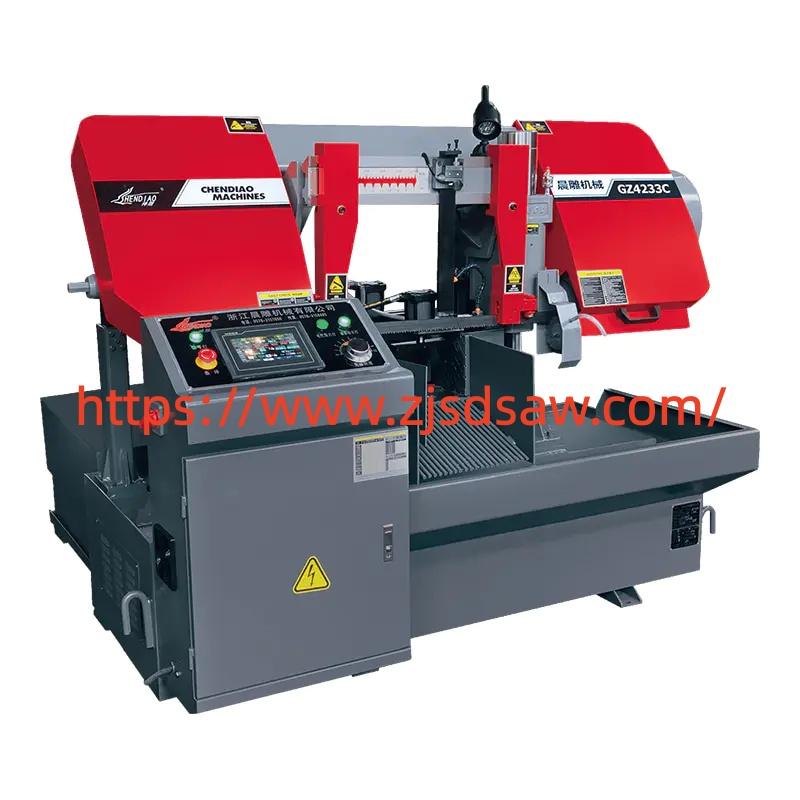
Horizontal Metal Cutting Band Saw Machine selection becomes easier when buyers begin with the actual production situation rather than focusing only on a specification sheet. Different workshops process different profiles, bars, tubes, and structural materials, while order quantities and daily schedules can vary considerably. A suitable setup should correspond with material dimensions, required lengths, batch frequency, feeding arrangements, operator involvement, and available workshop space. Chendiao provides different equipment configurations for industrial applications, including automatic feeding systems, programmable controls, hydraulic clamping, and adjustable processing functions.
The first consideration is the size and shape of the stock handled in daily work. Buyers should record common round diameters, rectangular dimensions, tube sizes, and material lengths. It is also useful to identify the largest workpiece that may occasionally enter production. This information can help narrow the appropriate capacity range and avoid selecting equipment based only on routine jobs.
Production quantity is another important factor. A workshop handling occasional orders may place greater value on flexible setup and convenient manual adjustment. A facility processing repeated batches may benefit from automatic feeding, programmable quantities, and stored processing parameters. Chendiao has models that combine automatic feeding with programmable control, allowing users to set processing data through a digital interface. One example provides automatic material feeding, automatic processing, PLC control, and linear scale positioning with a stated positioning error of no more than 0.2 mm.
Material movement deserves careful attention because it can influence the rhythm of the entire workshop. Buyers should review how stock enters the equipment, how it is positioned, and how the finished pieces are removed. Automatic indexing can reduce repeated measuring and repositioning during batch work. The appropriate feeding method depends on material length, weight, quantity, and the available space around the equipment.
Clamping is equally important. A workpiece needs stable support during processing, particularly when profiles have uneven surfaces or different cross sections. Hydraulic clamping can provide controlled holding pressure and can be incorporated into automated production cycles. Buyers should ask whether the proposed arrangement matches their common material shapes and whether additional support components are needed for longer stock.
Blade settings should also correspond with the materials being processed. Different alloys and section sizes may require different speeds, tooth configurations, and feed conditions. Some industrial equipment provides several speed settings, while other configurations offer stepless adjustment. A Chendiao BS 280G model, for example, provides two blade speeds, hydraulic descent, coolant circulation, and different capacity figures according to the processing angle. These functions show why buyers should compare the actual production range rather than selecting equipment from one specification alone.
Cooling and chip removal can influence daily operating routines as well. A coolant system can help manage heat and lubrication during processing, while suitable chip removal arrangements can make cleaning more convenient. Buyers should also consider how easily operators can reach coolant tanks, guides, blades, and other service areas. Simple maintenance access can be useful when equipment is expected to operate regularly.
Workshop layout should not be overlooked. Before placing an order, buyers can measure the installation area, material loading route, electrical supply, operator position, and space required for supporting rollers or storage racks. Long stock may need additional support, while heavy sections can require appropriate loading equipment. Chendiao also provides configurable material rack options for different stock types and workshop arrangements.
Control functions should match the production routine. A digital interface can make recurring settings easier to manage, while programmable functions may reduce repeated manual input. Buyers should ask whether the control system supports the number of jobs they normally process and whether operators can quickly adjust settings when material types change.
Safety and service conditions deserve equal attention. Emergency stop functions, protective guarding, interlocks, blade monitoring, and appropriate operating procedures should be reviewed before purchase. Buyers can also ask about spare parts, installation guidance, training, and maintenance support. These details can affect how smoothly new equipment becomes part of an existing workshop.
Chendiao works with metal processing applications and provides equipment configurations that can be considered according to material dimensions, production volume, feeding requirements, and workshop conditions. The company states that its manufacturing operation includes a 12,000 square meter factory and supports customized sawing equipment for specific applications.
For buyers comparing options, the practical approach is to prepare material sizes, expected quantities, required lengths, preferred feeding methods, available floor space, and operating conditions before discussing a configuration with the manufacturer. This gives both sides a clearer basis for equipment selection and helps connect technical specifications with actual production requirements. Product categories and available solutions from Chendiao can be reviewed at https://www.zjsdsaw.com/product/ as a convenient starting point for comparing equipment suited to different workshop applications.