English
 Arabic
 French
 Spanish
 Portuguese
 Deutsch
 Turkish
 Dutch
Dutch
 Italiano
 Russian
 Romaian
 Portuguese (Brazil)
 Greek
Greek
Understanding Insurance Options Accepted at Enfield Royal Clinic Care
Health |
2026-05-19 07:26:01
 Advertise With Us
 About Us
 Terms And Conditions
 سياسة الخصوصية
عرض كل النتائج
سياسة الخصوصية
عرض كل النتائج

ترقية الحساب
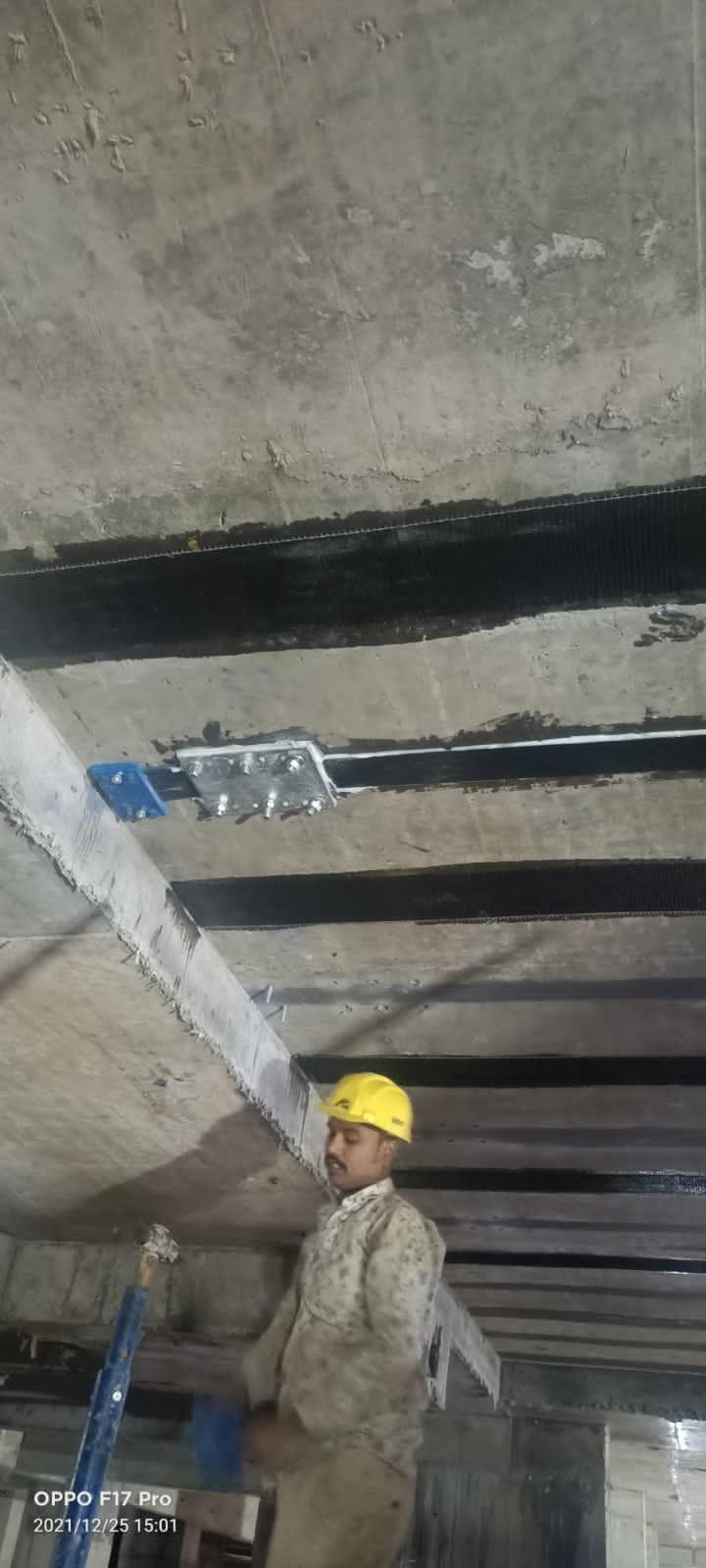
Structural damage can develop gradually, often beginning with visible cracks, concrete spalling, exposed reinforcement, water seepage, corrosion, or unusual deflection. Ignoring these warning signs can allow deterioration to spread and eventually affect the strength, durability, and serviceability of a structure. Professional structural repair services help identify the underlying causes and restore damaged structural elements through suitable engineering methods, quality materials, controlled execution, and appropriate protection against future deterioration.
Structural repair services involve the assessment, restoration, and protection of damaged structural components such as beams, columns, slabs, foundations, walls, and other reinforced concrete members. The objective is not simply to improve appearance, but to restore structural performance and durability. Depending on the condition, repairs may involve concrete restoration, crack treatment, reinforcement corrosion control, strengthening, jacketing, injection systems, protective coatings, or other engineered interventions.
Buildings and infrastructure are exposed to several factors that gradually reduce structural performance. Ageing concrete, reinforcement corrosion, water penetration, carbonation, chemical exposure, excessive loading, construction defects, poor workmanship, environmental conditions, and inadequate maintenance can contribute to deterioration. Structural repair contractors first need to understand why damage occurred before selecting a repair method. Treating only the visible symptom without addressing the underlying cause can result in recurring cracks, corrosion, leakage, or concrete deterioration.
Several warning signs can indicate that professional assessment is required. These include widening cracks in beams or columns, concrete pieces falling from slabs, exposed reinforcement, rust staining, honeycombing, damp structural members, unusual deflection, damaged concrete surfaces, and deterioration around reinforcement. Not every crack represents an immediate structural danger, but unexplained or progressive damage should not be ignored. A qualified engineering assessment can determine whether the problem requires maintenance, repair, strengthening, or comprehensive rehabilitation.
A successful repair begins with understanding the existing condition of the structure. Structural repair contractors may visually inspect damaged areas, review available drawings, examine previous repair history, and evaluate environmental exposure. Where necessary, suitable testing and investigation can help determine concrete condition, reinforcement deterioration, cracking, or other defects. The collected information supports an appropriate repair strategy rather than relying on a standard treatment for every building or structural element.
Concrete repair becomes necessary when concrete has cracked, spalled, delaminated, deteriorated, or lost its protective cover over reinforcement. Damaged concrete is generally removed carefully until a sound substrate is reached, followed by cleaning and preparation of the affected area. Depending on the repair requirements, compatible repair mortar, polymer-modified materials, micro-concrete, or other suitable systems may be selected. Proper surface preparation, bonding, placement, curing, and finishing are essential for achieving durable results.
Reinforcement corrosion is one of the major causes of deterioration in reinforced concrete structures. Water, carbonation, chlorides, and aggressive environmental conditions can reduce the protection around embedded steel and initiate corrosion. As reinforcement corrodes, it expands and can cause cracking, delamination, and concrete spalling. Effective repair therefore needs to address both damaged concrete and the corrosion mechanism. Depending on project conditions, reinforcement cleaning, corrosion protection, protective systems, or specialised corrosion-control techniques may be considered.
Cracks require careful evaluation because their location, width, depth, movement, and cause influence the appropriate treatment. Some cracks may be superficial, while others can indicate structural distress, shrinkage, settlement, corrosion, or excessive loading. Structural repair contractors should determine the reason for cracking before choosing an injection, sealing, routing, filling, or strengthening solution. Epoxy injection may be suitable for certain stable structural cracks, whereas moving or moisture-related cracks may require a different repair approach.
Repair and strengthening are related but different requirements. Repair primarily addresses deterioration or damage, while strengthening may be necessary when an element needs additional load-carrying capacity or improved structural performance. Changes in building usage, increased loads, ageing, design deficiencies, damage, or updated requirements can create a need for strengthening. Depending on engineering assessment, solutions may include fibre-reinforced systems, jacketing, steel strengthening, additional reinforcement, or other structural modification techniques.
Carbon fibre reinforced polymer systems can be used for strengthening selected concrete members where additional capacity or performance improvement is required. Carbon fibre wrapping may be considered for columns, beams, slabs, and other suitable elements following engineering evaluation. The system is lightweight and can provide strengthening without significantly increasing member dimensions. However, carbon fibre should not be treated as a universal solution. Proper design, substrate preparation, fibre orientation, bonding, detailing, and installation are essential.
Micro-concrete jacketing can be used when damaged or deficient structural members require restoration and strengthening. The method generally involves preparing the existing member, installing required reinforcement or detailing, creating suitable formwork, and placing flowable micro-concrete around the member. This technique can be useful for columns and other structural elements where additional section capacity or concrete restoration is required. Its effectiveness depends on engineering design, existing member condition, reinforcement detailing, material compatibility, and execution quality.
Guniting and shotcreting are spray-applied concrete or mortar techniques used for repairing and strengthening selected deteriorated surfaces and structural elements. They can be useful where conventional concrete placement is difficult, particularly on large surfaces, vertical members, or areas with restricted access. The substrate must be properly prepared before application, and thickness, reinforcement, bonding, curing, and surface finish must be controlled. The selected system should always correspond to the structural condition and project requirements.
Water infiltration can accelerate deterioration by promoting reinforcement corrosion, concrete damage, staining, biological growth, and repeated wetting and drying. For this reason, structural repairs should consider the source of moisture rather than treating damaged concrete alone. Waterproofing, joint treatment, protective coatings, drainage improvements, and crack sealing may form part of a broader rehabilitation strategy. Preventing water from reaching vulnerable areas can significantly support the long-term durability of repaired structural elements.
Industrial buildings experience demanding operating conditions that can accelerate deterioration. Heavy equipment, vibration, chemical exposure, high temperatures, moisture, production processes, and increased loading can affect concrete structures over time. Structural repair contractors working in industrial environments need to understand operational constraints as well as technical requirements. Repair planning should consider access, safety, production schedules, shutdown limitations, material compatibility, and work sequencing so that necessary repairs can be completed with controlled disruption to ongoing operations.
Commercial buildings may develop structural deterioration because of ageing, water ingress, corrosion, renovation activities, increased occupancy loads, or inadequate maintenance. Repairs may involve damaged beams, columns, slabs, balconies, parking structures, terraces, or other concrete components. A professional approach begins with identifying the affected areas and determining whether the problem is isolated or widespread. Repair planning should then focus on restoring performance while considering occupant safety, access limitations, business continuity, and the long-term protection of the structure.
Ageing structures require regular inspection because deterioration can remain hidden until significant damage has developed. Concrete carbonation, reinforcement corrosion, moisture penetration, fatigue, repeated loading, and environmental exposure can gradually reduce durability. Engineered structural restoration focuses on identifying these deterioration mechanisms and selecting repair measures suited to the existing structure. Rather than replacing an entire building or infrastructure asset, properly designed repair and rehabilitation can help extend service life where the existing structure remains suitable for continued use.
Choosing structural repair contractors should involve more than comparing quotations. Building owners should evaluate technical experience, previous project work, engineering capability, safety practices, quality-control procedures, repair methodology, material selection, and ability to work within operational constraints. Contractors should be able to explain why a particular repair method is recommended and what problem it addresses. Reviewing relevant experience with similar structures can also help clients assess whether the contractor is suitable for the project.
Every damaged structure has different exposure conditions, construction details, loading requirements, deterioration mechanisms, and accessibility challenges. Consequently, a repair method that works effectively on one building may not be appropriate for another. Professional structural repair services should therefore be based on the actual condition of the structure. Site observations, engineering evaluation, damage mapping, testing where required, and project requirements help develop a repair strategy that addresses the specific causes and expected performance.
Repair quality depends heavily on execution. Even a technically appropriate repair system can perform poorly if surface preparation, material mixing, application, curing, bonding, reinforcement treatment, or environmental controls are inadequate. Quality control should therefore continue throughout the repair process rather than only after completion. Materials should be suitable for the specified application, workmanship should be monitored, and completed repairs should be inspected. Proper documentation also helps establish consistency and supports future maintenance decisions.
Structural repair work can involve working at height, restricted access, heavy equipment, damaged concrete, exposed reinforcement, active industrial environments, and other hazards. Contractors must therefore plan work sequences carefully and establish appropriate safety controls. For operational buildings, repairs may also need to be completed in stages to reduce downtime. An experienced contractor can coordinate access, barricading, temporary protection, work scheduling, and repair activities to maintain safety while limiting unnecessary disruption to occupants or operations.
Structural repair requires practical understanding of materials, construction conditions, deterioration mechanisms, access limitations, and site execution. Experienced contractors can identify challenges that may not be obvious during an initial visual inspection and adapt the methodology when site conditions change. For organisations comparing structural repair contractors, evaluating technical capability and relevant project experience can provide greater confidence than selecting a contractor solely on the lowest initial quotation. Long-term performance should remain a primary consideration. When structural deterioration is identified, choosing experienced structural repair contractors is essential for achieving safe, durable, and technically appropriate results. The right team can assess the damage, identify its underlying cause, and recommend suitable repair or strengthening methods based on the structure’s condition. For reliable structural repair services, Gubbi Civil Engineers Limited can be considered for professional solutions focused on restoring structural performance, improving durability, and extending the service life of existing structures.
Complete reconstruction is not always necessary when a structure shows deterioration. Depending on the structural assessment, carefully planned repair and strengthening can restore performance and extend service life while avoiding the disruption associated with replacement. The decision should consider structural condition, remaining service life, repair feasibility, future loading, safety requirements, operational needs, and overall project economics. Professional assessment helps owners determine whether repair, strengthening, rehabilitation, or reconstruction is the most appropriate solution.
Structural deterioration should be treated as an engineering concern rather than simply a cosmetic problem. Cracks, corrosion, spalling, water ingress, weakened members, and other defects can progress when their causes remain unresolved. Professional structural repair services combine inspection, diagnosis, suitable repair materials, strengthening techniques, quality execution, and protective measures. Selecting experienced structural repair contractors can help building and infrastructure owners restore structural performance, improve durability, reduce future deterioration, and extend the useful life of existing assets.