English
 Arabic
 French
 Spanish
 Portuguese
 Deutsch
 Turkish
 Dutch
Dutch
 Italiano
 Russian
 Romaian
 Portuguese (Brazil)
 Greek
Greek
Homestay in Lonavala – A Comfortable Stay Amidst Nature
Other |
2026-08-13 06:21:01
 Advertise With Us
 About Us
 Terms And Conditions
 سياسة الخصوصية
عرض كل النتائج
سياسة الخصوصية
عرض كل النتائج

ترقية الحساب
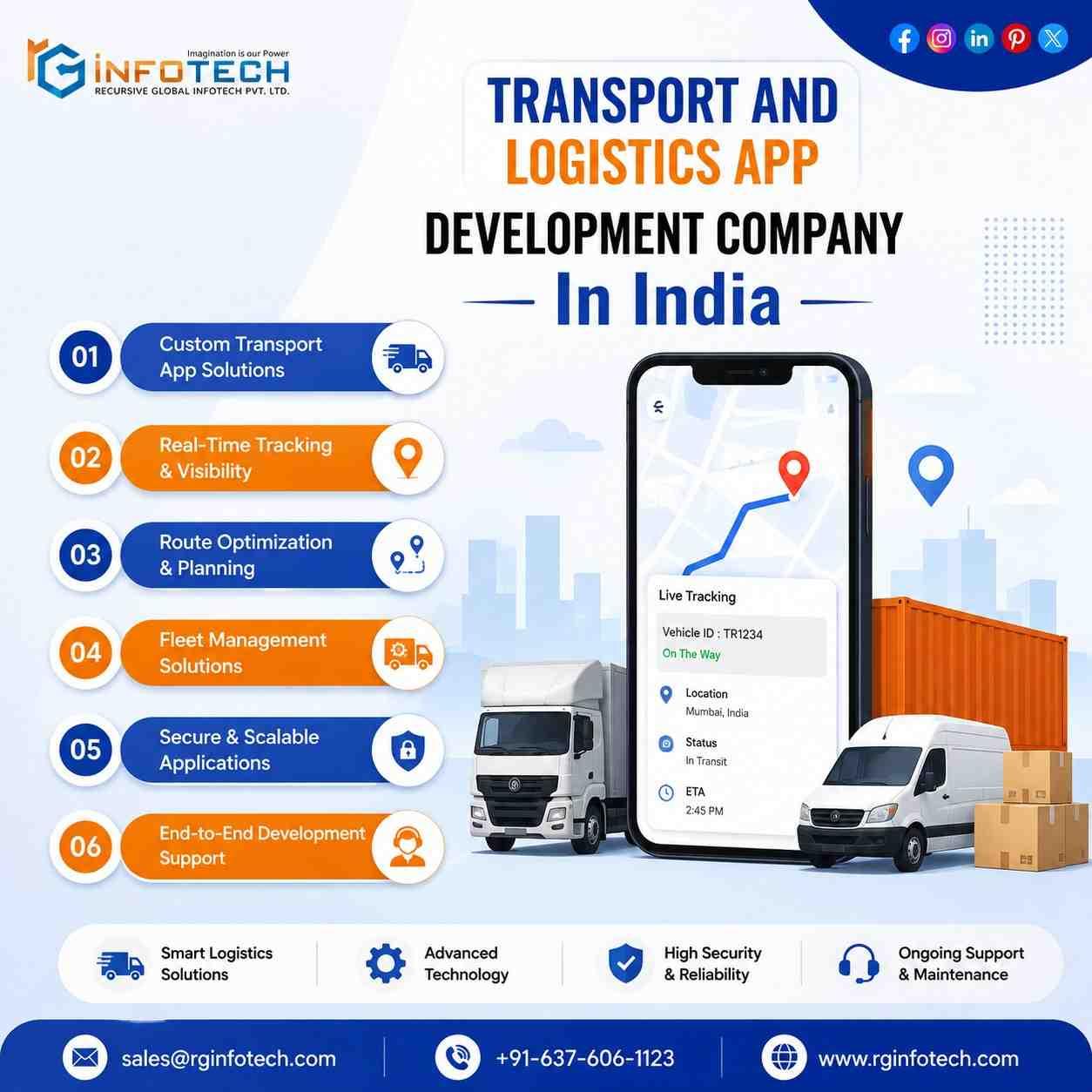
Choosing a development partner for your transport application is an important business decision. A well-built transport app can help you manage fleets, track vehicles, optimize routes, improve driver productivity, automate communication, and deliver better customer experiences. However, choosing the wrong technology partner can result in unexpected costs, security problems, delays, and an application that fails to meet your operational requirements.
Before signing a contract, businesses should carefully evaluate a potential development partner. Asking the right questions can help you understand their expertise, development process, pricing, communication, security practices, and long-term support.
Here are 10 critical questions to ask before hiring a transport app development partner.
Start by asking about the company's experience in transportation, logistics, fleet management, delivery, or mobility applications.
A Transport App Development Company with relevant experience is more likely to understand real-world challenges such as vehicle tracking, driver assignment, route planning, fuel management, trip scheduling, and fleet monitoring.
Ask for examples of previous projects and case studies. Look beyond the number of applications developed and evaluate whether the company has worked with features and workflows similar to your requirements.
Relevant experience can reduce the learning curve and help the team identify potential challenges earlier in the project.
The technology stack has a direct impact on your application's performance, scalability, security, and maintenance.
Ask the development team which technologies they recommend for the mobile application, backend, database, APIs, cloud infrastructure, and third-party integrations.
Depending on your requirements, a project might use technologies such as Flutter or React Native for cross-platform development, Node.js for backend services, PostgreSQL or MongoDB for data management, and cloud infrastructure for scalability.
The important point is not to select technologies simply because they are popular. Your development partner should explain why the proposed stack is appropriate for your specific transport application.
Real-time tracking is often a core requirement for transport and fleet applications.
Ask how the development team will handle GPS data, location updates, map integration, background location tracking, battery optimization, and location accuracy.
You should also understand how frequently location data will be updated and how the system will handle poor network connectivity.
A well-designed tracking system should provide useful location information without unnecessarily consuming device resources.
Your fleet and user base may grow significantly after launch. The application should therefore be capable of handling increasing amounts of data and traffic.
Ask the development team how they will design the backend and infrastructure for future growth.
Discuss cloud deployment, database optimization, caching, load balancing, modular architecture, and monitoring.
A scalable architecture can help you add more vehicles, drivers, customers, regions, and features without rebuilding the entire application.
Transport applications may process sensitive information, including customer details, driver records, payment information, business data, and real-time vehicle locations.
Ask the development company how it will protect this information.
Important security measures may include:
Secure authentication
Role-based access control
Data encryption
API security
Secure payment integration
Regular vulnerability testing
Secure cloud configuration
Backup and recovery procedures
Security should be included throughout the development lifecycle rather than added just before launch.
Transport applications often depend on external services for maps, navigation, payments, SMS, email, analytics, cloud services, and vehicle or IoT data.
Ask whether the development team has experience integrating these types of APIs.
You should also ask how the application will handle API failures, service interruptions, authentication, version changes, and integration maintenance.
An experienced Transport App Development Company should be able to design integrations that are reliable and maintainable as external services evolve.
Never evaluate a development proposal based only on the total price.
Ask for a detailed breakdown of what is included in the quoted cost. This may cover:
Business analysis
UI/UX design
Mobile application development
Backend development
Admin dashboard
API integrations
Testing
Deployment
Documentation
Maintenance
Also ask about potential additional costs for third-party services, hosting, app store accounts, new features, or post-launch changes.
A transparent pricing structure can prevent unexpected expenses later.
Understanding the development methodology can help you evaluate how efficiently the project will be managed.
Ask whether the team follows Agile, Scrum, or another development methodology. Find out how requirements are documented, how milestones are defined, and how feedback is incorporated.
Testing is equally important. Ask whether the company conducts functional testing, performance testing, security testing, usability testing, API testing, and device compatibility testing.
A structured quality assurance process can help identify problems before they affect real users.
Good communication is essential for a successful software project.
Ask who your primary point of contact will be and how often you will receive project updates.
Discuss the communication channels, meeting schedules, reporting methods, and procedures for approving design or feature changes.
You should also clarify how the team handles urgent issues and requirement changes during development.
Clear communication can prevent misunderstandings and ensure that the final application stays aligned with your business objectives.
App development does not end when your application goes live.
Operating systems, APIs, security standards, devices, and user expectations continue to change. Your application may require bug fixes, performance improvements, security updates, feature enhancements, and technical monitoring.
Ask the provider about its post-launch support and maintenance services.
Find out:
What support packages are available?
How quickly are critical issues addressed?
Is ongoing monitoring included?
How are updates handled?
What happens if you need new features?
How are maintenance costs calculated?
An experienced development partner should provide a clear long-term support strategy.
Beyond asking these 10 questions, carefully review the contract before starting the project.
Make sure the agreement clearly defines the project scope, deliverables, timelines, milestones, payment structure, ownership rights, source code access, confidentiality requirements, support terms, and procedures for handling scope changes.
You should also clarify who owns the application's intellectual property after the project is completed.
If possible, request a detailed project roadmap that shows the expected development stages from discovery and design through testing, deployment, and maintenance.
A transport application is a long-term digital investment. Choosing a partner based only on price can create significant risks later.
The right Transport App Development Company should demonstrate technical expertise, industry understanding, transparent communication, strong security practices, scalable architecture, and reliable post-launch support.
A good development partner should also be willing to understand your business before recommending technologies or features. Their goal should be to create a solution that solves real operational problems rather than simply delivering a predefined set of features.
Hiring a transport app development partner requires careful research and evaluation. Asking these 10 critical questions can help you understand a company's experience, technical capabilities, development process, security standards, pricing, communication, and support services.
Take time to compare multiple providers, review their portfolios, discuss your requirements in detail, and carefully evaluate the contract before signing. The right technology partner can help turn your transport concept into a scalable application that supports long-term business growth.