English
 Arabic
 French
 Spanish
 Portuguese
 Deutsch
 Turkish
 Dutch
Dutch
 Italiano
 Russian
 Romaian
 Portuguese (Brazil)
 Greek
Greek
FYP Book Everything Was Beautiful and Nothing Hurt by Ben Reeves
Sports |
2026-06-19 06:47:49
 Advertise With Us
 About Us
 Terms And Conditions
 Política de privacidade
Ver todos
Política de privacidade
Ver todos

Atualizar para Plus
For a manufacturing business, purchasing new machinery is rarely a simple replacement decision. The investment can influence production capacity, electricity consumption, maintenance expenses, product quality, and long-term operating costs.
For MSMEs, where capital resources may be limited, technology investment needs even more careful planning. Businesses should evaluate whether a proposed machine genuinely improves operations rather than purchasing equipment only because financial assistance may be available.
Before looking for new machinery, a business should first understand the limitations of its current production system.
Questions worth examining include:
This initial assessment provides a clearer picture of where technology upgradation can create practical value.
The purchase price is only one part of a technology investment.
Businesses should also consider installation expenses, electrical modifications, civil work, employee training, maintenance requirements, financing costs, and expected operating expenses.
At the same time, expected improvements should be estimated realistically. These may include lower power consumption, reduced maintenance, increased production capacity, or improved manufacturing efficiency.
A machine that appears expensive initially may sometimes offer better long-term economics if it significantly reduces recurring operating costs.
Energy consumption can become particularly important when a manufacturing unit expands production.
Installing additional equipment without understanding its power requirements may increase electricity expenses considerably. Businesses can therefore compare the energy performance of different technologies before finalising an investment.
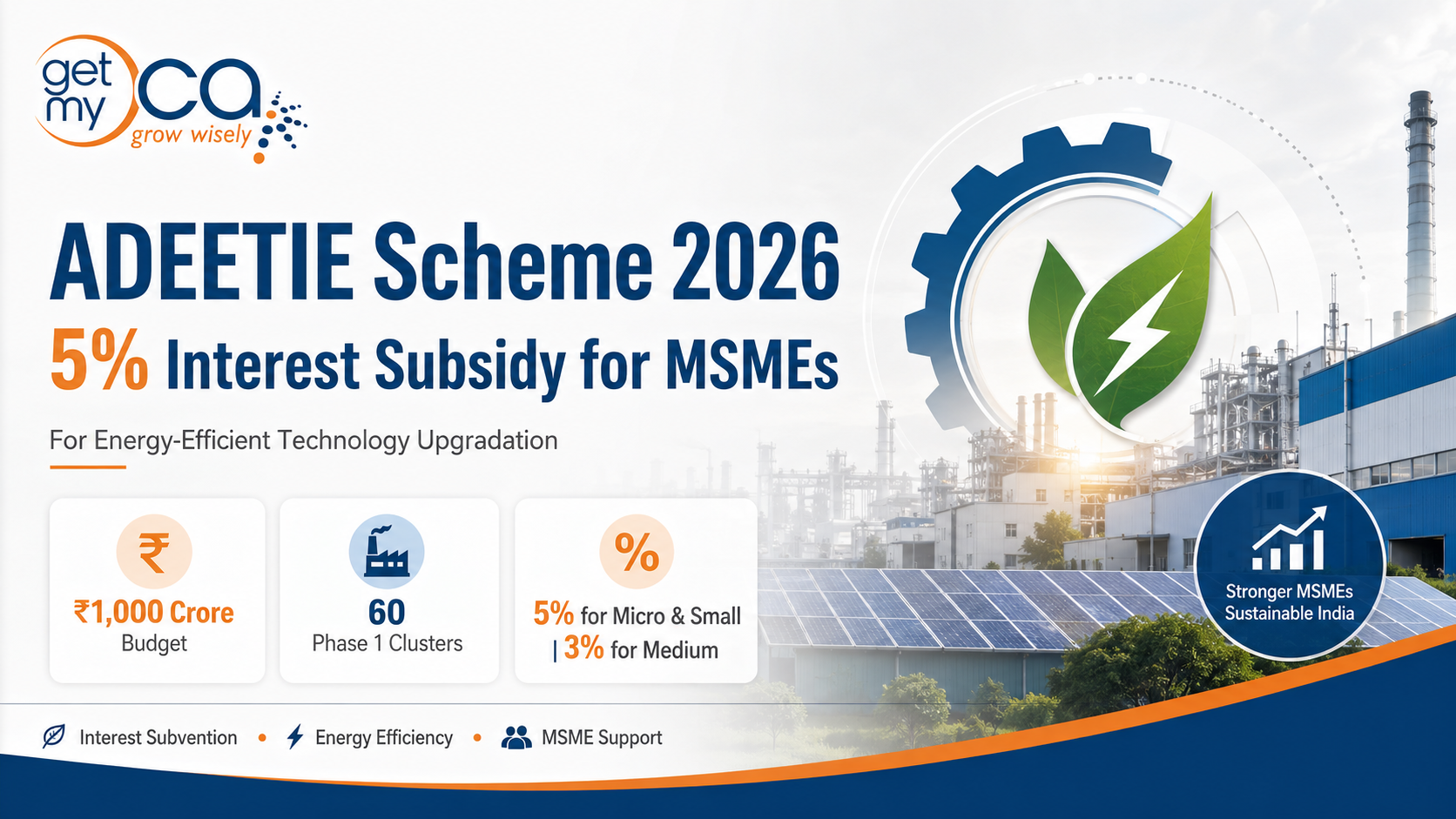
Eligible MSMEs exploring financing support for energy-efficient upgrades may also review the ADEETIE Interest Subsidy Scheme while planning their investment.
However, government support should be considered as one factor in the investment decision rather than the only reason for purchasing machinery.
The most advanced technology is not necessarily the most suitable technology.
A business should select machinery according to its production scale, workforce, available infrastructure, product requirements, and future expansion plans.
For example, purchasing highly automated machinery may not provide the expected benefit if production volumes are relatively low or if the facility lacks the supporting infrastructure required to operate it efficiently.
Technology selection should therefore be based on operational requirements rather than market trends alone.
Different industries have different reasons for upgrading their facilities.
In some sectors, businesses may primarily want to reduce energy consumption. In others, technology upgrades may be required to improve manufacturing standards, quality systems, utilities, or production environments.
Pharmaceutical manufacturing is one such example where facility and technology improvements may involve production equipment, HVAC systems, laboratories, utilities, water systems, or other manufacturing infrastructure.
Eligible pharmaceutical units evaluating such improvements may study the RPTUAS Subsidy Scheme as part of their technology-upgradation planning.
Businesses should organise relevant records before beginning a major technology investment.
Depending on the programme or financing arrangement, useful documents may include:
Maintaining organised documentation can make it easier to evaluate financial feasibility and scheme eligibility.
A government subsidy or interest-support programme can reduce part of the financial burden associated with technology upgradation, but it should not turn an unsuitable investment into a good one.
Businesses should first determine whether the proposed technology improves efficiency, productivity, quality, or compliance.
Financial support should ideally strengthen an already viable project.
Technology upgradation can help MSMEs improve production systems and manage operating costs, but successful investment requires more than simply purchasing new machinery.
Businesses should examine existing operations, calculate total project costs, compare technology options, estimate expected benefits, understand sector-specific requirements, and review available financial-support programmes before making a final decision.
A well-planned technology investment is more likely to deliver sustainable operational benefits over the long term.