English
 Arabic
 French
 Spanish
 Portuguese
 Deutsch
 Turkish
 Dutch
Dutch
 Italiano
 Russian
 Romaian
 Portuguese (Brazil)
 Greek
Greek
The Role of a Digital Marketing Company in Noida in Business Expansion
Other |
2026-06-24 06:49:38
 Advertise With Us
 About Us
 Terms And Conditions
 Política de Privacidade
Ver Todos
Política de Privacidade
Ver Todos

Atualize para o Pro
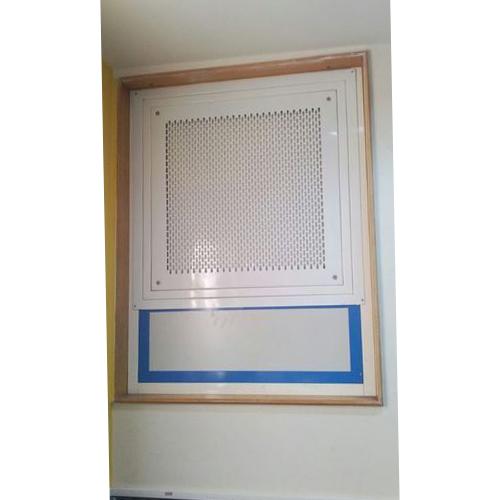
In hospitals, pharmaceutical facilities, laboratories, electronics manufacturing units, and cleanrooms, maintaining clean and controlled air is essential. Airborne particles, microorganisms, dust, and other contaminants can affect product quality, patient safety, and sensitive manufacturing processes. A Positive Pressure Module helps control this risk by supplying filtered air into a room and maintaining its pressure slightly higher than the surrounding areas.
When a room is maintained at positive pressure, air naturally moves outward through small openings whenever a door is opened or there is minor leakage. This reduces the possibility of contaminated air entering the protected space. Positive pressure systems are therefore widely used where maintaining a clean and controlled environment is important.
This blog explains what a Positive Pressure Module is, how it works, its applications, benefits, and how to select the right system for your facility.
What Is a Positive Pressure Module?
A Positive Pressure Module is a compact air handling and filtration system designed to supply clean, filtered air into a controlled environment. The module generally consists of an air intake, pre-filter, blower, HEPA filter, and suitable control components.
The blower draws surrounding air into the unit. The air first passes through a pre-filter that removes larger dust particles and then moves through a high-efficiency HEPA filter for finer particle filtration. The filtered air is supplied into the room at a controlled airflow rate.
When the amount of supplied air is greater than the air leaving the room through exhaust systems or leakage points, the room develops a positive pressure differential compared with adjacent areas.
In simple terms, the system provides clean air while helping prevent unwanted air from entering the protected space.
How Does a Positive Pressure Module Work?
The working principle of a Positive Pressure Module is based on controlled airflow and pressure differences.
First, ambient air enters the module through an intake arrangement. A pre-filter captures larger particles such as dust, fibres, and other impurities. This protects the downstream filtration and blower components.
The blower then moves the air through the filtration stages. A HEPA filter provides high-efficiency particle filtration before the air is introduced into the controlled room.
Once filtered air enters the room, the continuous supply creates a pressure level slightly higher than the surrounding area. As a result, air tends to move from the clean room toward adjacent spaces rather than entering the room.
The exact airflow, pressure differential, filtration level, and air changes required depend on the room size, application, cleanliness requirements, and applicable design standards.
Applications of Positive Pressure Modules
Positive pressure systems are useful in various industries where controlled air quality is important.
1. Operation Theatres
Operation theatres require controlled environmental conditions to minimize contamination risks during surgical procedures. Positive pressure helps reduce the entry of airborne contaminants from adjacent areas when doors are opened.
2. Pharmaceutical Manufacturing
Pharmaceutical manufacturing and packaging areas often require controlled environments to protect products from airborne contamination. Positive pressure systems can form part of a broader HVAC and contamination-control strategy.
3. Cleanrooms
Cleanrooms used for electronics, medical devices, precision manufacturing, and other sensitive processes require controlled particle levels. A Positive Pressure Module can provide filtered air and help maintain the desired pressure relationship between rooms.
4. Hospitals and Critical Care Areas
Certain hospital areas may use positive pressure systems where protecting patients or sensitive procedures from contaminants is important. The actual pressure strategy depends on the room's function and overall hospital HVAC design.
5. Laboratories
Some laboratories require controlled airflow and filtration to maintain suitable working conditions. Positive pressure may be appropriate for applications where protecting the internal environment is the primary objective.
6. Food and Packaging Industries
Food processing and packaging environments can benefit from controlled and filtered air to reduce the entry of dust and airborne contaminants into sensitive production areas.
Key Benefits of a Positive Pressure Module
A properly designed Positive Pressure Module can provide several advantages.
Controlled Air Pressure:
The system helps maintain the required pressure relationship between the protected room and surrounding areas.
Filtered Air Supply:
Multi-stage filtration can reduce airborne particles before air enters the controlled environment.
Contamination Control:
Positive pressure helps reduce the possibility of unfiltered air entering through doors, gaps, and other leakage points.
Compact Design:
Depending on the application, modular systems can be installed without requiring a complete redesign of the facility's HVAC system.
Flexible Applications:
Positive pressure modules can be used across healthcare, pharmaceutical, laboratory, electronics, and other controlled environments.
Improved Environmental Control:
When properly integrated with ventilation and air-conditioning systems, the module can contribute to maintaining consistent environmental conditions.
What to Consider When Selecting a Positive Pressure Module?
Choosing the correct module requires more than simply selecting a blower and filter. Several factors should be evaluated.
Airflow Capacity
The required airflow depends on room dimensions, occupancy, air changes, leakage, and application requirements. The module should be appropriately sized to maintain the required airflow and pressure conditions.
Filtration
Consider the required filtration efficiency and the type of filters suitable for your application. HEPA filtration is commonly used where high-efficiency particle removal is required.
Pressure Differential
The required pressure differential should be determined based on the room's purpose, surrounding areas, applicable standards, and overall HVAC design.
Construction Material
The construction material should match the operating environment. GI powder-coated construction may be suitable for many general applications, while stainless-steel construction can be preferred for environments requiring high levels of hygiene and frequent cleaning.
Monitoring and Controls
Pressure gauges, differential pressure monitoring, alarms, and suitable control systems can make it easier to monitor system performance and identify potential problems.
Maintenance and Service
Filters require periodic inspection and replacement. When selecting a supplier, consider the availability of replacement filters, technical support, maintenance services, and after-sales assistance.
Maintenance of Positive Pressure Modules
Regular maintenance is important for maintaining consistent performance. Pre-filters and HEPA filters should be inspected according to the manufacturer's recommended schedule. Filters that become excessively loaded can restrict airflow and increase the load on the blower.
Pressure readings should also be monitored regularly. Unexpected changes in pressure may indicate filter loading, airflow imbalance, leakage, or other system-related issues.
Periodic inspection of the blower, electrical components, controls, seals, and other parts can help identify problems before they affect the controlled environment.
Conclusion
A Positive Pressure Module is an important component for environments where protection against external airborne contamination is required. By supplying filtered air and maintaining a controlled pressure relationship, it can support contamination control in operation theatres, cleanrooms, pharmaceutical facilities, laboratories, and other sensitive areas.
However, achieving reliable performance depends on correct sizing, suitable filtration, proper airflow balancing, installation, monitoring, and regular maintenance. The module should also be considered as part of the facility's overall HVAC and contamination-control strategy rather than as an isolated piece of equipment.