English
 Arabic
 French
 Spanish
 Portuguese
 Deutsch
 Turkish
 Dutch
Dutch
 Italiano
 Russian
 Romaian
 Portuguese (Brazil)
 Greek
Greek
Sigmaexch Login – Everything You Need to Know About Safe Account Access
Sports |
2026-07-25 08:32:56
 Advertise With Us
 About Us
 Terms And Conditions
 Privacy Policy
Mostra tutti i risultati
Privacy Policy
Mostra tutti i risultati

Passa a Pro
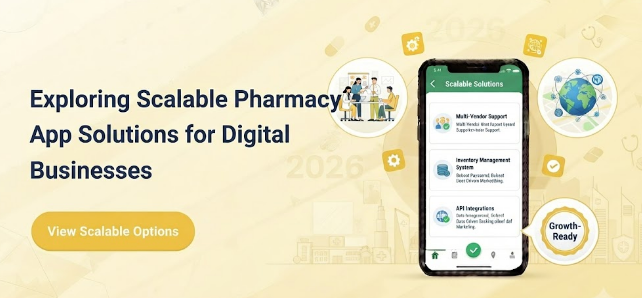
Digital transformation is changing how healthcare businesses connect with customers, manage products, process orders, and deliver essential healthcare items. Consumers increasingly expect convenient digital experiences that allow them to search for products, place orders, make payments, and receive doorstep deliveries without unnecessary delays. This shift has created significant opportunities for entrepreneurs and established healthcare businesses to build technology-driven platforms.
Schable pharmacy app solutions are helping digital businesses establish a strong foundation for entering the online healthcare market. Instead of creating a basic ordering application, businesses can adopt a scalable platform designed to support customers, pharmacies, delivery partners, and administrators through interconnected digital interfaces. With the right technology, businesses can expand their operations, accommodate increasing demand, and introduce new capabilities as their requirements evolve.
Scalable pharmacy app solutions are digital platforms designed to support healthcare and pharmacy-related businesses as they grow. Scalability means that the application can handle increasing numbers of users, products, orders, transactions, pharmacy partners, and delivery operations without requiring a complete redevelopment of the platform.
A scalable solution can be developed as a single-pharmacy platform or as a multi-vendor marketplace where multiple pharmacies can list products and fulfill customer orders. The exact structure depends on the business model, target market, operational requirements, and applicable regulations.
The platform typically connects several types of users. Customers can browse products, search for medicines or healthcare items, upload prescriptions when required, place orders, make payments, and track deliveries.
Pharmacy partners can manage product catalogs, inventory, orders, pricing, prescriptions, and fulfillment activities. Delivery partners can receive assigned orders, navigate to pickup and delivery locations, update order statuses, and monitor their earnings.
An administrator manages the overall ecosystem through a centralized dashboard. This connected structure allows different stakeholders to interact while keeping important business processes organized.

Scalability is particularly important for businesses that plan to expand after launching their initial platform. A solution that works well for a few hundred users may experience performance challenges when the number of customers and transactions increases.
As marketing activities and customer adoption increase, the platform may receive significantly more traffic and orders. A scalable architecture allows businesses to accommodate this growth more efficiently.
Digital businesses may initially serve one city or region before expanding into additional locations. A scalable platform can support geographical expansion by allowing businesses to introduce new service areas, pharmacies, delivery partners, and operational rules.
A growing marketplace may need to onboard additional pharmacies and healthcare suppliers. The platform should be capable of managing an expanding partner network without creating unnecessary administrative complexity.
Businesses may eventually want to add wellness products, healthcare services, consultation integrations, subscriptions, or other permitted offerings. A flexible technology foundation makes these future additions easier to manage.
A scalable platform should combine customer convenience with powerful business management capabilities. The following features can help create an efficient digital healthcare ecosystem.
Customers should be able to create accounts, manage personal information, save delivery addresses, view order history, and maintain relevant preferences.
A simple registration and login process can make it easier for customers to access the platform while appropriate authentication measures help protect accounts.
An efficient search system allows customers to find medicines and healthcare products quickly. Search functionality can be supported by categories, filters, product names, brands, availability, and other relevant attributes.
As product catalogs grow, an effective search experience becomes increasingly important for maintaining usability.
Where prescriptions are required, customers can upload applicable documents through the platform. Authorized pharmacy personnel can review the submitted information before processing eligible orders.
Prescription information should be handled securely and according to applicable healthcare and data protection requirements.
Pharmacy partners require a dedicated interface to manage their digital operations. They can use the dashboard to add products, update inventory, manage prices, review orders, process applicable prescriptions, and monitor business activity.
Inventory management helps businesses maintain accurate product availability. Pharmacy partners can update stock information and identify products that need replenishment.
Accurate inventory data can reduce customer frustration caused by orders being placed for unavailable products.
A scalable pharmacy platform should support reliable payment processing. Depending on the target market, businesses can integrate cards, digital wallets, online banking, and other appropriate payment methods.
Payment records, confirmations, refunds, and related transactions should be managed through secure workflows.
Order management functionality enables pharmacies and administrators to monitor the complete order lifecycle. Statuses can include confirmation, preparation, pickup, dispatch, and delivery.
Centralized order management helps reduce communication gaps and improves operational visibility.
Delivery partners can use a dedicated application to view assigned orders, access pickup and drop-off information, use navigation, update delivery status, and monitor completed deliveries.
Automated assignment mechanisms can help businesses coordinate delivery operations more efficiently.
Customers appreciate being able to see where their orders are in the fulfillment process. Real-time tracking can provide updates about order preparation, pickup, dispatch, and delivery.
Where supported, map integration can provide location-based delivery visibility.
Notifications can provide customers and business partners with timely information. Businesses can send order confirmations, delivery updates, payment alerts, prescription notifications, and relevant promotional messages.
Notifications should be designed carefully to remain useful without overwhelming users.
The administrator dashboard provides centralized control over the entire platform. Administrators can manage customers, pharmacies, delivery partners, products, orders, payments, promotions, commissions, and reports.
This centralized management system becomes increasingly valuable as the business expands.
Read more :- How to Develop a Medicine Delivery app For Startup Business?
Investing in scalable pharmacy app solutions can provide several advantages for digital healthcare businesses.
A scalable platform gives businesses a technological foundation that can support growth. Entrepreneurs can gradually increase the number of customers, pharmacies, delivery partners, and service locations.
Instead of replacing the application whenever the business expands, the existing infrastructure can be upgraded according to changing requirements.
Digital workflows can reduce manual activities associated with order processing, inventory management, delivery coordination, and reporting.
Connected systems allow pharmacies and administrators to access important information from centralized dashboards.
Customers can complete multiple steps through one platform. Searching for products, reviewing information, uploading applicable prescriptions, placing orders, making payments, and tracking deliveries can all be integrated into a single digital journey.
A properly designed platform can accommodate future changes more effectively than a rigid application. Businesses can introduce new features, integrations, and workflows without completely restructuring the core system.
Depending on the business model and applicable regulations, digital healthcare platforms can explore several revenue channels. These may include delivery charges, marketplace commissions, subscriptions, service fees, promotional placements, and other permitted models.
Diversified revenue opportunities can support long-term commercial sustainability.
Businesses entering the online healthcare sector need technology that can grow alongside their commercial objectives. Choosing scalable pharmacy app solutions allows entrepreneurs to think beyond the initial launch.
Startups can begin with essential features and gradually expand the platform as their customer base develops. This approach can help avoid investing heavily in advanced capabilities that are not immediately required.
Existing pharmacies and healthcare businesses can use a scalable platform to digitize their operations, reach additional customers, and develop new online service channels.
Entrepreneurs can build marketplaces that connect multiple pharmacies with customers. This model can create a larger product catalog and provide opportunities for geographic expansion.
As customer expectations evolve, businesses may need to introduce new payment options, integrations, analytics tools, automation capabilities, and customer engagement features. A customizable architecture can support these changes.
Businesses should evaluate several factors before investing in a digital pharmacy platform.
The technology stack should be modern, maintainable, and capable of supporting increasing traffic and transactions. Businesses should also understand how the platform handles future upgrades.
Healthcare platforms may process customer information, prescriptions, addresses, and payment-related data. Security measures should therefore be incorporated throughout the application.
Businesses should evaluate authentication, authorization, secure data handling, access controls, and other relevant safeguards.
Every business has different requirements. The solution should allow modifications to branding, workflows, features, integrations, and user interfaces.
Businesses may need integrations with payment gateways, maps, notification services, analytics platforms, and other systems. Integration flexibility can make the platform more useful as operations expand.
Post-launch support is important because digital platforms require maintenance, updates, troubleshooting, and improvements. Businesses should understand the support and maintenance options available before selecting a development partner.

The first step is to define a clear business model. Entrepreneurs should determine whether they want to operate a single-pharmacy platform, a multi-pharmacy marketplace, or a broader healthcare ecosystem.
Next, they should identify their target customers, geographical service area, revenue model, operational workflows, and essential features. Once these requirements are established, the technology architecture can be planned around current and future needs.
Testing is another critical stage. Businesses should evaluate customer registration, product search, prescription workflows, inventory synchronization, payments, order management, notifications, and delivery tracking before launch.
After deployment, analytics and customer feedback can help identify areas for improvement. Continuous optimization can ensure that the platform remains useful as customer expectations and business requirements change.
The future of digital healthcare is expected to involve greater automation, personalization, and interconnected services. Businesses may introduce artificial intelligence for customer assistance, inventory forecasting, recommendations, analytics, and operational optimization where appropriate.
Integration with telehealth, wellness services, digital health management, and other healthcare technologies can further expand the functionality of these platforms.
As technology develops, scalable pharmacy app solutions can evolve from basic ordering systems into broader digital healthcare ecosystems. Businesses that establish flexible technology foundations can be better positioned to adopt new capabilities over time.
Scalable pharmacy app solutions can provide digital healthcare businesses with the flexibility they need to launch, operate, and expand their online services. From customer ordering and prescription management to inventory control, pharmacy operations, delivery coordination, payments, notifications, and analytics, a comprehensive platform can connect the entire business ecosystem.
The key is to select a solution that combines scalability, security, customization, usability, and operational efficiency. Businesses should evaluate their current requirements while also considering future expansion, additional integrations, and changing customer expectations. By choosing the right technology foundation and working with an experienced clone app development company, entrepreneurs can build a digital healthcare platform capable of supporting sustainable long-term growth.
Scalable pharmacy app solutions are digital platforms designed to support growing numbers of customers, pharmacies, products, orders, transactions, and delivery operations without requiring a complete redevelopment of the application.
Scalability allows a business to accommodate increasing users, orders, pharmacy partners, and service locations. It can also make future feature additions and geographical expansion easier.
Yes. Depending on the platform architecture, a multi-vendor model can allow several pharmacies to register, manage products, receive applicable customer orders, and fulfill them through a centralized ecosystem.
Important features can include product search, prescription management, inventory control, pharmacy dashboards, order management, secure payments, delivery partner applications, real-time tracking, push notifications, analytics, and an admin panel.
Yes. A flexible platform can be customized with new features, integrations, workflows, branding elements, payment methods, analytics capabilities, and other functionality as the business expands.