English
 Arabic
 French
 Spanish
 Portuguese
 Deutsch
 Turkish
 Dutch
Dutch
 Italiano
 Russian
 Romaian
 Portuguese (Brazil)
 Greek
Greek
Google Stops FAQ Rich Results: What SEOs Must Know About AI Search in 2026 - Amigoways
Networking |
2026-07-09 07:21:30
 Advertise With Us
 About Us
 Terms And Conditions
 Privacy Policy
Mostra tutti i risultati
Privacy Policy
Mostra tutti i risultati

Passa a Pro
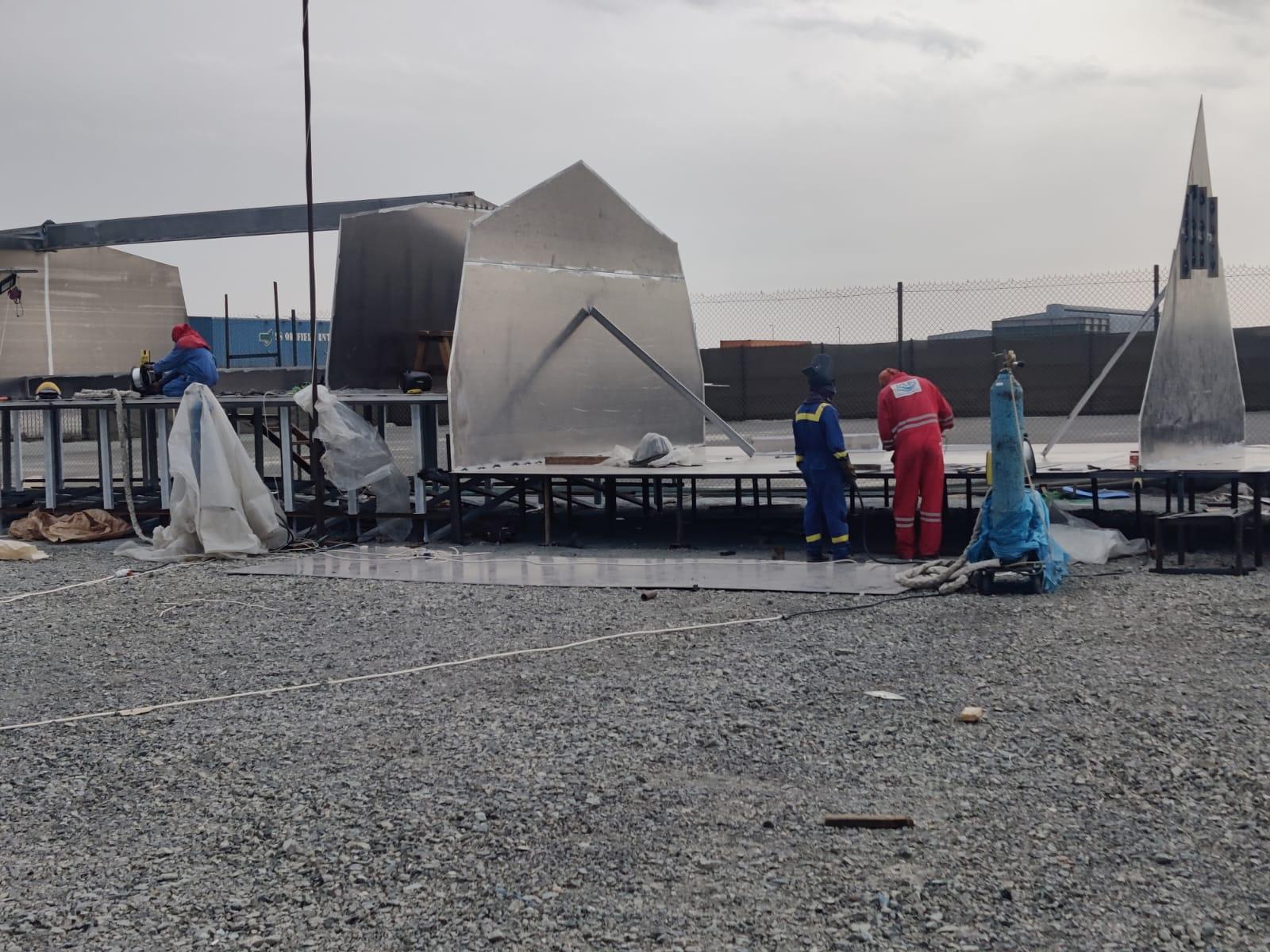
The maritime industry in the UAE is developing rapidly, and modern barge construction is becoming an important part of this growth. From offshore projects and port operations to cargo transportation and marine construction, barges are required to handle increasingly demanding tasks. Barge Builders in UAE are responding to this demand by adopting advanced engineering, better materials, digital design, and more precise fabrication techniques.
The UAE's strategic location between major global trade routes has helped it develop into a major maritime and logistics centre. According to UNCTAD data, UAE ports handled more than 21 million TEUs of container throughput in 2024, showing the scale of maritime activity in the country. This growing activity creates demand for reliable vessels and specialised marine platforms.
Traditional barges were generally designed around straightforward requirements such as carrying cargo or supporting basic marine operations. Modern projects, however, often require specialised vessels capable of carrying heavy machinery, construction equipment, containers, fuel, or offshore systems.
Advanced engineering allows designers to develop barges around specific operational requirements. Engineers can evaluate hull dimensions, structural strength, stability, loading capacity, draft, and deck arrangements before physical construction starts.
Computer-aided design and 3D modelling have become important tools in this process. Engineers can create a digital representation of the vessel and identify potential design issues earlier. This can reduce modifications during fabrication and improve overall construction efficiency.
Material selection has a direct impact on a barge's performance. Steel continues to be widely used for heavy-duty barges, but aluminium has become attractive for applications where lower weight and corrosion resistance are important.
Modern aluminium barge manufacturers focus on producing lightweight structures without compromising the required strength and durability. Aluminium's relatively high strength-to-weight ratio can help reduce vessel weight, which may provide greater payload flexibility or improved operational efficiency depending on the design.
This can be particularly useful for marine operations where weight, draft, speed, or fuel consumption needs to be carefully controlled. Aluminium also offers good resistance to corrosion when the appropriate alloy, welding procedures, surface treatment, and maintenance programme are used.
One of the biggest differences between traditional and modern construction is the level of fabrication accuracy. Advanced workshops can use CNC cutting, computer-controlled equipment, digital drawings, precision measurement systems, and modern welding techniques.
For aluminum barge builders, precision is especially important because hull plates, frames, stiffeners, decks, and other components must fit correctly during assembly. Accurate cutting and controlled welding can reduce distortion and minimise the need for rework.
Digital production planning can also improve material utilisation. Better nesting of cutting patterns can reduce scrap material, while accurate measurements can make the fabrication process more predictable.
A barge must be designed according to the type of work it will perform. A cargo barge carrying bulk materials has different requirements from a crane barge supporting heavy lifting equipment or a work barge carrying construction machinery.
Engineers therefore analyse areas such as the hull structure, deck reinforcement, bulkheads, frames, foundations, and load-bearing points. Heavy equipment may require additional structural support because concentrated loads can place significant stress on the deck.
Modern engineering uses structural calculations and computer simulations to understand how the vessel may respond to different loading conditions. This helps engineers achieve the right balance between structural strength and overall vessel weight.
Stability is one of the most important considerations in barge design. A vessel carrying heavy cargo or equipment must remain stable under expected operating conditions.
Engineers consider displacement, centre of gravity, freeboard, draft, cargo distribution, and other factors when developing the design. The loading arrangement must also be carefully considered because uneven weight distribution can affect stability.
Modern barges can additionally be equipped with navigation systems, communication equipment, alarms, monitoring devices, and other technologies that improve operational awareness.
Safety is not limited to the construction stage. Proper inspection, maintenance, corrosion monitoring, and regular structural checks are also essential for maintaining a barge throughout its service life.
Technology is now involved in almost every stage of marine fabrication. Before construction begins, digital models can help engineers visualise the complete vessel. During fabrication, computer-controlled cutting and measurement equipment can improve accuracy.
Modern welding technology is equally important. Consistent welding procedures help create reliable joints and reduce structural defects. Weld inspections and quality-control procedures can further verify the integrity of critical areas.
For a professional barge building company, combining engineering knowledge with controlled fabrication processes is essential. The objective is not simply to complete a vessel quickly, but to create a structure that can perform reliably under real operating conditions.
Environmental considerations are becoming increasingly relevant in maritime construction. Owners are looking for vessels that can operate efficiently while reducing unnecessary fuel consumption and maintenance costs.
One way to improve efficiency is through weight optimisation. A properly engineered lightweight structure can potentially reduce propulsion requirements or provide additional capacity, depending on the vessel's intended use.
Durable materials and protective coatings can also extend service life. Longer service intervals can reduce downtime and the environmental impact associated with frequent repairs or replacement of components.
Efficient manufacturing can contribute as well. Digital fabrication planning can reduce material waste, while accurate cutting and assembly can decrease rework.
The development of modern marine construction requires more than individual technologies. It requires engineering expertise, fabrication capability, quality control, and an understanding of practical marine operations.
VU Marine works across shipbuilding and marine services, including aluminium boat building, barge and tugboat construction, ship repair, retrofitting, maintenance, and marine consultancy. This integrated approach is valuable because vessel design and construction can be considered alongside long-term operational and maintenance requirements.
For specialised marine projects, such experience can help ensure that the final vessel is designed around its intended application rather than simply following a standard configuration.
The UAE's maritime industry continues to benefit from investment in ports, logistics infrastructure, shipbuilding, vessel repair, and marine services. The country's location gives it an important role in regional and international maritime trade.
In 2025, one major UAE port group reported AED 10.69 billion in revenue, representing 33% year-on-year growth, while its marine-services fleet increased from 66 vessels in 2024 to 81 vessels in 2025.
These developments demonstrate why supporting vessels, workboats, barges, and other specialised marine assets remain important to the wider maritime ecosystem.
The next generation of barges is likely to become more specialised and technology-driven. Digital twins, advanced simulation, remote monitoring, automated fabrication, improved corrosion protection, and energy-efficient systems can all contribute to better vessel performance.
Customisation will also remain important. Instead of using one standard design for every project, owners can specify deck strength, cargo capacity, dimensions, draft, equipment foundations, and other features according to their operational requirements.
Another important trend is lifecycle planning. Modern owners increasingly look beyond the initial construction cost and consider fuel consumption, maintenance, downtime, repair requirements, and expected service life.
Advanced engineering is transforming barge construction in the UAE by making the design and fabrication process more accurate, efficient, and application-focused. Digital modelling, structural analysis, lightweight materials, precision fabrication, modern welding, improved stability calculations, and better monitoring systems are helping create barges suited to demanding marine environments.
As the UAE's maritime sector continues to expand, demand for reliable and specialised marine vessels is expected to remain strong. The future of barge construction will depend on combining traditional marine expertise with modern engineering and manufacturing technologies.
Ultimately, a successful barge is not simply a floating platform. It is an engineered marine asset designed around safety, strength, efficiency, durability, and the specific needs of its operation. This combination of engineering and practical experience will continue to shape the future of modern barge construction in the UAE.