English
 Arabic
 French
 Spanish
 Portuguese
 Deutsch
 Turkish
 Dutch
Dutch
 Italiano
 Russian
 Romaian
 Portuguese (Brazil)
 Greek
Greek
Traitement Orthodontique pour un Sourire Plus Esthétique
Health |
2026-08-13 11:29:54
 Advertise With Us
 About Us
 Terms And Conditions
 سياسة الخصوصية
عرض كل النتائج
سياسة الخصوصية
عرض كل النتائج

ترقية الحساب
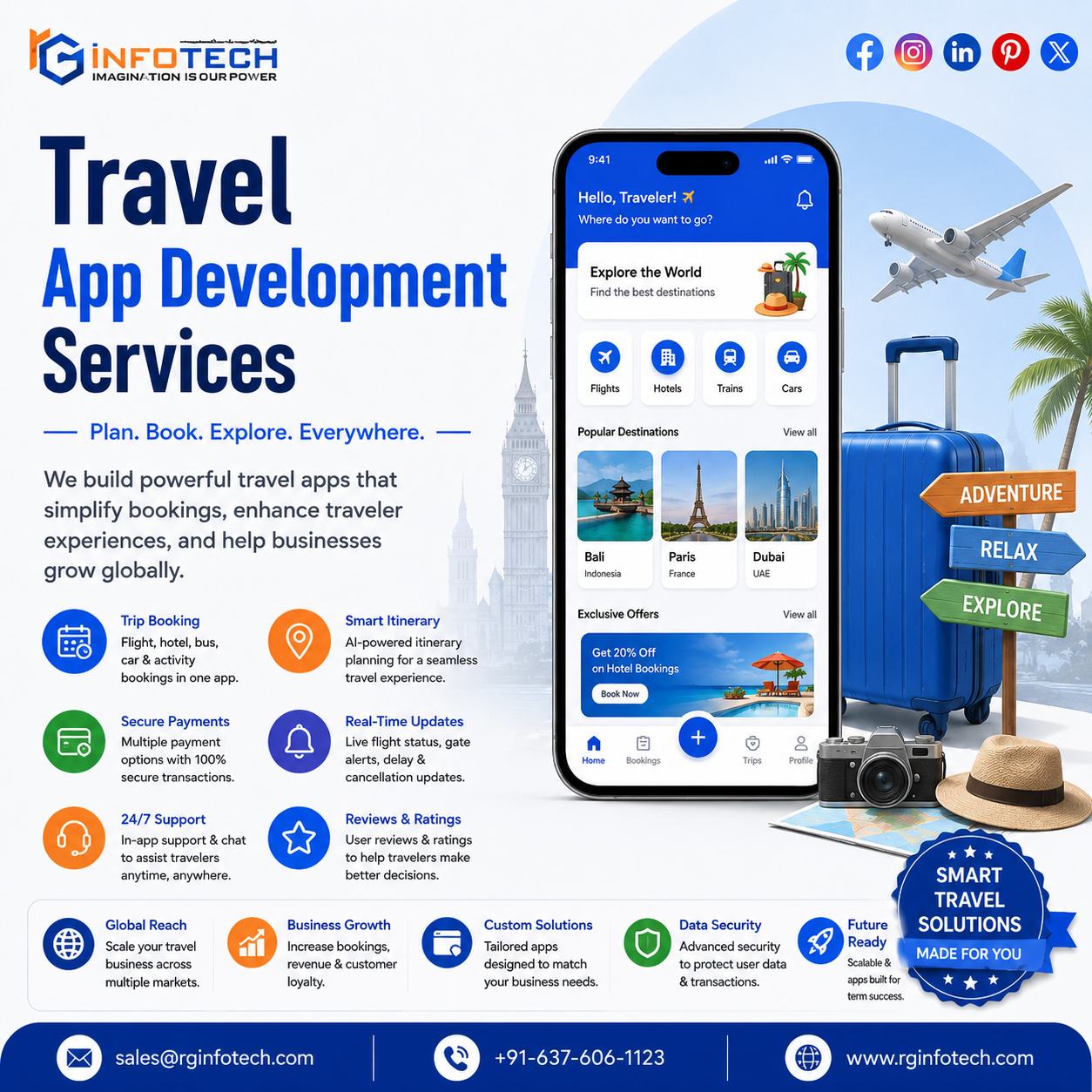
The travel industry is becoming increasingly digital, and mobile applications have become essential for booking flights, hotels, transportation, activities, and complete travel experiences. As businesses plan new travel applications, one important decision is choosing between native and cross-platform development.
Native development offers platform-specific performance and deep device integration, while cross-platform development allows businesses to create applications for multiple operating systems with greater development efficiency. Among modern cross-platform technologies, Flutter has gained significant attention because of its fast development cycle, customizable interfaces, and ability to deliver consistent experiences across platforms.
For businesses looking to build a modern travel application, understanding how Flutter compares with native development can help make the right technology decision.
Native app development involves building applications specifically for an operating system. Android applications are commonly developed using Kotlin or Java, while iOS applications use Swift or Objective-C.
The biggest advantage of native development is platform-specific optimization. Developers can access device features directly and create highly responsive experiences tailored to each operating system.
For travel apps, native development can be useful when the application requires advanced GPS functionality, sophisticated animations, intensive background processing, or deep integration with platform-specific services.
However, developing separate Android and iOS applications usually requires different codebases and development teams. This can increase development time, maintenance requirements, and overall costs.
Cross-platform development allows developers to create applications for multiple platforms using a shared codebase. Instead of building separate applications from scratch for Android and iOS, businesses can reuse a significant portion of the development work.
This approach can reduce development time and make maintenance easier. Updates and bug fixes can often be implemented across platforms without duplicating the same work.
For travel businesses that want to launch an MVP quickly or reach Android and iOS users simultaneously, cross-platform development can be an attractive option.
A skilled Travel App Development Company can evaluate the application's requirements and determine whether native, cross-platform, or a hybrid approach is the most suitable choice.
Flutter is an open-source UI toolkit developed by Google. It uses the Dart programming language and allows developers to create applications for multiple platforms from a shared codebase.
One of Flutter's biggest advantages is its widget-based architecture. Developers can create highly customized interfaces while maintaining a consistent design across platforms.
Flutter also includes features such as hot reload, which allows developers to see changes quickly during development. This can accelerate UI development, testing, and experimentation.
For travel applications, where visually appealing interfaces and quick iteration are important, Flutter provides a strong development foundation.
The choice between Flutter and native development depends on business requirements, application complexity, budget, and long-term goals.
Native applications require separate development processes for Android and iOS. Flutter allows developers to reuse code across platforms, potentially shortening development timelines.
This can be particularly valuable for travel startups that want to launch their product quickly and test their concept in the market.
Building two native applications can require additional resources because teams need to maintain separate codebases. Flutter can reduce development effort through code reuse.
However, the actual project cost depends on features, integrations, design complexity, backend infrastructure, testing, and developer expertise.
Flutter provides a rich collection of customizable widgets that make it easier to create consistent and visually engaging interfaces.
Travel applications often need attractive destination pages, booking screens, maps, filters, cards, animations, and personalized dashboards. Flutter's UI capabilities can help developers create these experiences efficiently.
Native applications generally provide excellent platform-specific performance. Flutter applications can also deliver strong performance for most travel use cases because Flutter renders its own UI components rather than relying entirely on platform-specific widgets.
For standard booking, tracking, search, payment, and content-driven applications, Flutter can provide a smooth experience when properly developed and optimized.
Maintaining separate native applications can require changes to multiple codebases. Flutter's shared architecture can simplify updates and maintenance.
Businesses can implement many feature changes and fixes in a common codebase, potentially reducing long-term development effort.
Flutter is capable of supporting many features required by modern travel applications. These include:
Flight and hotel booking
Destination discovery
GPS and location tracking
Interactive maps
Travel itinerary management
Push notifications
Online payments
User reviews and ratings
Multilingual interfaces
Currency conversion
Personalized recommendations
Loyalty and reward programs
Social sharing
In-app customer support
Flutter can also integrate with APIs and third-party services for booking inventory, maps, payment gateways, weather information, authentication, analytics, and other travel-related functionality.
Flutter can be a strong choice when a business wants to launch applications across Android and iOS with a shared development approach. It is especially suitable for startups, travel agencies, booking platforms, and businesses that prioritize development speed and consistent UI.
Flutter is also useful for MVP development. Businesses can build and validate an initial product before investing heavily in advanced features.
However, businesses should not select a framework based only on popularity. Applications requiring highly specialized native functionality or extremely platform-specific behavior may still benefit from native development.
A professional Travel App Development Company can analyze technical requirements and recommend the most suitable architecture based on the application's goals.
Travel applications are becoming more personalized, intelligent, and feature-rich. Users expect fast booking experiences, real-time information, digital payments, smart recommendations, location-based services, and seamless interfaces.
Flutter can support this evolution by providing a flexible development environment for building applications across multiple platforms. Its growing ecosystem and ability to integrate with modern APIs make it a practical option for businesses developing digital travel products.
As travel companies increasingly focus on reducing development cycles while maintaining high-quality user experiences, cross-platform technologies such as Flutter are likely to remain an important part of the development landscape.
Native development remains an excellent option for applications requiring maximum platform-specific optimization. However, cross-platform development has become increasingly attractive for businesses seeking faster development, code reuse, consistent interfaces, and efficient maintenance.
Flutter stands out by combining cross-platform development with powerful UI capabilities and strong performance. For many travel applications, it can provide the right balance between development efficiency, user experience, and scalability.
If you are planning to build a travel booking platform, itinerary application, hotel app, flight app, or complete travel ecosystem, choosing the right technology stack is an important first step.