English
 Arabic
 French
 Spanish
 Portuguese
 Deutsch
 Turkish
 Dutch
Dutch
 Italiano
 Russian
 Romaian
 Portuguese (Brazil)
 Greek
Greek
FYP Book A Penance for Crows by Shannon Morgan
Shopping |
2026-07-02 03:17:03
 Advertise With Us
 About Us
 Terms And Conditions
 Datenschutzbestimmungen
Alle anzeigen
Datenschutzbestimmungen
Alle anzeigen

Upgrade auf Pro
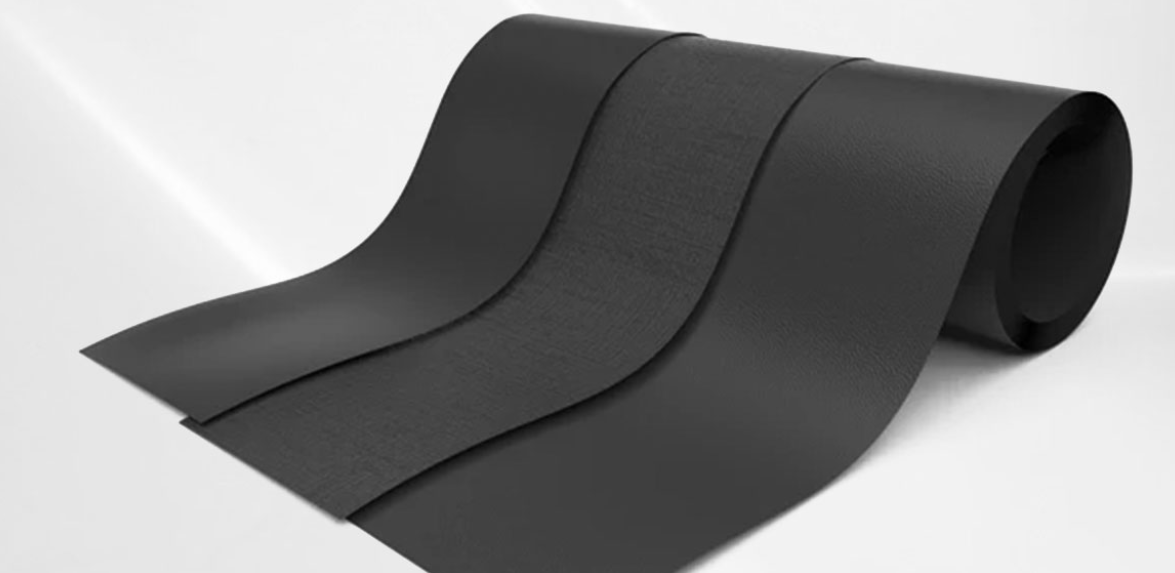
The rubber industry depends on materials that can deliver consistency, durability, flexibility, and reliable performance across demanding applications. From automotive components and industrial seals to construction products and specialized molded parts, selecting the right rubber material can have a significant impact on the quality of the final product. GB Gummi provides solutions designed to support manufacturers looking for dependable materials and improved processing performance.
Among the commonly used materials in rubber manufacturing are neoprene, EPDM, and silicone material. Alongside these elastomeric materials, masterbatches such as color masterbatch and carbon masterbatch play an important role in achieving desired appearance, reinforcement, dispersion, and processing characteristics.
Neoprene is a synthetic rubber known for its balanced combination of flexibility, durability, and resistance properties. It is widely used in applications where rubber components need to withstand exposure to environmental conditions, oils, chemicals, and mechanical stress.
One of the advantages of neoprene is its versatility. Manufacturers can use it for different industrial products, including seals, gaskets, hoses, vibration-control components, protective covers, and various molded rubber products.
Neoprene can also offer good resistance to weathering and ozone compared with several general-purpose rubber materials. This makes it suitable for applications where products may be exposed to outdoor environments.
For manufacturers, choosing the appropriate neoprene formulation is important because the formulation can influence hardness, flexibility, tensile properties, and overall product performance.
EPDM is another widely used synthetic rubber in industrial manufacturing. Ethylene Propylene Diene Monomer is particularly recognized for its resistance to weathering, ozone, heat, and aging.
EPDM is commonly selected for products that need to perform under outdoor or demanding environmental conditions. It is used in automotive weather seals, gaskets, hoses, roofing applications, construction products, electrical components, and industrial rubber parts.
The durability of EPDM makes it a practical option for applications where long-term exposure to sunlight, moisture, ozone, and changing temperatures is expected.
When manufacturers select EPDM compounds, factors such as hardness, processing requirements, temperature resistance, and application-specific performance should be considered.
GB Gummi focuses on rubber material solutions that can help manufacturers achieve consistent processing and dependable product performance.
Silicone material is valued for its excellent temperature stability and flexibility. Silicone rubber can maintain its useful properties across a broad temperature range, making it suitable for applications where conventional rubber materials may not provide the required thermal performance.
Silicone materials are commonly used in automotive, electrical, medical, food-related, industrial, and consumer applications, depending on the formulation and required specifications.
Another important advantage of silicone is its flexibility. Silicone rubber products can be designed for applications requiring repeated deformation, sealing, insulation, and resistance to temperature fluctuations.
The right silicone formulation depends on the intended application, processing method, hardness requirements, and performance expectations. Manufacturers should therefore consider both material properties and processing conditions before selecting a silicone material.
Rubber products are not always required to have a standard black or natural appearance. Many manufacturers need specific colors to meet branding, identification, aesthetic, or product-design requirements. This is where color masterbatch can become an important part of the manufacturing process.
Color masterbatch contains concentrated pigments or colorants that can be dispersed into a polymer or rubber system to achieve a desired color.
Using an appropriate color masterbatch can help manufacturers achieve more consistent coloration throughout a production batch. Uniform dispersion is particularly important when producing large quantities of molded or extruded products.
Color masterbatch can be used for applications where visual consistency is important, including consumer products, automotive components, industrial parts, and other manufactured rubber products.
Manufacturers should consider pigment compatibility, dispersion, processing temperature, color strength, and the desired final shade when selecting a color masterbatch.
Carbon masterbatch is another important material used in polymer and rubber-related manufacturing processes. Carbon-based additives can contribute to the coloration and functional characteristics of rubber compounds, depending on the formulation and application.
Carbon black, for example, is widely used in rubber products because it can provide black coloration as well as reinforcement and other performance benefits in suitable formulations.
A carbon masterbatch can help manufacturers achieve controlled dispersion of carbon-based additives during processing. Consistent dispersion is important because uneven distribution can affect the appearance and performance of the finished product.
The appropriate carbon masterbatch depends on factors such as the base material, processing technology, required color, loading level, and desired physical properties.
Selecting a suitable rubber material should always begin with the requirements of the final application. Different elastomers provide different combinations of flexibility, temperature resistance, chemical resistance, weather resistance, durability, and processing characteristics.
For example, neoprene can be considered for applications requiring balanced resistance and durability. EPDM is often preferred for excellent weather, ozone, and heat resistance, while silicone material can be suitable for applications requiring broad temperature performance and flexibility.
Similarly, manufacturers requiring specific visual characteristics can consider color masterbatch, while carbon-based formulations may benefit from carbon masterbatch solutions.
The objective is not simply to select a material based on its name but to identify a formulation that matches the technical and production requirements of the application.
Consistency is one of the most important factors in rubber manufacturing. Variations in raw materials can affect processing behavior, appearance, physical properties, and the quality of finished products.
Reliable material solutions can help manufacturers maintain better control over production. Consistent dispersion, appropriate formulation, and controlled processing can contribute to improved manufacturing efficiency.
GB Gummi understands the importance of material consistency and supports rubber manufacturers with solutions for different industrial requirements.
Rubber materials and masterbatches are used across a wide range of industries. Automotive manufacturers use rubber compounds for seals, hoses, bushings, gaskets, and protective components. Industrial manufacturers use rubber materials for vibration-control products, sealing systems, conveyor components, and molded parts.
Construction and infrastructure applications can also require durable rubber products capable of withstanding environmental exposure. Electrical and specialized applications may require materials with specific insulation and temperature-resistance properties.
The combination of suitable elastomers and masterbatch solutions allows manufacturers to develop products according to specific performance and design requirements.
Choosing the right material supplier can make a difference in product consistency and manufacturing efficiency. GB Gummi provides rubber material and compounding solutions designed around the requirements of modern rubber manufacturers.
Whether the requirement involves neoprene, EPDM, silicone material, color masterbatch, or carbon masterbatch, understanding the intended application and processing conditions is essential.
With a focus on quality, consistency, and application-oriented solutions, GB Gummi can support manufacturers looking to improve their rubber production processes and develop reliable finished products.
The selection of appropriate materials is fundamental to producing high-quality rubber products. Neoprene, EPDM, and silicone material each offer different performance characteristics, while color masterbatch and carbon masterbatch can support specific processing, appearance, and formulation requirements.
For manufacturers, understanding these materials and matching them with application requirements can help improve product quality, consistency, and overall performance. GB Gummi offers material solutions to help meet the diverse needs of the rubber manufacturing industry.
If you are looking for dependable rubber material and masterbatch solutions, exploring the right formulation with GB Gummi can be an important step toward achieving consistent and efficient rubber production.
1. What is neoprene used for?
Neoprene is commonly used for seals, gaskets, hoses, protective components, vibration-control products, and other industrial rubber applications requiring durability and resistance to environmental conditions.
2. What are the main advantages of EPDM?
EPDM is known for its excellent resistance to weathering, ozone, heat, moisture, and aging, making it suitable for many automotive, construction, and industrial applications.
3. What is silicone material used for?
Silicone material is commonly used in applications requiring flexibility, temperature stability, and reliable performance under changing temperature conditions.
4. What is color masterbatch?
Color masterbatch is a concentrated colorant formulation used to provide consistent and uniform coloration during rubber or polymer processing.
5. What is carbon masterbatch?
Carbon masterbatch is a concentrated formulation containing carbon-based additives designed to facilitate controlled dispersion during manufacturing and support specific coloration or functional requirements.