English
 Arabic
 French
 Spanish
 Portuguese
 Deutsch
 Turkish
 Dutch
Dutch
 Italiano
 Russian
 Romaian
 Portuguese (Brazil)
 Greek
Greek
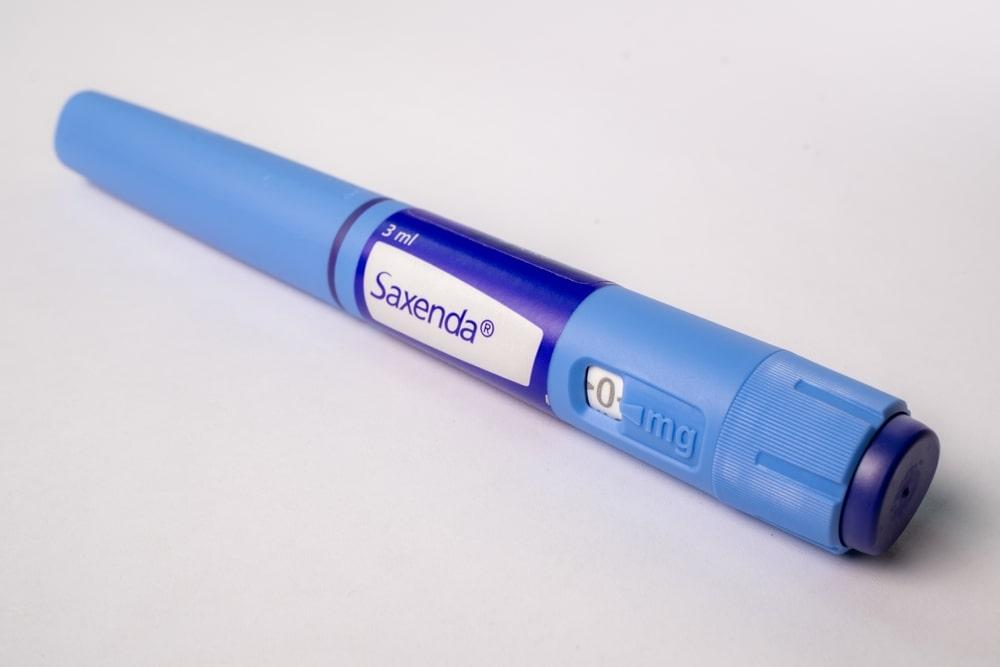
Saxenda injection in Dubai Non Surgical Fat Loss Option
Health |
2026-05-14 10:31:03
 Advertise With Us
 About Us
 Terms And Conditions
 سياسة الخصوصية
عرض كل النتائج
سياسة الخصوصية
عرض كل النتائج

ترقية الحساب

Modern electronics depend heavily on accurate timing and signal management to ensure reliable performance across a wide range of applications. The Frequency Divider Market is gaining importance as frequency divider technologies become increasingly necessary for telecommunications, consumer electronics, industrial automation, aerospace, automotive systems, and advanced computing. A frequency divider is an electronic circuit that receives a signal at a particular frequency and produces an output signal at a lower frequency according to a defined division ratio. This basic function plays an important role in clock generation, synchronization, signal processing, and frequency management.
Frequency division is a fundamental process used in many electronic systems. For example, when a circuit receives a high-frequency signal but another component requires a lower operating frequency, a frequency divider can convert the original signal into an appropriate output. A divider with a ratio of two can reduce the input frequency by half, while other configurations can produce different output frequencies. This allows several components within a system to operate at different speeds while maintaining synchronization with a common reference signal.
Communication systems are among the most important applications for frequency divider technologies. Wireless networks, satellite communication systems, radio equipment, optical communication infrastructure, and networking devices require precise timing signals to transmit and receive information correctly. Frequency dividers are commonly incorporated into clock-generation and frequency-synthesis architectures to create appropriate reference signals. As communication technologies continue moving toward higher data rates and increasingly complex frequency bands, accurate frequency control becomes more important for maintaining reliable network performance.
Consumer electronics also rely on frequency division. Smartphones, laptops, televisions, gaming systems, smartwatches, digital cameras, and other connected devices contain processors and communication components that operate at different frequencies. A single high-frequency reference can be divided into several lower-frequency signals that support different circuit blocks. This approach can simplify system architecture and reduce the requirement for multiple independent timing sources. In portable electronics, frequency divider technologies can also contribute to efficient power management by helping components operate at appropriate frequencies based on workload.
Industrial automation is another important area where frequency dividers provide value. Modern manufacturing facilities use programmable controllers, sensors, robotic systems, motor drives, and industrial communication networks that require precise coordination. Frequency divider circuits can generate timing signals for controllers and measurement equipment, supporting accurate operation of automated processes. Industrial equipment often operates continuously under demanding environmental conditions, so timing components must provide stable and dependable performance.
Advancements in semiconductor technology are also influencing frequency divider development. Modern integrated circuits can combine frequency division with oscillators, counters, phase-locked loops, control logic, and other timing functions. This integration can reduce the number of external components required and enable smaller electronic designs. Programmable frequency dividers are particularly valuable because engineers can change division ratios depending on system requirements, making them suitable for communication equipment, test instruments, embedded systems, and other flexible applications.
The future of frequency divider technology is closely connected with the growth of high-speed electronics. Emerging applications such as artificial intelligence hardware, advanced wireless communication, connected vehicles, edge computing, and industrial IoT require sophisticated timing architectures. These applications demand high operating speeds, low power consumption, minimal timing errors, and compact component designs. Manufacturers are therefore focusing on developing divider solutions that offer improved performance while consuming less energy.
As electronic systems become faster, smaller, and more intelligent, reliable frequency management will remain essential. Frequency dividers may perform a relatively simple function, but their contribution to modern electronics is significant. From communication infrastructure and consumer devices to industrial automation and advanced computing, these circuits help ensure that electronic systems operate with accurate and synchronized timing. Continued innovation in semiconductor manufacturing and system design is expected to create new opportunities for frequency divider technologies across a broad range of applications.