English
 Arabic
 French
 Spanish
 Portuguese
 Deutsch
 Turkish
 Dutch
Dutch
 Italiano
 Russian
 Romaian
 Portuguese (Brazil)
 Greek
Greek
FYP Book The Moorwitch by Jessica Khoury
Shopping |
2026-07-01 05:48:31
 Advertise With Us
 About Us
 Terms And Conditions
 Política de Privacidade
Ver Todos
Política de Privacidade
Ver Todos

Atualize para o Pro
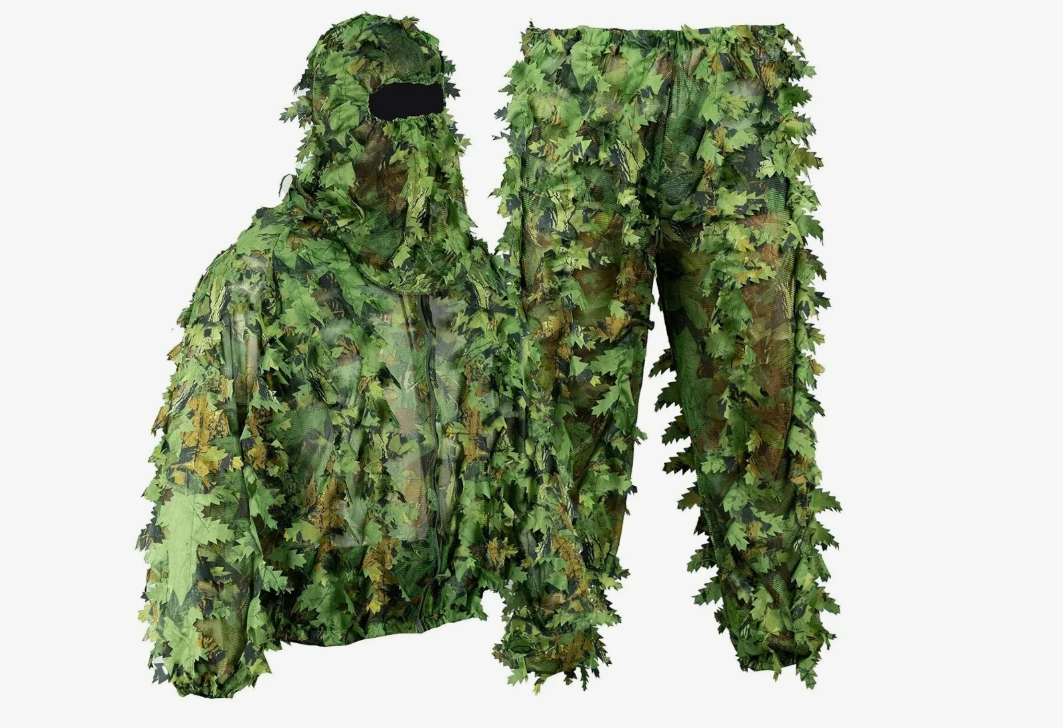
Three-dimensional camouflage clothing has become a practical option for outdoor users who want clothing that blends naturally with complex vegetation. A 3D Outfitter leafy suit uses layered, leaf-like elements to add depth and irregularity to the wearer's appearance, helping break up the familiar outline of the human body against natural backgrounds. This style can be useful for hunting, wildlife observation, outdoor photography, and other activities where visual blending is important. However, the value of a camouflage garment depends on more than its appearance; comfort, mobility, weight, construction, and environmental suitability also deserve careful consideration.
Choosing a 3D Outfitter leafy suit requires an understanding of the conditions in which it will be worn. Forests, grasslands, brush, and changing seasonal landscapes have different colors, textures, and levels of vegetation. A suit designed for dense green foliage may not be equally suitable for dry terrain or late-season environments. Buyers should also consider temperature, moisture, expected movement, layering requirements, and compatibility with other outdoor equipment. Evaluating these factors beforehand can help ensure the garment is practical for extended use.
Unlike conventional camouflage that relies primarily on printed colors, three-dimensional leafy clothing adds physical texture to the garment. Leaf-shaped elements can create irregular edges and additional visual depth, which may help disrupt the smooth human silhouette. This design can complement environments containing grass, leaves, branches, and shadows. However, camouflage performance is influenced by lighting, distance, movement, and the background itself. A well-designed suit should therefore be viewed as one part of an overall outdoor clothing system rather than something that guarantees concealment in every situation.
Terrain should be a major factor when selecting a leafy camouflage design. Dense woodland can contain dark greens, brown branches, exposed earth, and deep shadows, while open fields may feature lighter vegetation and fewer vertical structures. Dry environments can require more muted tan and brown tones. Seasonal changes can make the same location look completely different throughout the year. Buyers should identify the environments where they expect to spend the most time and choose colors and textures that complement those surroundings. This approach is generally more practical than selecting a pattern based solely on its appearance in photographs or indoors.
Three-dimensional elements naturally add some bulk compared with ordinary outdoor clothing, so weight and airflow are important considerations. Lightweight mesh-based construction can make a leafy suit easier to wear during warmer conditions and periods of movement. Breathability is particularly valuable when users are walking through uneven terrain or carrying additional equipment. In colder weather, the suit should provide enough room for appropriate insulating layers. Buyers should consider climate, humidity, expected activity, and the clothing worn underneath when evaluating overall comfort. The lightest garment is not always the most suitable option if it cannot accommodate the conditions in which it will be used.
A leafy suit should allow natural movement without becoming excessively loose or restrictive. Outdoor users may need to walk, crouch, sit, kneel, climb, or navigate around vegetation. Adjustable cuffs, waist sections, hoods, and other components can help keep the garment secure while allowing flexibility. The fit should also work with backpacks and other equipment. Excess material can create snagging risks, while a tight fit can interfere with movement and layering. Testing the garment with the clothing and equipment intended for actual outdoor use can provide a much more accurate assessment than trying it on by itself.
Noise can be an important consideration when moving carefully through natural environments. Different leafy materials can produce different sounds when they rub together or contact vegetation. Users should consider how the suit behaves during walking, crouching, and changing position. A garment that combines quiet movement with reasonable durability can be more useful than one that focuses entirely on either characteristic. Buyers should also consider whether the three-dimensional elements are securely attached and unlikely to create unnecessary movement or inconvenience during regular outdoor activity.
Outdoor clothing can be exposed to branches, thorns, moisture, dirt, and repeated friction. Durability is therefore important for anyone expecting to use a leafy suit regularly. Buyers should examine stitching, mesh, attachment points, elastic sections, closures, and areas that may experience frequent contact with vegetation. Lightweight construction can improve mobility, but the material should still match the demands of the intended terrain. Someone traveling regularly through dense brush may require more robust construction than someone using a suit occasionally in an open environment.
The best camouflage garment is one that can be worn comfortably for the duration of the activity. Excessive heat, poor ventilation, heavy construction, or restrictive sizing can make outdoor use unpleasant. Breathable materials can help manage moisture during warmer conditions, while suitable layering can provide warmth during colder periods. Users should also evaluate the fit around the shoulders, arms, waist, and legs. A garment that allows comfortable movement and temperature management is more practical than one selected solely for its amount of three-dimensional material.
Additional features can improve the practicality of a leafy camouflage suit when they address genuine outdoor needs. Depending on the design, useful elements may include an attached hood, adjustable cuffs, elastic waist sections, secure pockets, boot openings, or a storage bag. These features can make the garment easier to wear and transport. Buyers should consider how each feature interacts with other equipment and whether it adds unnecessary weight or bulk. Practical functionality should remain the priority, particularly for users who expect to spend long periods outdoors.
Three-dimensional camouflage requires careful maintenance because its attached elements can be more vulnerable than printed fabric. Users should follow the garment's care instructions and avoid unnecessarily harsh cleaning methods. After exposure to rain, dew, or damp vegetation, the suit should be dried thoroughly before being stored. Dirt and leaves should be removed gently to avoid pulling on leafy elements or seams. Regular inspection can reveal loose stitching, damaged mesh, worn elastic, or other issues before they become significant. The garment should also be stored in a way that avoids excessive compression, which can affect its three-dimensional structure.
Different outdoor activities create different clothing requirements. A user who spends extended periods in dense woodland may prioritize visual texture and breathability, while someone moving frequently through brush may value lightweight construction and durability. Wildlife observers and photographers may have additional requirements involving equipment access and comfort during stationary periods. The complete clothing system should include appropriate footwear, base layers, gloves, headwear, and other accessories that complement the environment. Considering all components together can help prevent problems that might not be obvious when choosing a camouflage suit independently.
Choosing suitable three-dimensional camouflage requires careful attention to terrain, season, fit, mobility, comfort, durability, and intended use. A 3D Outfitter leafy suit can provide additional texture that helps disrupt the wearer's outline when its colors and construction complement the surrounding environment. Buyers should look beyond visual design and assess breathability, weight, quiet movement, layering capacity, useful features, and compatibility with other outdoor equipment. Proper cleaning, drying, storage, and inspection can further extend the garment's useful life. By matching a leafy camouflage system to real-world conditions and personal requirements, outdoor users can achieve a practical balance of visual blending, comfort, and dependable field performance.