English
 Arabic
 French
 Spanish
 Portuguese
 Deutsch
 Turkish
 Dutch
Dutch
 Italiano
 Russian
 Romaian
 Portuguese (Brazil)
 Greek
Greek
Trending on BookTok The Apartment Across the Hall by Jack Dane
Sports |
2026-06-23 04:56:34
 Advertise With Us
 About Us
 Terms And Conditions
 Política de Privacidade
Ver Todos
Política de Privacidade
Ver Todos

Atualize para o Pro
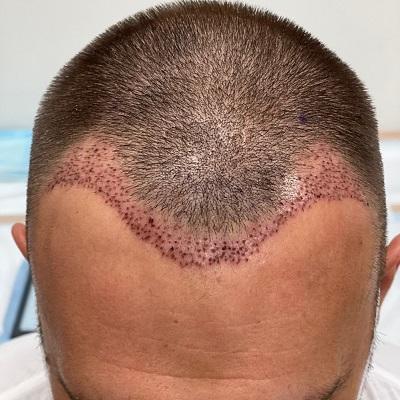
Hair loss is a common concern among men and can develop at different stages of life. For some, it begins with a gradually receding hairline, while others notice thinning around the crown or an overall reduction in hair density. Although hair loss is usually a natural process, visible changes can affect personal appearance and confidence.
A Hair Transplant in Dubai offers a surgical approach to restoring hair in areas where noticeable thinning or baldness has developed. Modern techniques focus on using existing healthy follicles to create coverage while maintaining a natural-looking hairline and appropriate hair direction.
Men considering hair restoration should understand that every hair-loss pattern is different. The amount of donor hair, the extent of thinning, hair characteristics, age, and future hair-loss potential all need to be considered when creating an appropriate treatment plan.
Male pattern hair loss is one of the most common reasons men seek hair restoration. It is often influenced by genetics and hormonal sensitivity and can gradually affect the temples, frontal hairline, and crown.
Other factors may also contribute to hair thinning, including:
Identifying the underlying reason for hair loss is an important part of determining whether transplantation is appropriate.
Men can experience hair loss in several recognizable patterns.
The temples may gradually move backward, creating an increasingly prominent forehead. Restoring the frontal area can help improve the balance between the forehead and remaining hair.
Some men initially notice reduced density at the crown. Because the crown has a naturally circular growth pattern, transplantation in this area requires careful graft placement.
Instead of a clearly receding hairline, some men experience diffuse thinning across the frontal scalp. This can make the hair appear less dense even when individual follicles are still present.
Advanced hair loss can affect much of the top of the scalp. In these cases, donor availability becomes particularly important because complete coverage may not be realistic.
Hair transplantation involves moving healthy follicles from a donor region to areas affected by hair loss.
The donor follicles are carefully selected, harvested, prepared, and placed into recipient sites. The objective is not simply to add as many grafts as possible. Instead, grafts should be distributed strategically to create useful coverage while preserving donor resources.
The direction and angle of each graft can also influence how natural the final result appears.
Follicular Unit Extraction, commonly known as FUE, involves removing individual follicular units from the donor area.
After extraction, the grafts are prepared for transplantation. Tiny recipient openings are then created, allowing the follicles to be positioned according to the planned hairline and density.
FUE is widely used because it does not involve removing a long strip of scalp. Instead, individual extraction points are created throughout the donor area.
Follicular Unit Transplantation, or FUT, involves removing a strip of donor scalp. Individual follicular units are then separated from this strip and prepared for transplantation.
FUT can be suitable in certain situations, particularly when a larger number of grafts may be needed and the donor characteristics are appropriate.
The decision between FUE and FUT should be based on individual assessment rather than assuming one method is universally better.
For men, hairline design can make a significant difference in the overall appearance of a transplant.
A natural male hairline usually contains subtle irregularities rather than appearing like a perfectly straight line. The design should also consider the patient's age and potential future hair loss.
Important factors include:
A carefully designed hairline can help transplanted follicles blend more naturally with existing hair.
There is no universal graft number for every patient.
The number depends on:
A smaller frontal recession may require considerably fewer grafts than extensive thinning involving the hairline, mid-scalp, and crown.
Using an appropriate number of grafts is important because donor hair is a limited resource.
The treatment usually begins by preparing the scalp and confirming the previously planned treatment areas.
Depending on the selected method, donor follicles are harvested individually or obtained through the chosen donor technique. The grafts are then prepared before implantation.
Recipient sites are created according to the planned design. Grafts are placed carefully to follow the natural direction and angle of surrounding hair.
The length of the procedure depends on the number of grafts and the technique involved.
Younger men sometimes consider transplantation as soon as they notice a receding hairline. However, early treatment requires careful consideration.
If hair loss is still progressing rapidly, transplanting a low hairline too early could create an unnatural pattern later as surrounding hair continues to thin.
A conservative approach may therefore be more appropriate in some younger patients. Professional assessment can help determine whether transplantation is suitable at a particular stage.
The recovery period differs between individuals.
Temporary redness, swelling, sensitivity, and small crusts may occur around the treated areas. These effects generally improve as the scalp heals.
Patients should follow their personalized aftercare instructions carefully. This may include guidance on:
Avoiding unnecessary manipulation of the treated area is particularly important during early healing.
Some transplanted hairs may shed during the early stages after treatment. This can appear alarming, especially when someone expects immediate growth.
However, temporary shedding can occur as transplanted follicles adapt to the new environment and enter a new growth cycle.
New hair growth generally develops gradually, so patience is essential.
Hair restoration is a gradual process.
During the first weeks, the scalp may primarily show signs of healing rather than significant new density. Over the following months, new hairs can begin emerging and gradually become thicker.
The final appearance develops over time, and the exact timeline varies from person to person.
It is important to evaluate progress over an appropriate period rather than judging the outcome too early.
Modern hair transplantation can create natural-looking results when appropriate planning and technique are used.
Several details contribute to a natural appearance:
Hair should follow the natural growth pattern.
Single-hair follicular units may be particularly useful around the front of the hairline.
The available donor hair should be distributed strategically.
Proper positioning helps transplanted hair blend with surrounding strands.
The treatment should consider possible future hair loss rather than focusing only on today's appearance.
Hair transplantation does not necessarily prevent natural hair from thinning in other areas.
Men may therefore benefit from a long-term approach to hair health. Depending on individual circumstances, additional hair-loss treatments may be considered to help maintain existing follicles.
Regular professional assessments can help monitor changes and determine whether additional treatment is appropriate.
No. Hair transplantation can be considered for different levels of hair loss, including receding hairlines, localized thinning, crown thinning, and certain bald areas.
A receding hairline can sometimes be restored by transplanting follicles into suitable areas. The design should account for facial proportions and future hair loss.
No. Hair growth takes time. Temporary shedding may occur before new growth becomes visible.
Yes, some men with crown thinning may be candidates. However, the size of the area and available donor supply must be assessed.
It can. Transplantation restores selected follicles but does not necessarily stop hereditary or age-related thinning of untreated hair.
A Hair Transplant in Dubai can provide men with an effective surgical option for addressing selected forms of hair loss. Whether the main concern is a receding hairline, frontal thinning, crown loss, or a combination of areas, careful planning is essential for achieving balanced and natural-looking coverage.
The best approach depends on individual hair characteristics, donor availability, current hair loss, and long-term expectations. Understanding these factors before treatment can help men make informed decisions rather than focusing only on short-term changes.
Tajmeels Clinic can be considered when researching hair restoration options and learning more about personalized approaches to hair transplantation. A professional consultation remains an important step toward determining whether treatment is appropriate and what strategy may best suit your hair restoration goals.