English
 Arabic
 French
 Spanish
 Portuguese
 Deutsch
 Turkish
 Dutch
Dutch
 Italiano
 Russian
 Romaian
 Portuguese (Brazil)
 Greek
Greek
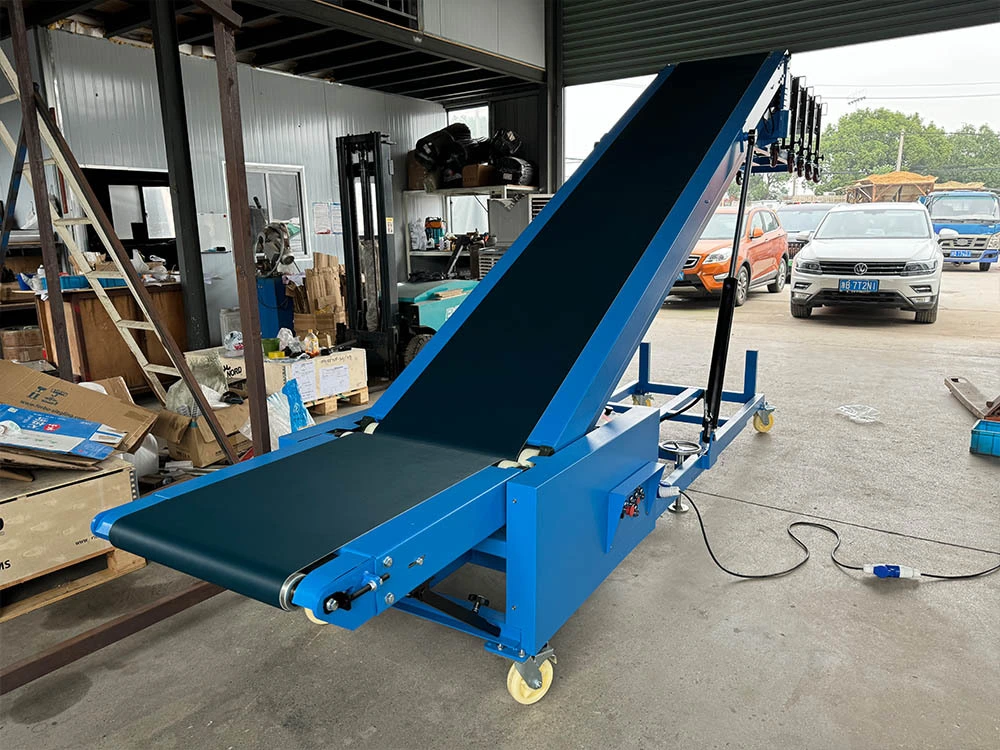
YiFan Conveyor Lorry Loading Conveyor for Pharmaceutical and Chemical Bulk Material Handling
Other |
2026-08-03 15:07:09
 Advertise With Us
 About Us
 Terms And Conditions
 Datenschutzbestimmungen
Alle anzeigen
Datenschutzbestimmungen
Alle anzeigen

Upgrade auf Pro
Decarbonizing the maritime industry requires action on two fronts: the ships themselves and the ports that serve them. Ships and ports are the two key application areas driving the market, each with its own set of challenges and opportunities. According to Market Research Future, understanding these dynamics is essential.
Ships are the largest application segment, reflecting the urgent need to decarbonize the vessels that are the primary source of emissions. This involves a wide range of strategies, from retrofitting existing ships with energy-saving technologies to designing new vessels powered by alternative fuels. The focus is on reducing fuel consumption and emissions directly at the source. Significant investments are directed toward retrofitting existing ships and developing green technologies for new builds.
Ports are the fastest-growing application segment. They are emerging as critical hubs for decarbonization, adopting cleaner energy sources and smart infrastructure initiatives. This includes providing shore-side electricity (cold ironing) to ships at berth, allowing them to turn off their auxiliary engines and reduce emissions. Ports are also becoming centers for the production and distribution of alternative fuels. This shift is driven by the need to accommodate greener shipping practices and improve their own operational efficiencies.
The decarbonization of ships and ports is symbiotic. Ships require ports with the infrastructure to supply alternative fuels and shore power. Ports require ships that are capable of using these new technologies. This interdependence is driving collaboration across the industry.
Technological innovations, such as wind-assisted propulsion and advanced hull designs, are being developed for ships to reduce fuel consumption. Ports are investing in smart grid technologies and renewable energy sources to power their operations and provide shore-side electricity.
Europe and North America are leading the development of green port infrastructure. The Asia-Pacific region, with its massive shipping traffic, is also making significant strides.
The future of maritime decarbonization lies in the development of integrated maritime energy systems, where ships and ports operate as a unified, low-carbon network. This will require close collaboration between ship operators, port authorities, energy providers, and technology developers. This integrated approach will be a key driver for the Maritime Decarbonization Market.
Explore key developments shaping industry transformation:
Brazil Reciprocating Compressor Market