English
 Arabic
 French
 Spanish
 Portuguese
 Deutsch
 Turkish
 Dutch
Dutch
 Italiano
 Russian
 Romaian
 Portuguese (Brazil)
 Greek
Greek
North America Generic Allergy Medicine Market Trends: Increasing Allergy Cases and Generic Drug Adoption
Health |
2026-08-17 12:06:30
 Advertise With Us
 About Us
 Terms And Conditions
 Datenschutzbestimmungen
Alle anzeigen
Datenschutzbestimmungen
Alle anzeigen

Upgrade auf Pro
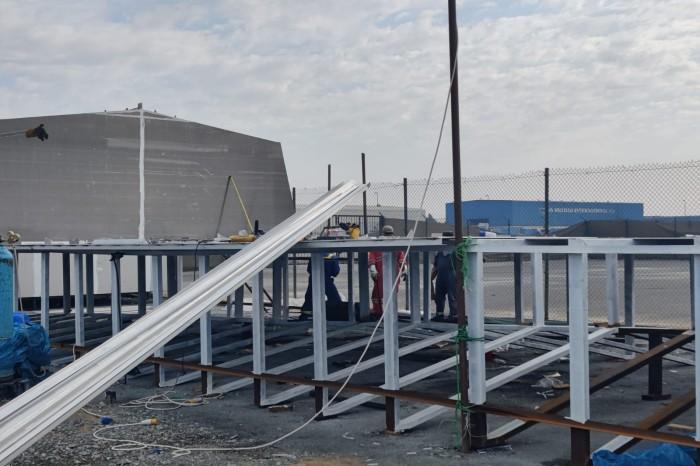
The UAE has developed into an important maritime hub because of its strategic location, modern ports, strong trade activity, and investment in marine infrastructure. As the maritime industry continues to grow, vessel construction is also changing. Customers now want ships and boats that are safer, more fuel-efficient, easier to maintain, and better suited to specific operations. For businesses researching ship building companies in UAE, understanding these future trends can help them make better decisions when planning a new vessel.
The UAE maritime sector contributes around AED 135 billion to the country's economy, showing how important shipping and related activities are. According to UNCTAD data, UAE ports handled more than 21 million TEUs of container traffic in 2024. This large maritime activity creates demand for commercial ships, workboats, passenger vessels, offshore craft, and other specialized marine vessels.
The future of vessel construction in the UAE will be influenced by the changing needs of shipping, logistics, offshore operations, port activities, tourism, and marine transportation. Instead of simply building larger vessels, the industry is moving toward vessels designed for specific purposes.
Ship manufacturing companies in UAE are increasingly focusing on performance, durability, fuel efficiency, and lifecycle costs. A vessel that costs less to operate and maintain can provide much better value over many years than one selected only because of its initial price.
Fuel consumption is one of the biggest operating expenses for many vessels. Because of this, shipbuilders are paying greater attention to energy-efficient hull designs, improved propulsion systems, lightweight structures, and better onboard systems.
Modern hull shapes can reduce water resistance, allowing a vessel to achieve the required speed with less power. Efficient engines and propellers can further reduce fuel consumption. These improvements may appear small individually, but over thousands of operating hours they can create significant savings.
Future UAE vessels are therefore likely to be designed with long-term operating efficiency in mind.
Electric and hybrid propulsion are also gaining attention in marine transportation. These systems can reduce fuel consumption, emissions, and noise, particularly for vessels operating on short routes.
Dubai's Marine Transport Master Plan 2030 targets increasing the marine transport fleet from 196 vessels in 2023 to 258 vessels by 2030. The plan also includes an electric abra using 3D-printing technology, with expected manufacturing-time savings of 90% and production-cost savings of 30%.
This shows how alternative propulsion and advanced manufacturing can work together. As battery technology and charging infrastructure improve, electric and hybrid systems could become increasingly practical for ferries, harbor craft, workboats, and other vessels.
Digital technology is changing the way vessels are designed and built. Computer-aided design, 3D modeling, simulation, digital inspection, and automated production can make the construction process more accurate.
Before physical construction begins, digital models can help engineers identify design problems and test different solutions. This can reduce material waste and expensive modifications later.
Digital systems can also continue to provide benefits after a vessel enters service. Sensors can monitor engines, fuel consumption, equipment condition, and other important parameters. This information can help operators plan maintenance before equipment failure occurs.
For modern marine services in UAE, smart monitoring and connected vessels can improve reliability and make daily operations more efficient.
Lightweight construction is another important trend. Aluminum is widely considered for vessels where low weight, speed, corrosion resistance, and fuel efficiency are important.
A lighter vessel generally needs less propulsion power, which can help improve fuel economy and performance. This makes lightweight construction useful for passenger vessels, crew boats, patrol craft, workboats, and other fast marine vessels.
However, successful lightweight construction requires careful engineering. Strength, welding quality, structural design, corrosion protection, and operating conditions must all be considered. The goal is to build a vessel that is light without compromising safety or durability.
Environmental responsibility is becoming increasingly important across the maritime industry. Modern customers are looking for ways to reduce emissions, fuel consumption, waste, and the environmental impact of vessel operations.
Sustainable shipbuilding can include cleaner propulsion systems, efficient hull designs, recyclable materials, improved energy management, and longer-lasting components.
The UAE is also increasing its focus on environmental, social, and governance practices in the maritime sector. As regulations and customer expectations develop, sustainability is likely to become a standard part of vessel design rather than an additional feature.
The UAE does not need only large commercial ships. Specialized vessels are essential for ports, offshore activities, coastal transportation, maintenance, and marine infrastructure.
These include tugboats, barges, ferries, crew boats, offshore support vessels, patrol craft, utility boats, and maintenance vessels. Each type requires a different combination of speed, stability, deck space, capacity, range, and maneuverability.
Dubai's Marine Transport Master Plan 2030 plans to increase the marine transport network from 55 km in 2023 to 158 km by 2030. Marine transport stations are also expected to increase from 48 to 79. Such expansion can create additional demand for vessels designed for passenger transportation and marine support.
Automation is another area with strong future potential. Modern vessels can use advanced navigation equipment, sensors, remote monitoring, and automated machinery to support crews and improve operational safety.
Automation does not necessarily mean completely crewless ships. In many cases, technology simply helps crews monitor machinery, navigate more efficiently, identify problems, and make faster decisions.
Autonomous technology could eventually become more common in surveying, inspection, port operations, and repetitive short-distance marine activities.
The UAE's vessel construction industry is moving toward a future based on efficiency, technology, sustainability, and specialized design. Electric and hybrid propulsion, lightweight materials, digital shipbuilding, automation, and smart monitoring are likely to influence how commercial and marine vessels are designed.
For customers comparing the top shipbuilding companies, factors such as engineering expertise, construction quality, customization, material knowledge, technology, maintenance support, and lifecycle costs will become increasingly important.
VU Marine can contribute to this changing industry by focusing on practical vessel construction and modern marine requirements. With continued investment in maritime infrastructure and transportation, the UAE has strong potential for further growth in commercial and marine vessel construction. The vessels of the future will not simply need to be strong and reliable; they will also need to be efficient, environmentally responsible, technologically advanced, and economical to operate.