English
 Arabic
 French
 Spanish
 Portuguese
 Deutsch
 Turkish
 Dutch
Dutch
 Italiano
 Russian
 Romaian
 Portuguese (Brazil)
 Greek
Greek
Liquid Soap Market Growth: Key Drivers and Opportunities
Networking |
2026-08-07 06:33:40
 Advertise With Us
 About Us
 Terms And Conditions
 Πολιτική Ιδιωτικότητας
δες τα όλα
Πολιτική Ιδιωτικότητας
δες τα όλα

Upgrade to Pro
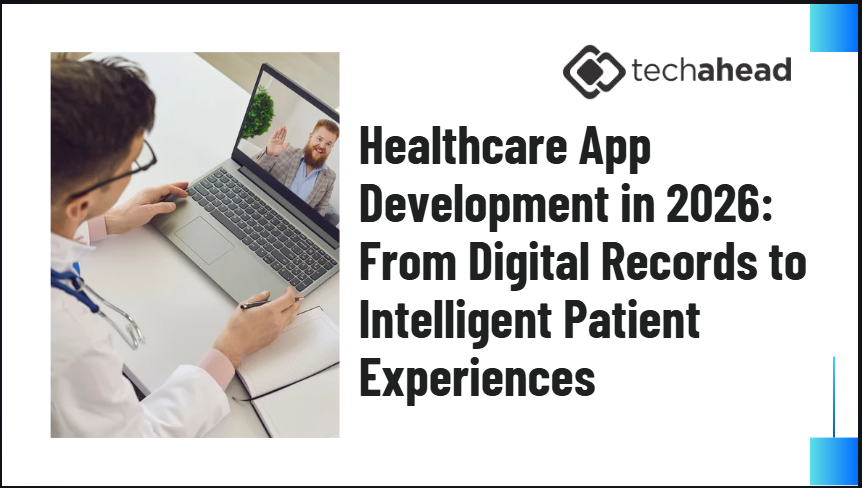
Healthcare applications have come a long way from basic appointment-booking tools.
Modern platforms can support telemedicine, electronic records, remote monitoring, digital payments, medication management, wearable integration, AI assistance, and patient engagement.
The next stage is even more ambitious.
Healthcare software is becoming an intelligent layer connecting patients, clinicians, devices, and data.
For a Healthcare development company, this means application development is increasingly about building entire digital ecosystems rather than isolated mobile applications.
At the same time, the rise of wellness technology means healthcare platforms are beginning to interact with fitness applications, wearable devices, and lifestyle data in new ways.
Healthcare organizations often operate with multiple systems.
Electronic health records.
Laboratory platforms.
Pharmacy systems.
Telemedicine applications.
Patient portals.
Remote monitoring devices.
Billing systems.
When these systems operate independently, healthcare professionals may struggle to obtain a complete view of the patient.
Interoperability is therefore becoming a central development priority.
In 2026, healthcare software trends increasingly emphasize cloud-native architecture, interoperability, FHIR-based exchange, remote patient monitoring, IoMT, and connected health applications.
AI is no longer limited to experimental healthcare projects.
It is increasingly being integrated into operational and clinical workflows.
Potential applications include:
A 2026 review of AI and digital health applications highlights opportunities involving diagnostic support, personalized therapy, early disease detection, predictive analytics, and workflow efficiency.
The important shift is that AI is becoming infrastructure rather than merely a feature.
Healthcare communication often involves repetitive questions.
Patients may need information about appointments, preparation instructions, medication schedules, or administrative processes.
Generative AI can help automate some of these interactions.
A conversational assistant could understand natural-language questions and retrieve appropriate information from approved sources.
However, healthcare requires a higher standard than ordinary customer-service automation.
Systems need reliable knowledge sources, escalation paths, monitoring, privacy controls, and appropriate restrictions.
The goal should not be to create a chatbot that sounds intelligent.
The goal should be to create an assistant that is reliably useful within a clearly defined scope.
Healthcare does not stop when the patient leaves the clinic.
Remote patient monitoring can help extend certain care processes into the home.
Wearables, connected medical devices, smartphones, and sensors can provide data that healthcare systems may use for appropriate monitoring.
This is one area where fitness technology and healthcare technology can intersect.
A wearable might initially be used for general activity tracking, while connected health platforms can potentially use suitable validated data for more specific monitoring workflows.
The distinction between the two must remain clear.
Fitness applications can provide valuable lifestyle context.
Activity levels.
Exercise frequency.
Sleep patterns.
Recovery trends.
Daily movement.
For consumers, these measurements can support wellness goals.
For healthcare providers, appropriately collected information may potentially complement other data sources in relevant use cases.
This is why a Fitness App Development Company may increasingly need to think about interoperability, security, and data ownership.
Fitness applications are becoming part of a broader digital health environment.
India provides an important example of this transformation.
The Ayushman Bharat Digital Mission aims to support a connected digital health ecosystem, while India's broader digital health environment increasingly emphasizes consent-based sharing and longitudinal health information.
Recent analysis of India's digital healthcare landscape highlights the growing role of mobile health applications, personal health records, wearable integration, remote monitoring, and ABDM-linked infrastructure.
This creates opportunities for developers building healthcare platforms for India's large and diverse population.
Healthcare applications process highly sensitive information.
That means security architecture needs to be considered from the beginning.
Important areas include:
Users should only have access to information appropriate for their role.
Data should be protected during transmission and storage.
Organizations should be able to understand who accessed or changed information.
Patients need meaningful control over appropriate data sharing.
APIs connecting healthcare systems need strong authentication and authorization.
These capabilities should be built into the architecture rather than added after the application is complete.
The healthcare industry is increasingly exploring models centered around prevention and continuous wellness.
PwC's 2026 global health analysis identifies consumer-driven care, predictive and proactive care, secure data sharing, interoperability, privacy, and cyber resilience among important trends shaping healthcare.
This creates a natural intersection with fitness applications.
Exercise and physical activity are already important components of preventive health.
Digital platforms can make those behaviors easier to track and support.
Healthcare technology can be technically impressive and still fail if the user experience is complicated.
Patients may have limited technical knowledge.
Clinicians may have limited time.
Caregivers may manage multiple people.
Fitness users may want fast interactions rather than lengthy forms.
This means healthcare and fitness applications need intuitive interfaces designed around real workflows.
Technology should reduce friction rather than introduce another layer of complexity.
The healthcare application of the future will likely be less isolated.
It could connect:
Patient identity.
Medical records.
Telemedicine.
Wearables.
Remote monitoring.
AI assistants.
Laboratory data.
Pharmacy services.
Fitness applications.
The application becomes the interface to a larger digital ecosystem.
That makes architecture and interoperability just as important as visual design.
Healthcare application development is moving from digitizing existing processes toward redesigning how care and wellness interact.
AI can improve workflows.
Connected devices can provide continuous information.
Interoperability can connect fragmented systems.
Fitness applications can support preventive behaviors.
But technology must be implemented responsibly.
A Healthcare development company that understands AI, cloud infrastructure, interoperability, security, and patient experience can help organizations build the next generation of digital healthcare platforms.
Meanwhile, a Fitness App Development Company can contribute by creating connected wellness experiences that fit naturally into people's daily lives.
The future is not simply digital healthcare.
It is healthcare that becomes increasingly connected to the way people live.