English
 Arabic
 French
 Spanish
 Portuguese
 Deutsch
 Turkish
 Dutch
Dutch
 Italiano
 Russian
 Romaian
 Portuguese (Brazil)
 Greek
Greek
Industrial Automation Boosts Air Compressor Market Toward USD 48.79 Billion by 2036
Party |
2026-08-06 13:45:38
 Advertise With Us
 About Us
 Terms And Conditions
 Политика конфиденциальности
Смотреть все
Политика конфиденциальности
Смотреть все

Обновить до Про
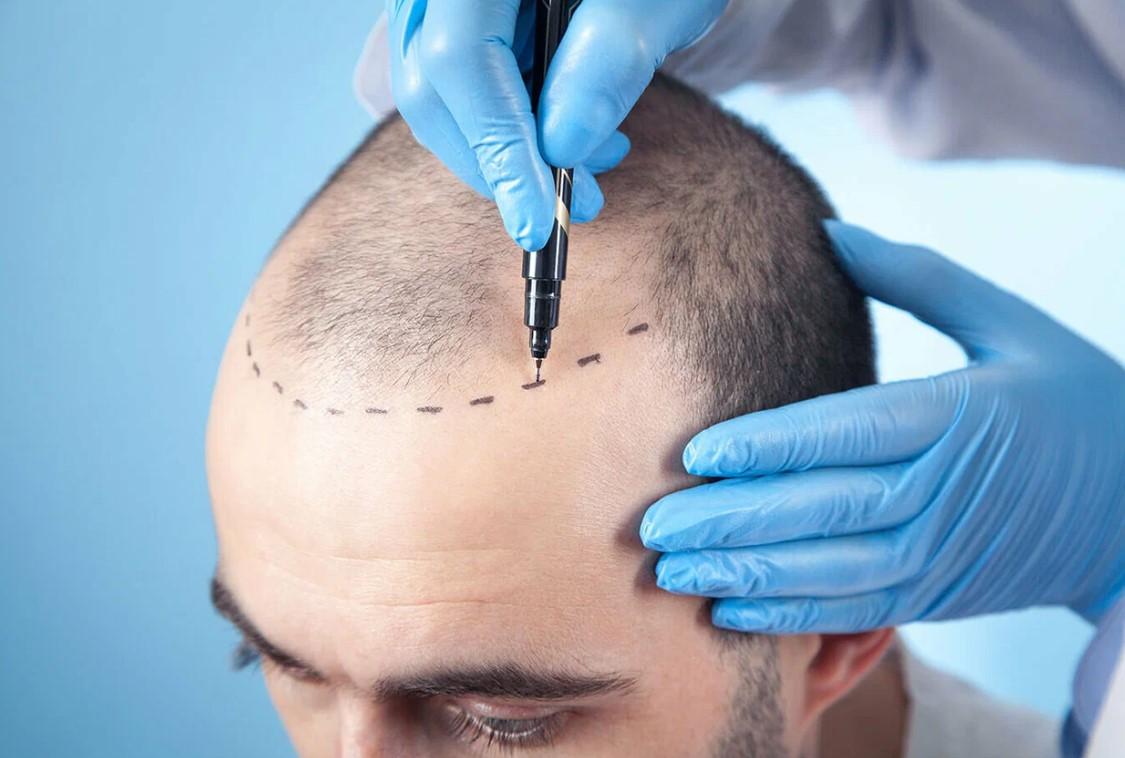
Hair transplant surgery has become one of the most effective long-term solutions for hair loss in Riyadh. However, not everyone experiencing hair thinning or baldness is immediately suitable for the procedure. A successful hair transplant depends on proper candidate selection, as this directly affects the natural appearance, density, and long-term results. Hair transplant in Riyadh offers advanced solutions for restoring natural hair growth and improving confidence.
Understanding the signs that you are a good candidate can help you decide whether it is the right time to consider surgery or if you should wait or try alternative treatments first.
Hair transplantation is not just about restoring hair—it is about strategic redistribution of existing healthy hair follicles. Since donor hair is limited, surgeons must ensure that it is used wisely.
A good candidate typically has:
Without these factors, results may be less effective or require multiple future procedures.
One of the strongest indicators that you are a good candidate is stable hair loss.
This means:
In Riyadh clinics, surgeons often recommend waiting until hair loss stabilizes because performing a transplant too early can lead to uneven results later as natural hair continues to fall.
Medical experts note that stabilizing hair loss is more important than age when determining suitability. (hairmedico.com)
Donor hair is the foundation of every hair transplant.
A good candidate has:
These hairs are genetically permanent and are used to restore bald or thinning areas.
If the donor area is weak or overly thin, surgeons may limit the procedure or suggest alternative treatments.
Ideal candidates usually fall into recognizable hair loss stages, such as:
Patients with completely diffuse thinning or unpredictable hair loss may need further evaluation before surgery.
General health plays an important role in healing and graft survival.
A good candidate should:
Conditions like diabetes or hypertension do not automatically disqualify patients, but they must be well-controlled.
One of the most important factors is mindset.
A good candidate understands that:
Patients with realistic expectations are far more satisfied with long-term results.
Hair transplants work best for androgenetic alopecia, the most common form of genetic hair loss.
In men, this includes:
In women, it may appear as:
This type of hair loss responds best to surgical restoration.
Surprisingly, being too early can also make you a poor candidate.
You may need to wait if:
Surgeons in Riyadh often prefer to observe younger patients before recommending surgery to avoid future imbalance.
Hair transplantation is a long-term journey, not an instant fix.
A good candidate is prepared for:
Mental readiness is just as important as physical suitability.
Healthy scalp conditions are essential for successful transplantation.
You are likely a good candidate if:
Any existing issues must be treated before surgery.
A strong candidate understands that hair transplant is part of a broader approach.
In Riyadh, many clinics combine surgery with:
Patients who accept combined treatment plans often achieve better long-term results.
Some individuals may need to delay or reconsider surgery if they have:
In such cases, doctors may recommend medical therapy first.
Modern clinics in Riyadh use detailed assessments, including:
This helps create a personalized treatment plan for each patient.
Being a good candidate for a hair transplant in Riyadh depends on more than just hair loss—it depends on stability, donor strength, health, and expectations.
You are likely a strong candidate if:
When these factors come together, hair transplant surgery can deliver natural, long-lasting, and highly satisfying results.