English
 Arabic
 French
 Spanish
 Portuguese
 Deutsch
 Turkish
 Dutch
Dutch
 Italiano
 Russian
 Romaian
 Portuguese (Brazil)
 Greek
Greek
Pakistani Escort In Sharjah +971521673633
Other |
2026-07-16 13:28:30
 Advertise With Us
 About Us
 Terms And Conditions
 سياسة الخصوصية
عرض كل النتائج
سياسة الخصوصية
عرض كل النتائج

ترقية الحساب
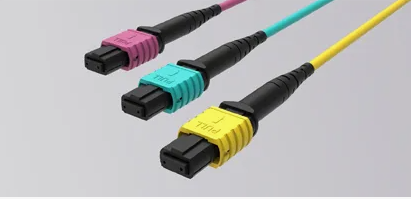
Modern data centers, telecommunications facilities, and enterprise networks require compact connectivity systems that can handle growing numbers of optical fibers while maintaining reliable performance. A multi fiber push on connector provides a practical solution by allowing multiple optical fibers to be aligned and connected through a single interface. Instead of managing individual connectors for every fiber, organizations can use multi-fiber connectivity to reduce physical congestion and create more organized network architectures. This technology is particularly valuable in environments where bandwidth requirements are increasing and available rack or pathway space must be used efficiently.
The growing adoption of cloud computing, artificial intelligence, high-performance computing, and large-scale data processing is increasing demand for high-density optical infrastructure. Network operators need connectivity components that support efficient deployment without making maintenance unnecessarily complicated. A multi fiber push on connector can be integrated into trunk cables, patch panels, breakout assemblies, and optical transceiver connections, depending on the network design. Its effectiveness depends on accurate fiber alignment, connector quality, appropriate polarity, and compatibility with the surrounding optical equipment. Understanding these factors helps businesses make informed decisions when planning or upgrading high-capacity fiber networks.
Multi Fiber Push On, commonly abbreviated as MPO, is a fiber-optic connector technology designed to align multiple optical fibers simultaneously within a single ferrule. The connector's precision alignment system ensures that corresponding fibers meet correctly when two connector halves are mated. This multi-fiber structure allows several optical channels to be handled through one physical interface, making it well suited to high-density network environments. MPO connectors can be manufactured in different fiber-count configurations and can support both single-mode and multimode applications. The technology is widely used for structured cabling and parallel optical transmission, where multiple fibers may simultaneously carry data between network devices. A properly designed multi-fiber interface can help reduce cable bulk and simplify physical infrastructure while maintaining the optical performance required by modern networking equipment. Because multiple fibers depend on a common connector interface, precision manufacturing and proper installation are particularly important for reliable operation.
Professional installation is essential when deploying multi-fiber connectors because several optical channels must be managed and aligned correctly. Technicians need to verify connector orientation, polarity, fiber position, gender, and compatibility before connecting assemblies. Incorrect polarity can cause transmit and receive channels to be connected improperly, while incorrect gender or keying can prevent physical mating altogether. Connector cleanliness is equally important because contamination on a multi-fiber end face can affect several channels simultaneously. Installers should inspect and clean connector interfaces before mating them and perform appropriate optical testing after installation. Cable routing should also maintain suitable bend radii and avoid excessive pulling or mechanical stress. Proper labeling and documentation can make a significant difference in large facilities, where hundreds or thousands of multi-fiber connections may need to be managed. Professional installation therefore helps establish a reliable physical infrastructure that can be maintained, tested, and expanded efficiently.
Multi-fiber push-on connectors are widely used in data centers, telecommunications networks, enterprise structured cabling, optical distribution systems, and high-speed network applications. They can connect switches, servers, patch panels, trunk cables, and optical transceivers while consolidating multiple fibers into compact interfaces. Pre-terminated trunk assemblies are particularly useful for large installations because several fiber connections can be deployed as a single organized cable assembly. MPO interfaces can also support parallel optical transmission, where multiple fibers operate together to achieve higher aggregate bandwidth. Different configurations can accommodate different fiber counts, connector arrangements, and optical transmission requirements. Depending on the application, connectors may be designed for single-mode or multimode fiber and may use different end-face polishing configurations. This flexibility allows network designers to select multi-fiber assemblies that correspond with specific equipment and infrastructure requirements. When properly implemented, the technology can simplify large-scale deployment while improving physical density and cable organization.
Selecting the appropriate connector requires careful evaluation of the complete network architecture. Fiber count should be determined first because the connector must match the cable and equipment configuration. Buyers should also identify whether the network uses single-mode or multimode fiber and confirm the required connector polish. Polarity is one of the most important considerations because the transmitting and receiving fibers must be mapped correctly between connected devices. Connector gender and key orientation should also be verified to ensure compatibility between mating components. Optical performance specifications such as insertion loss and return loss can become increasingly important as network speeds increase or link distances become longer. Businesses should review manufacturer documentation and confirm compatibility with transceivers, adapters, patch panels, and trunk assemblies before purchasing. For large deployments, future network expansion should also be considered so that the selected connector architecture can support additional capacity without requiring unnecessary infrastructure changes.
Quality assurance is critical for multi-fiber connectivity because one physical connector can support numerous optical channels. Precision ferrule dimensions, fiber-hole positioning, guide-pin alignment, end-face quality, and connector housing design all influence the reliability of the completed connection. Manufacturers should maintain consistent production processes and test components according to appropriate specifications. During installation, technicians should inspect connector end faces, remove contamination, verify polarity, and test completed links. Optical testing can identify excessive insertion loss, incorrect connections, or other problems before they affect production operations. Industry standards also help define connector dimensions, interfaces, and interoperability requirements, allowing compatible components from different manufacturers to be used within structured systems when appropriate. Organizations should consider supplier reputation, technical documentation, testing capabilities, and product consistency when purchasing components for critical network infrastructure. Combining quality products with proper inspection and testing practices can reduce service issues and improve the long-term reliability of a high-density optical network.
The primary advantage of multi-fiber push-on connectivity is its ability to accommodate multiple optical channels within a compact interface. This can significantly reduce the physical space required for large numbers of connections, making the technology particularly useful in data centers with limited rack and pathway capacity. Multi-fiber assemblies can also accelerate installation because pre-terminated cables allow several connections to be deployed simultaneously. Reduced cable congestion can make infrastructure easier to organize, identify, and maintain. Another important benefit is scalability. Multi-fiber systems can provide a structured foundation for upgrading network equipment and increasing bandwidth as business requirements evolve. The technology can also support modular architectures in which trunk cables, patching systems, and breakout assemblies work together to provide flexible connectivity. When correctly specified and installed, multi-fiber push-on technology offers an effective balance of density, deployment efficiency, and long-term network flexibility.
The rapid growth of artificial intelligence, cloud computing, high-performance computing, and data-intensive applications is increasing demand for faster and denser optical infrastructure. Data centers need to move larger quantities of information between servers, switches, storage systems, and other equipment while controlling physical space and cable complexity. Multi-fiber connectivity is well suited to this environment because several optical channels can be managed through compact interfaces. Future developments are likely to emphasize higher transmission speeds, lower insertion loss, improved connector designs, greater fiber density, and easier installation. Modular and pre-terminated systems may also become increasingly important as organizations seek faster deployment and simplified infrastructure management. Network designers will need to consider how current connector choices interact with emerging optical transceiver technologies and higher-bandwidth architectures. Businesses that plan multi-fiber infrastructure with future requirements in mind can establish networks that are easier to expand and less likely to require major physical redesigns as technology develops.
A multi fiber push on connector provides an efficient approach to high-density optical connectivity by allowing multiple fibers to be connected through a compact interface. Its use in data centers, telecommunications networks, enterprise infrastructure, and high-speed applications can help organizations improve space utilization, simplify cabling, and support scalable network architectures. However, successful implementation requires careful attention to fiber count, polarity, gender, key orientation, fiber type, optical performance, cleanliness, and equipment compatibility. Professional installation and testing further help ensure dependable operation and easier maintenance. As bandwidth requirements continue to rise, multi-fiber push-on technology will remain an important component of modern optical infrastructure, helping businesses build organized, efficient, and future-ready networks capable of supporting increasingly demanding digital applications.