English
 Arabic
 French
 Spanish
 Portuguese
 Deutsch
 Turkish
 Dutch
Dutch
 Italiano
 Russian
 Romaian
 Portuguese (Brazil)
 Greek
Greek
Rhinoplasty Aging Effects on Your Reshaped Nose
Health |
2026-03-26 13:15:26
 Advertise With Us
 About Us
 Terms And Conditions
 Política de Privacidade
Ver Todos
Política de Privacidade
Ver Todos

Atualize para o Pro
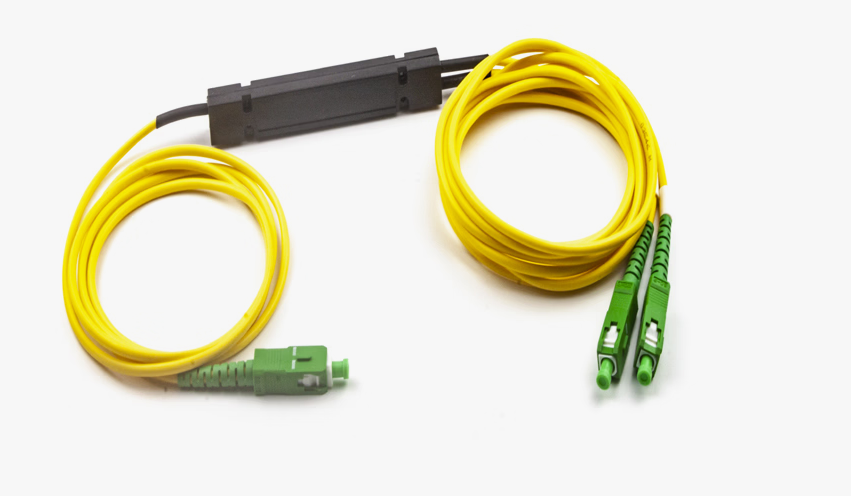
Modern communication networks depend on reliable optical infrastructure to transmit large volumes of information quickly and efficiently. An optic coupler is an important passive component used in fiber optic systems to connect, distribute, combine, or manage optical signals between different fiber paths. Unlike active networking equipment, a passive coupler does not require electrical power to perform its basic optical function. This makes it useful in a wide range of applications, including telecommunications, data centers, enterprise networks, broadband systems, monitoring infrastructure, and specialized optical equipment. As organizations continue to demand greater bandwidth and more dependable connectivity, efficient management of optical signals has become increasingly important.
The role of optical coupling can vary depending on the design and application. Some couplers are used to divide an incoming optical signal among multiple outputs, while others combine signals or provide controlled optical distribution within a network. The technology can support passive optical network architectures, testing systems, sensing applications, and other fiber-based communication environments. Selecting the right optic coupler requires consideration of coupling ratio, insertion loss, wavelength range, fiber type, connector configuration, operating environment, and overall network requirements. Understanding these factors allows businesses and network professionals to choose components that provide predictable performance and long-term reliability.
An optical coupler is designed to transfer optical power between two or more fiber paths according to a specific configuration. Depending on the product type, the component may divide one optical signal into multiple outputs or combine signals from separate inputs into a shared optical path. Passive fiber couplers are often based on technologies such as fused biconical taper or planar lightwave circuit designs, with each approach offering different characteristics for specific applications. Coupling ratio is a key specification because it determines how optical power is distributed between output ports. In telecommunications and passive optical networks, couplers can enable one optical source to serve multiple endpoints, reducing the need for separate active equipment at every connection. The component's insertion loss and uniformity can directly influence network performance, so careful specification is important. A properly selected optical coupler can therefore help create efficient network architectures while maintaining controlled signal distribution across connected devices.
Professional installation is important because optical components require careful handling and accurate integration into the surrounding fiber infrastructure. Technicians must ensure that the coupler is compatible with the fiber type, wavelength, connector system, and optical power requirements of the network. Poor connections, contaminated interfaces, excessive bending, or incorrect routing can introduce additional signal loss and reduce overall system performance. Fusion-spliced couplers also require specialized installation equipment and appropriate splicing procedures to achieve reliable optical connections. During deployment, technicians should document fiber paths and connection points so that future maintenance can be completed efficiently. Testing is another important part of installation because optical power measurements can verify whether the completed link performs within the expected loss budget. Professional installation reduces the risk of avoidable faults and helps ensure that the coupler performs as intended within the larger optical system.
Optical couplers are used across numerous industries and network architectures because they provide passive methods for managing optical power. Passive optical networks commonly use splitters and couplers to distribute signals from a central optical line terminal to multiple subscribers. Data centers and enterprise environments may use optical coupling components in monitoring, testing, or specialized signal distribution systems. Telecommunications networks can also incorporate couplers into wavelength management and fiber distribution architectures. In optical sensing applications, couplers may divide or combine signals between sensing elements and measurement equipment. Important specifications can include the number of ports, coupling ratio, operating wavelength, insertion loss, return loss, polarization characteristics, and operating temperature range. Some products are packaged as compact modules, while others are integrated into specialized enclosures or fiber assemblies. Selecting the appropriate design depends on whether the application prioritizes signal splitting, combining, monitoring, redundancy, or another optical function.
Selecting an appropriate coupler begins with defining how optical power needs to move through the network. Buyers should identify the required input and output configuration and determine whether the application needs a balanced split or a specific coupling ratio. Wavelength compatibility is another critical factor because a component designed for one optical range may not provide the desired performance at another wavelength. Fiber type should also match the rest of the system, particularly when working with single-mode or multimode infrastructure. Insertion loss is important because every passive component consumes part of the available optical power budget. Businesses should also consider return loss, polarization requirements, environmental conditions, connector type, packaging, and expected operating temperature. For critical telecommunications or data center deployments, manufacturers should provide detailed specifications and appropriate test documentation. A complete system-level evaluation can help organizations select a coupler that balances optical performance, reliability, cost, and long-term maintenance requirements.
Quality control is essential for passive optical components because small variations can affect signal distribution and overall network performance. Reliable manufacturers use controlled production and testing processes to verify optical characteristics, physical dimensions, and environmental performance. Important tests may include insertion loss, return loss, coupling ratio, wavelength response, and polarization-related measurements, depending on the product design. Connectorized couplers should also be inspected for contamination and physical damage before installation. Fiber interfaces must be kept clean because particles on connector end faces can introduce additional loss or potentially damage mating surfaces. Industry standards and manufacturer specifications can provide guidance for component performance, interoperability, and environmental requirements. Organizations purchasing optical couplers should therefore evaluate supplier reputation, testing procedures, technical documentation, and product consistency rather than selecting components based solely on purchase price. High-quality components and proper testing can help reduce unexpected losses and improve the reliability of the complete fiber optic network.
One of the major benefits of optical couplers is their passive operation, which allows optical signal distribution without requiring an external electrical power source. This characteristic can simplify network architecture and reduce the number of active components required in certain applications. Couplers can also provide flexible methods for distributing optical signals among multiple endpoints, supporting efficient infrastructure designs in telecommunications and broadband networks. Their compact form factor makes them suitable for applications where physical space is limited, while different coupling ratios allow network designers to control how optical power is distributed. Optical couplers can also support monitoring and testing applications by directing a controlled portion of an optical signal toward measurement equipment. When properly specified, these components can contribute to reliable network operation and predictable optical performance. Their flexibility makes them useful across a wide range of fiber-based systems, from large telecommunications deployments to specialized optical sensing and measurement applications.
The continued expansion of fiber-based communications is creating new opportunities for optical coupling technologies. Broadband expansion, cloud infrastructure, data center growth, distributed networks, and advanced sensing systems all require efficient management of optical signals. As networks become more complex, organizations will increasingly seek compact passive components that can support higher bandwidth while maintaining low optical losses. Advances in photonic integration and planar optical technologies may enable more sophisticated coupling and signal-management functions within smaller packages. At the same time, telecommunications operators will continue to require reliable passive distribution components for expanding fiber-to-the-home and other optical access networks. Future optical couplers are likely to focus on improved uniformity, lower insertion loss, wider wavelength support, greater port density, and enhanced environmental durability. Businesses that consider these developments when planning infrastructure can build systems that are better prepared for future bandwidth and connectivity requirements.
An optic coupler provides a practical passive solution for connecting, splitting, combining, and managing optical signals across modern fiber networks. Its ability to distribute optical power without electrical amplification makes it valuable in telecommunications, passive optical networks, data centers, sensing applications, and specialized communication systems. However, selecting the correct component requires careful attention to coupling ratio, wavelength, fiber type, insertion loss, return loss, packaging, and environmental conditions. Professional installation, proper cleaning, and thorough testing can further improve reliability and ensure that the component operates within the network's optical budget. As demand for fiber-based connectivity continues to increase, optical coupling technology will remain an important part of efficient and scalable network infrastructure, helping organizations manage optical signals while supporting dependable long-term performance.