English
 Arabic
 French
 Spanish
 Portuguese
 Deutsch
 Turkish
 Dutch
Dutch
 Italiano
 Russian
 Romaian
 Portuguese (Brazil)
 Greek
Greek
Gear for Every Activity: Analyzing the Product Segments of the Sports and Leisure Equipment Market
Other |
2026-07-22 13:03:41
 Advertise With Us
 About Us
 Terms And Conditions
 Privacy Policy
Hepsini Gör
Privacy Policy
Hepsini Gör

Upgrade to Pro
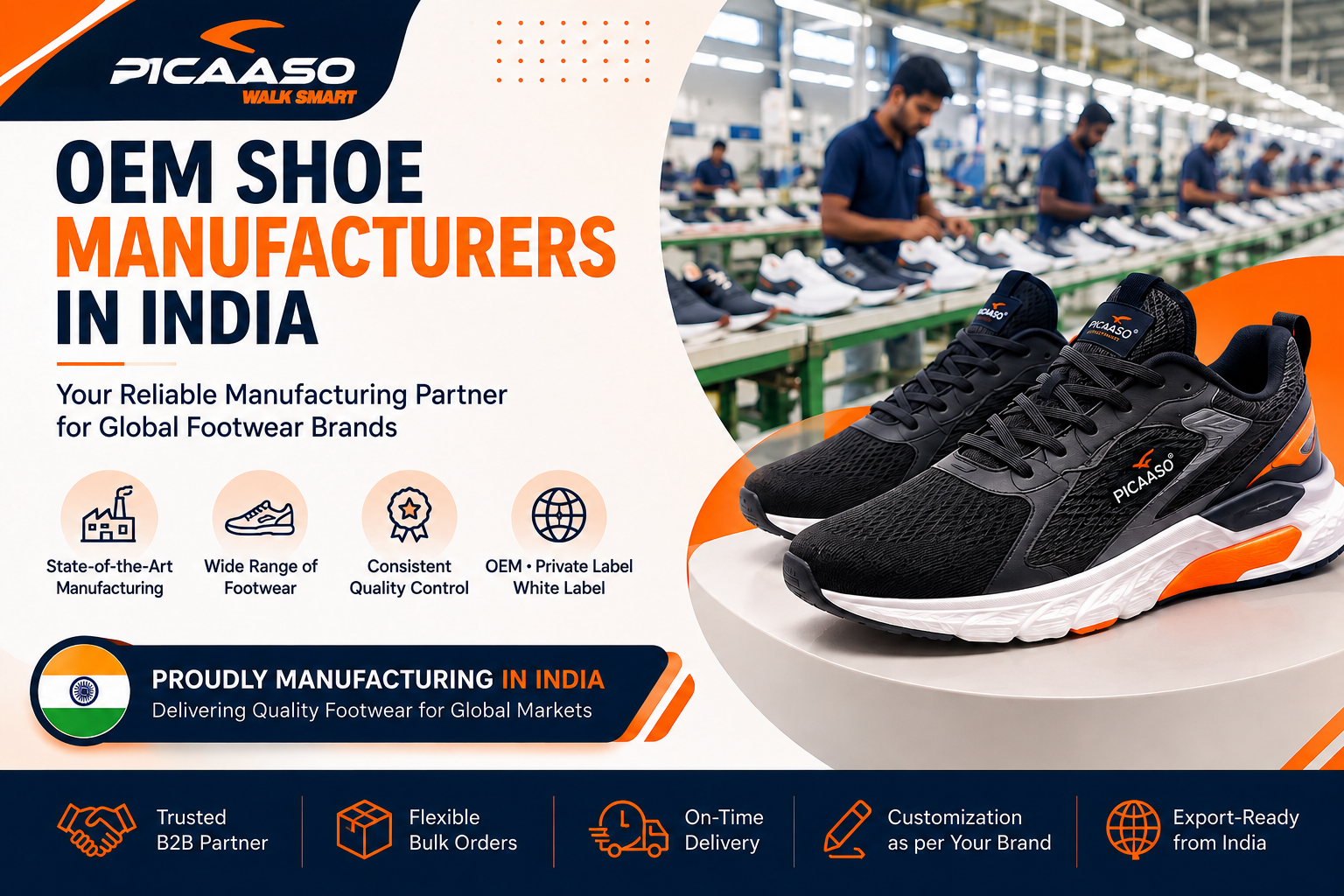
The footwear market is becoming more competitive as brands focus on product quality, comfort, design, and reliable production. For many businesses, setting up an independent manufacturing facility may require significant investment, infrastructure, and technical expertise.
Working with experienced OEM shoe manufacturers in India can provide an alternative approach where footwear brands can focus on product development, branding, and market expansion while production is handled by a manufacturing partner.
OEM stands for Original Equipment Manufacturing. In the footwear industry, it generally refers to a manufacturer producing shoes according to the requirements and specifications of another brand.
Depending on the arrangement, OEM manufacturing may include:
This model can be useful for retailers, wholesalers, startups, distributors, and established footwear brands looking to develop their own product range.
The performance of footwear depends heavily on the materials used in its construction. Different materials can influence comfort, flexibility, durability, weight, cushioning, and overall product cost.
For example, sole materials should be selected according to the intended use of the footwear. Understanding the difference between EVA sole vs rubber sole can help brands evaluate factors such as weight, flexibility, grip, cushioning, and durability before finalizing a footwear design.
Choosing the right sole material is particularly important for sports shoes, casual footwear, slippers, sandals, and other everyday categories.
Sampling is an important stage in footwear manufacturing because it allows brands to review the product before moving to larger production quantities.
A footwear sample can be checked for:
Necessary modifications can then be communicated to the manufacturer before bulk production begins.
Quality control should not be limited to the final stage of production. Regular inspections during different manufacturing stages can help identify issues before they affect a large number of finished products.
Manufacturers may check materials, stitching, bonding, sizing, finishing, and packaging according to agreed product specifications.
Clear communication between the brand and manufacturer can also help maintain consistency across different production batches.
One of the advantages of OEM manufacturing is the ability to develop footwear according to specific brand requirements.
Customization may include colours, materials, sole patterns, upper designs, packaging, labels, logos, and other product elements. The level of customization generally depends on manufacturing capabilities, order quantity, and product category.
Brands should therefore prepare detailed product specifications before beginning the development process.
Selecting a footwear manufacturer should involve more than comparing production prices. Businesses should also review manufacturing infrastructure, product range, quality-control procedures, communication, sampling processes, customization capabilities, and production timelines.
A suitable manufacturing partner should understand the brand's requirements and provide a clear production process from sampling to final delivery.
OEM footwear manufacturing can help brands develop and manufacture footwear without establishing their own production facility. However, successful manufacturing requires proper planning, suitable material selection, detailed specifications, effective sampling, and consistent quality control.
By understanding both the manufacturing process and important product elements such as sole materials, footwear businesses can make more informed decisions while developing products for their target customers.