English
 Arabic
 French
 Spanish
 Portuguese
 Deutsch
 Turkish
 Dutch
Dutch
 Italiano
 Russian
 Romaian
 Portuguese (Brazil)
 Greek
Greek
Buffalo Hump Removal in Dubai: Everything You Need to Know About Restoring a Balanced Neck and Upper Back
Health |
2026-07-09 10:57:05
 Advertise With Us
 About Us
 Terms And Conditions
 Política de privacidade
Ver todos
Política de privacidade
Ver todos

Atualizar para Plus
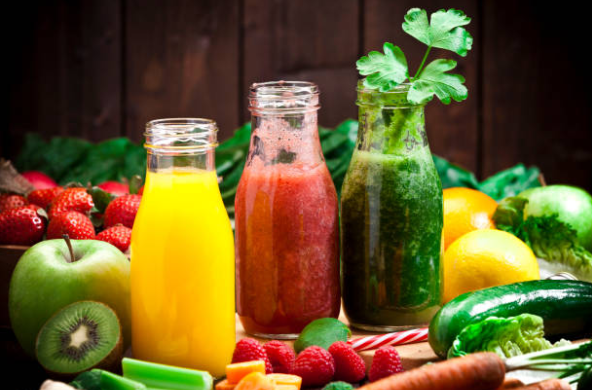
Every new beverage idea starts the same way, someone tastes something at home, a friend says "you should sell this," and suddenly there's a half-formed business plan scribbled on a napkin. The distance between that napkin and an actual bottle on a shelf is way bigger than most people expect though. This is exactly where drink formulation companies come into the picture, taking a rough idea, a flavor profile someone loves, and turning it into something that's actually stable, scalable, and safe to sell at volume. It's a lot more technical than most first-time founders assume going in.

Something that tastes perfect mixed in a kitchen blender often falls apart completely once you try producing thousands of units. Shelf stability's a huge issue nobody thinks about until it bites them, a drink that separates or spoils within days at home scale becomes a nightmare once it's sitting on store shelves for weeks. Ingredients that work fine at small batch quantities sometimes react totally differently at industrial scale, texture changes, flavor shifts, sometimes the whole thing just doesn't hold together the same way. This is precisely the technical gap formulation experts exist to bridge, taking something that works in a kitchen and rebuilding it so it actually survives real world production and distribution.
People picture a lab coat and beakers, and honestly that's not far off, but there's way more involved than just chemistry. A good formulation partner works through flavor balancing, shelf life testing, packaging compatibility, sometimes even regulatory compliance depending on the category, alcohol, functional beverages, kids drinks, all carry different rules. They'll run multiple iterations, tweaking sweetness, acidity, mouthfeel, until the product matches what the founder actually envisioned, not just something technically stable but bland and forgettable. It's honestly part science, part art, and the good companies in this space understand both sides equally well instead of just nailing the technical piece while losing what made the drink special in the first place.
Not every formulation company specializes in the same categories, and this trips people up constantly. Some focus heavily on functional beverages, energy drinks, wellness shots, things with active ingredients requiring precise dosing and stability testing. Others specialize in more traditional soft drinks or juices, where the challenges lean more toward flavor and shelf life than complex ingredient interactions. Ask potential partners directly about their experience with your specific category, request examples of products they've actually brought to market successfully, and honestly ask about failures too, because a company that's never had a formulation not work out is either very new or not being fully honest with you.
First time founders almost always underestimate how long this process takes, genuinely. Getting from initial concept to a fully stable, production-ready formula often takes several months, sometimes closer to a year depending on complexity and how many iterations it takes to get things right. Rushing this stage to hit an arbitrary launch date tends to backfire badly, either through a product that doesn't hold up once it's actually out in the world, or worse, quality issues that damage a brand's reputation right out the gate. Building in realistic time for proper testing, even when it's frustrating to wait, almost always pays off compared to rushing something half-finished to market.
Getting the formula right is genuinely half the battle, maybe less honestly, because a perfectly formulated drink still needs people to actually know it exists and want to buy it. This is where things shift from lab work to actual marketing, and for beverage brands hoping to land in quick service settings, the principles overlap heavily with a solid marketing strategy for fast food restaurant operations, positioning, visual branding, and getting product in front of the right audience at the right moment. A lot of formulation companies focus purely on the technical side and leave founders scrambling to figure out the go-to-market piece entirely on their own, which is a gap worth planning for early rather than discovering after the product's already sitting in a warehouse.
There's actually a lot beverage founders can learn from how quick service restaurants approach marketing, even if the categories seem unrelated at first glance. Limited time offers, seasonal flavor drops, that kind of urgency-driven promotion works incredibly well for beverages too, creating a reason for customers to try something now rather than someday. Visual consistency matters just as much, recognizable packaging and branding across every touchpoint the same way a fast food chain keeps its logo and colors instantly recognizable everywhere. Even the loyalty and rewards mechanics that quick service chains lean on heavily translate surprisingly well to beverage brands trying to build repeat purchase behavior instead of just one-time trial.
A perfectly formulated, well marketed drink still needs to actually be available where customers can buy it, and distribution's honestly where a lot of promising beverage brands stumble hardest. Getting into grocery stores, convenience chains, or foodservice accounts involves a whole separate set of relationships and logistics beyond just having a good product. Some formulation companies have existing relationships that help open doors here, which is worth asking about directly during the vetting process, because that kind of connection can shave months off what's otherwise a slow, relationship-driven process of getting shelf space and building retailer trust from scratch.
Formulation and production costs add up fast, and there's always pressure to cut corners somewhere, cheaper ingredients, skipping a round of stability testing, rushing packaging decisions. This almost always backfires eventually, sometimes not immediately but a few months down the line when a batch fails or a flavor profile doesn't hold up the way it did in early samples. Budgeting realistically for proper formulation work upfront, even when it feels expensive relative to a tight startup budget, tends to save significantly more money later by avoiding costly reformulation or a damaged brand reputation from an inconsistent product hitting shelves.
At the end of the day, launching a new beverage successfully takes more than a great tasting recipe, it takes proper technical development from experienced drink formulation companies paired with a genuine go-to-market plan. Borrowing smart tactics, the kind of urgency and consistency baked into a solid marketing strategy for fast food restaurant brands, can give beverage founders a real edge once the product's actually ready to sell. Get the formula right, plan the launch seriously, and don't rush either piece, because both matter just as much as the recipe that started the whole thing on a napkin.