English
 Arabic
 French
 Spanish
 Portuguese
 Deutsch
 Turkish
 Dutch
Dutch
 Italiano
 Russian
 Romaian
 Portuguese (Brazil)
 Greek
Greek
Lignocellulosic Biomass Market Analysis by Feedstock, Application & Region
Food |
2026-05-12 16:40:32
 Advertise With Us
 About Us
 Terms And Conditions
 Privacy Policy
Mostra tutti i risultati
Privacy Policy
Mostra tutti i risultati

Passa a Pro
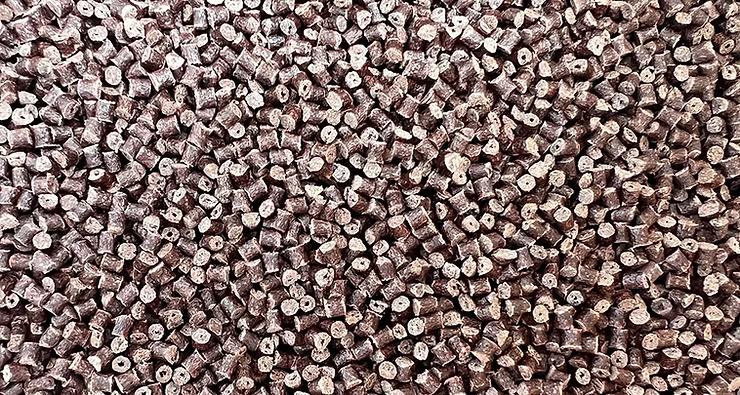
Wood plastic composites (WPCs) are gaining attention as practical materials for manufacturers looking to combine durability, versatility, and improved resource efficiency. Made by combining wood-based materials with thermoplastic polymers, WPCs can be used to create a wide range of products for construction, furniture, automotive, landscaping, and other industries.
A reliable wood plastic composite manufacturer can help businesses select suitable material formulations based on their specific application, processing method, and performance requirements.
Wood plastic composite is an engineered material that combines wood fibers, wood flour, or other plant-based materials with polymers. Depending on the intended application, manufacturers may also add processing aids, stabilizers, pigments, fillers, and other additives.
The resulting material can provide a balance of properties associated with both wood and plastics. It can also be processed through techniques such as extrusion and injection molding, making it suitable for different product designs.
WPC materials offer several characteristics that make them useful for manufacturers. Their composition can be adjusted to achieve specific physical, aesthetic, and processing requirements.
Some potential advantages include:
These features make WPCs suitable for products where appearance, durability, and functionality are important.
WPC products are used in a growing number of applications. In the construction sector, they can be used for decking, fencing, wall cladding, railing, profiles, and decorative elements.
In furniture manufacturing, WPCs can be considered for panels, components, outdoor furniture, and other designed products. Automotive manufacturers may also explore composite materials for selected interior components and applications.
Other potential uses include landscaping products, architectural elements, packaging components, and consumer products.
The role of a wood plastic composite manufacturer extends beyond simply producing composite material. Manufacturing expertise is important for developing formulations that provide consistent performance during processing and final use.
A capable manufacturer focuses on factors such as:
Choosing appropriate polymers and wood-based materials is essential. The selected materials should be compatible with the intended production process and final application.
Different products require different material characteristics. Formulations can be adjusted to address requirements related to strength, stiffness, appearance, processing, moisture resistance, and durability.
Consistent compounding and processing help manufacturers achieve predictable material properties. Quality control throughout production can reduce variations between batches.
Technical guidance can help customers determine whether a particular WPC formulation is suitable for their manufacturing process. This can be especially valuable when developing a new product or replacing conventional materials.
Sustainability is becoming an important consideration across the plastics industry. WPCs can provide opportunities to incorporate wood-based resources and, depending on the formulation, recycled polymer materials.
Using recovered materials can support more efficient resource utilization and reduce dependence on virgin resources. However, the sustainability profile of a WPC product depends on factors including raw-material sourcing, manufacturing methods, product lifespan, and end-of-life management.
For this reason, manufacturers should consider the complete material lifecycle when developing sustainable products.
RRAJ Bioplast focuses on material solutions that support sustainability, resource efficiency, and circularity within the plastics industry. The company works toward transforming waste and recovered resources into useful materials for industrial applications.
For businesses seeking a wood plastic composite manufacturer, selecting an experienced material partner can simplify product development and support consistent manufacturing requirements. A suitable partner can help businesses explore material options while considering performance, processing, and sustainability goals.
Demand for alternative and resource-efficient materials is encouraging continued innovation in composite technologies. Improvements in formulations, recycled content, processing methods, and product design may expand the applications of WPC materials.
As manufacturers look for materials that combine performance with responsible resource use, wood plastic composites can play an important role in developing new products.
Wood plastic composites offer manufacturers a versatile material option for applications requiring durability, design flexibility, and wood-like aesthetics. The right wood plastic composite manufacturer can provide consistent formulations, technical expertise, and material solutions tailored to specific production needs.
With continued innovation and greater focus on circularity, WPC materials have the potential to support more efficient and sustainable product development across multiple industries.