English
 Arabic
 French
 Spanish
 Portuguese
 Deutsch
 Turkish
 Dutch
Dutch
 Italiano
 Russian
 Romaian
 Portuguese (Brazil)
 Greek
Greek
Rising Demand for Designer Prom Dresses Driving Global Market Growth
Other |
2026-04-21 08:37:36
 Advertise With Us
 About Us
 Terms And Conditions
 Политика конфиденциальности
Смотреть все
Политика конфиденциальности
Смотреть все

Обновить до Про
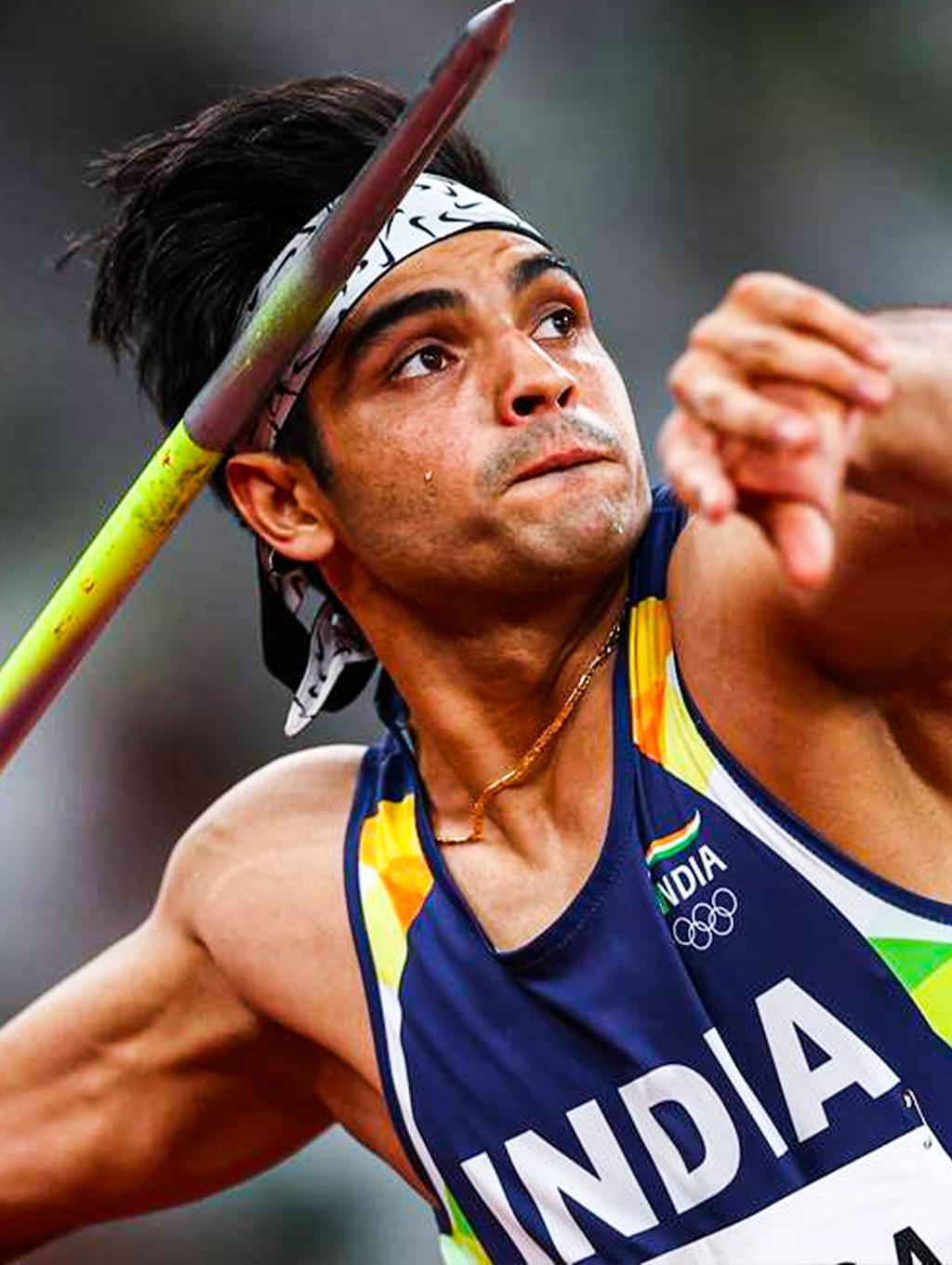
For decades, Indian sports had an easy story: cricket occupied the centre of the conversation, while athletes from other disciplines often had to fight for attention, funding and facilities.
That story is changing.
The shift is not happening because cricket has become less important. Cricket remains deeply embedded in Indian culture. Instead, other sports are finally building the kind of ecosystem that allows athletes to be noticed, supported and developed over many years.
From Neeraj Chopra’s impact on athletics to the rise of Indian shooters, badminton players, boxers and wrestlers, the definition of an Indian sporting hero has become much broader.
The change is also visible away from the medal podium. India is investing more in sports infrastructure, athlete support, talent identification and sports science. The Union Budget 2026–27 increased the Ministry of Youth Affairs and Sports allocation to ₹4,479.88 crore and introduced the Khelo India Mission as a longer-term framework for developing the sector.
For fans searching for sports updates online, terms such as gold365 login may appear alongside wider sports discussions, but the bigger story is happening in stadiums, academies, schools and training centres across the country.
The most important change is that Indian success is no longer concentrated in one sport.
At the Olympics and other international competitions, India now expects competitive performances from athletes in shooting, badminton, wrestling, boxing, athletics, weightlifting, hockey and several other disciplines.
That expectation matters.
When a young athlete grows up watching an Indian win an Olympic medal in javelin or shooting, sport starts to look like a realistic career rather than an unusual choice. A child who once wanted to become only a cricketer may now see athletics, badminton or shooting as equally worth pursuing.
Neeraj Chopra is perhaps the clearest example.
His Olympic gold in Tokyo and silver in Paris did more than add medals to India's tally. He changed the visibility of an entire event. Javelin became something Indian audiences actively followed, discussed and understood.
That kind of influence cannot be measured only through medals.
It can be seen when children begin asking for better training facilities, when parents take athletics more seriously and when local coaches have more talented youngsters entering their programmes.
The same pattern has appeared in badminton.
PV Sindhu's Olympic success, along with the achievements of Saina Nehwal, Kidambi Srikanth, Lakshya Sen and the doubles partnership of Satwiksairaj Rankireddy and Chirag Shetty, has helped establish badminton as a mainstream Indian sport.
Shooting has followed a similar path.
Manu Bhaker's Olympic success turned her into a household name, while India's broader shooting programme continues to produce athletes capable of competing at the highest level.
The important point is that these athletes are not isolated success stories anymore. They are part of a growing pipeline.
India's sporting transformation is increasingly about what happens before an athlete reaches the international stage.
The Khelo India programme has become an important part of this process. Government data shows that more than 1,000 Khelo India Centres have been established, while thousands of athletes receive structured support covering areas such as coaching, equipment, competition exposure and sports science.
The financial side is also significant.
Under the Khelo India athlete-support system, selected athletes can receive assistance of ₹6.28 lakh per year for training, equipment, competition exposure, education and scientific support.
That changes the equation for a talented teenager from a smaller city.
Imagine an athlete who is exceptionally fast but whose family cannot afford specialist coaching, travel to competitions or proper equipment. Talent alone may not be enough.
Structured support can bridge that gap.
It does not guarantee a medal, but it gives talent a better chance to survive long enough to become elite.
India has also expanded the use of talent identification programmes. The KIRTI initiative uses structured assessments to identify sporting potential at an early age, with more than 1.8 lakh assessments reported by June 2026.
That is an important shift from the old approach of simply waiting for exceptional athletes to appear.
Athletics deserves particular attention because it covers so many events.
A successful cricket team can produce one trophy. A strong athletics programme can potentially produce medals across sprinting, middle-distance running, long-distance running, jumping and throwing events.
India has already shown that its athletes can compete internationally.
Neeraj Chopra leads the conversation, but athletes such as Parul Chaudhary, Gulveer Singh and several younger competitors are helping build depth.
The development of athletics infrastructure is another encouraging sign. In February 2026, the government announced new synthetic athletic tracks in Bhopal, Guwahati and Jalpaiguri as part of a ₹120 crore package involving sports infrastructure and athlete-support facilities.
Infrastructure alone cannot create champions.
A track does not teach an athlete how to run faster. A gym does not automatically produce a weightlifting champion.
But good infrastructure combined with expert coaching, nutrition, recovery and competition experience creates an environment in which talent has a much better chance to develop.
This is where India's sports story becomes more interesting.
The country is gradually moving from a system that celebrates exceptional athletes to one that attempts to produce them consistently.

The transformation of Indian sport is not only about government spending. It involves coaches, academies, sports scientists, parents, schools, private organisations, federations and, increasingly, the athletes themselves.
One of the biggest improvements is the growing acceptance of sports science.
Elite athletes now need much more than physical training. Nutrition, biomechanics, recovery, injury prevention, psychology, data analysis and performance monitoring can all influence results.
Consider a javelin thrower.
Two athletes may have similar natural strength. The difference may come from throwing mechanics, approach speed, recovery routines or the ability to maintain technique under pressure.
The same is true in badminton.
At the highest level, winning may depend on tiny details such as movement efficiency, reaction time, court positioning and recovery between rallies.
This is why modern Indian sport increasingly resembles a professional performance industry rather than a collection of individual talents.
The 2026 Budget's Khelo India Mission is intended to strengthen this broader pipeline, including talent development, infrastructure, coaching, sports science and athlete support.
Another important development is geographic expansion.
Sporting talent has never belonged exclusively to India's major metropolitan cities. Many successful athletes have emerged from smaller towns and rural communities.
The challenge was always access.
If a talented youngster lives hundreds of kilometres away from a quality training facility, potential can disappear before anyone notices it.
The expansion of Khelo India Centres and state-level facilities is designed to reduce that problem. According to government figures, the network now extends across districts and includes facilities intended to serve regions that previously had fewer structured sporting opportunities.
This could eventually become one of the most important changes in Indian sport.
What is driving India's new sporting era?
The commercial side also matters.
When an athlete becomes recognisable, sponsorship opportunities can follow. That money can help athletes access better coaching, international competitions, equipment and support teams.
It also creates a positive cycle.
More visibility can attract sponsors. Sponsors can provide resources. Better resources can improve performance. Better performances create more visibility.
That cycle is already visible across several Indian sports.
Fans following the changing sporting landscape may encounter terms such as gold365 bonus while searching for sports-related content, but the broader transformation should be understood through participation, infrastructure and athlete development rather than any individual online platform.
There are still major challenges
It would be wrong to suggest that Indian sport has solved all of its problems.
Infrastructure quality remains uneven. Some athletes still struggle to access experienced coaches, specialist medical support and international competition.
Sports federations can also face organisational challenges, while promising athletes sometimes struggle during the difficult transition from junior competition to senior international sport.
That transition is particularly important.
A teenager winning a junior championship is encouraging, but senior sport is a different environment. Competitors are stronger, tactics are more sophisticated and the psychological pressure is greater.
India's next challenge is therefore not simply finding talented youngsters.
It is keeping them in the system long enough to become world-class seniors.
How fans can support the new sporting culture
Fans also have a role.
You do not need to become an expert in every sport. Start by following one athlete or discipline outside cricket.
Watch a few athletics meets. Learn the basics of shooting. Follow an Indian badminton player through a major tournament.
The more familiar you become with a sport, the easier it is to appreciate what makes an elite performance special.
Media habits matter too.
When non-cricket athletes receive sustained attention rather than coverage only after winning a medal, they gain a larger audience and stronger commercial opportunities.
There is also value in celebrating progress.
An athlete finishing fourth after setting a personal best may have achieved something extraordinary even without standing on the podium.
That mindset is important if India wants a healthier sporting culture.
Common myths about India's sporting transformation
One common myth is that cricket is responsible for holding every other Indian sport back.
The reality is more complicated.
Cricket's popularity has helped create a powerful sports economy in India, and some of that commercial knowledge, infrastructure and professional expertise can benefit other sports.
Another myth is that more money automatically means more medals.
It does not.
Funding must reach the right areas: coaching, competition exposure, equipment, recovery, nutrition, sports science and athlete welfare.
The third misconception is that India's next sporting revolution will come from one superstar.
It is more likely to come from depth.
If India can produce ten strong athletes instead of one exceptional athlete in a particular discipline, its medal prospects become much more sustainable.
Key takeaways
FAQ: India’s New Sporting Era
Is Indian sports really moving beyond cricket?
Yes, although cricket remains India's dominant spectator sport. The growth of athletics, badminton, shooting, wrestling, boxing and other disciplines shows that Indian audiences increasingly follow athletes and competitions outside cricket.
Why is athletics becoming more popular in India?
Neeraj Chopra has played a major role by bringing javelin into mainstream conversation. His success has made athletics easier for casual fans to understand and has encouraged greater interest in field events.
What is Khelo India doing for Indian sports?
Khelo India focuses on grassroots participation, talent identification, infrastructure and athlete development. By June 2026, more than 23,000 athletes were reported to be supported through various Khelo India programmes.
How can young athletes benefit from India's growing sports ecosystem?
Young athletes can look for recognised academies, Khelo India Centres, state sports programmes and legitimate competition pathways. Early assessment, qualified coaching and regular competition experience are more valuable than simply joining the most expensive academy.
What role does gold365 vip play in India's sporting growth?
Searches for gold365 vip may appear in sports-related online activity, but it is not a measure of India's sporting development. The more meaningful indicators are athlete participation, infrastructure, coaching quality, international results and the strength of the talent pipeline.
Is 365 win connected to India's athletics development?
The term 365 win may appear in online sports searches, but India's athletics development is driven by athletes, coaches, federations, training systems and sports-support programmes. Official athletics bodies remain the appropriate source for competition and athlete information.
India's sporting transformation is ultimately about changing possibilities. A young athlete in a small town should be able to imagine a future in athletics, shooting, badminton or boxing without feeling that cricket is the only realistic route to recognition.
The country is not there yet, and challenges remain. But the foundations are becoming stronger: more facilities, structured talent identification, greater financial support and a growing understanding of sports science.
The next stage will be judged not by one extraordinary champion, but by how many talented athletes India can develop, retain and support over the next decade. If that pipeline continues to strengthen, India's sporting identity could become far broader than the cricket-first model that defined previous generations.