English
 Arabic
 French
 Spanish
 Portuguese
 Deutsch
 Turkish
 Dutch
Dutch
 Italiano
 Russian
 Romaian
 Portuguese (Brazil)
 Greek
Greek
Hymen Surgery in Dubai – Procedure Details, Recovery Process, and Key Benefits Explained
Health |
2026-07-02 09:24:05
 Advertise With Us
 About Us
 Terms And Conditions
 Datenschutzbestimmungen
Alle anzeigen
Datenschutzbestimmungen
Alle anzeigen

Upgrade auf Pro
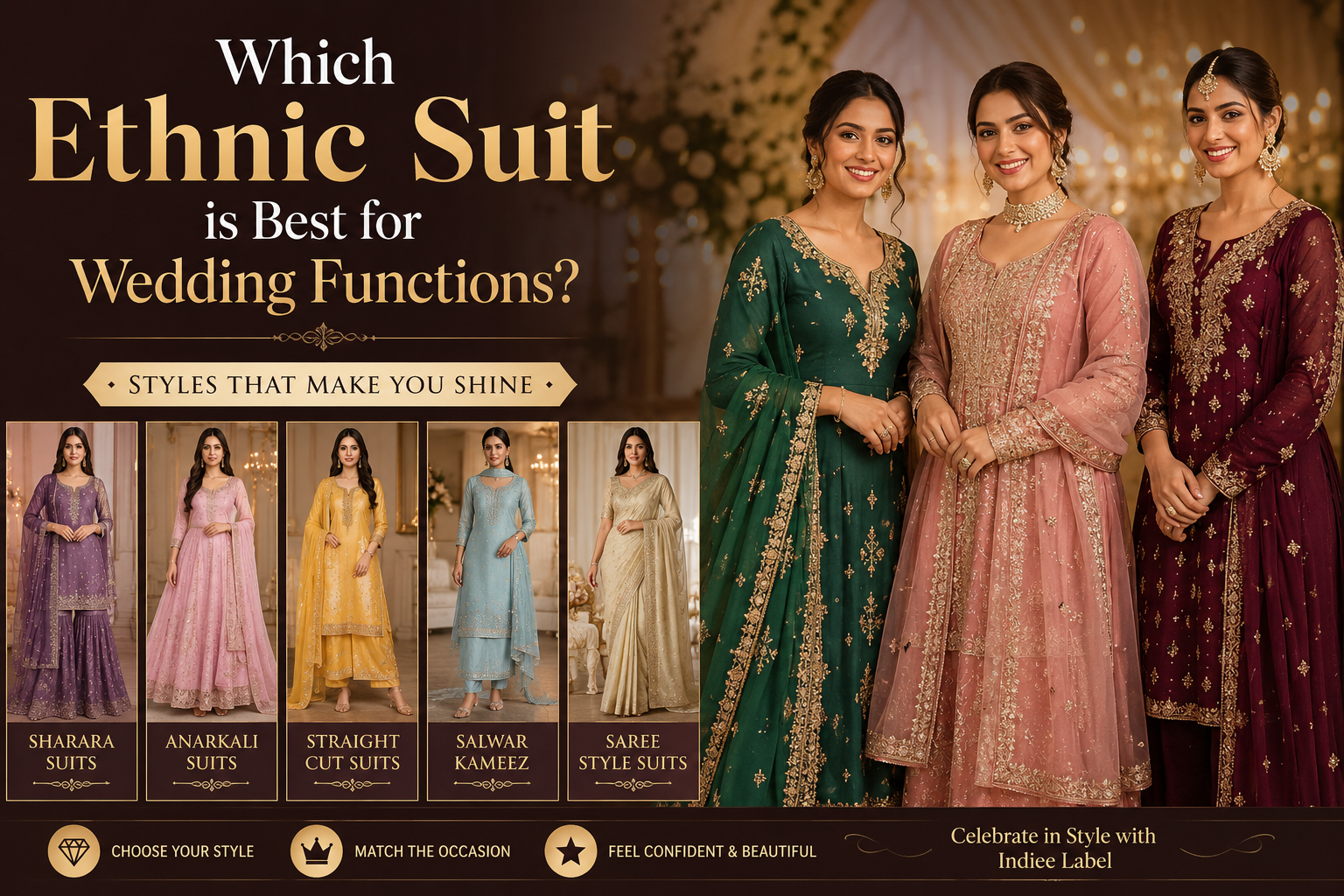
Wedding season in India rarely means just one event. Between the mehendi, sangeet, haldi, and the many smaller get-togethers that lead up to the main ceremony, most women end up needing several outfits, and not all of them call for a heavy lehenga or an elaborate saree. This is exactly where a well-chosen ethnic suit earns its place. A good suit can carry you through a mehendi afternoon, a family dinner, or even a smaller wedding function with the same ease and elegance that a lehenga offers, minus the weight and the fuss.
The question that trips up most women, though, is which ethnic suit actually works best for wedding functions, given how many silhouettes are available today. A salwar kameez suit, a sharara palazzo suit, and a kaftan suit all fall under the same broad "ethnic suit" category, yet they serve fairly different purposes depending on the function, the setting, and how much movement is involved. This guide breaks down each option so you can choose with real confidence rather than guesswork.
A decade ago, wedding functions were dominated almost entirely by lehengas and sarees, with suits treated as a more casual, everyday category. That has changed considerably. Designer ethnic suits today are made with the same richness of fabric, embroidery, and detailing as a lehenga, while offering far more practicality across the many events that make up a modern Indian wedding.
The appeal is simple. A suit allows for genuine ease of movement, which matters enormously during functions that involve dancing, standing for long hours, or moving between venues. It is also considerably easier to manage through the day compared to a heavy lehenga, without compromising on how festive or elegant the final look feels. This combination of comfort and style is exactly why suits have moved from being a backup option to a genuine first choice for many wedding functions.
Before deciding which ethnic suit for wedding functions works best, it helps to think about the specific event you are dressing for, since different functions call for different levels of formality and movement.
Mehendi and haldi functions tend to be relaxed, colourful, and daytime affairs, often involving sitting for long stretches while mehendi is applied or standing through the haldi ritual itself. Sangeet functions are almost always built around dancing and performances, which makes ease of movement the top priority. Smaller pre-wedding dinners or family gatherings call for something elegant but understated, since the focus is on conversation rather than performance or ritual. Cocktail or reception-adjacent functions sometimes call for a slightly more contemporary, statement-making silhouette.
Once you are clear on which of these categories your function falls into, choosing between a salwar kameez, a sharara palazzo suit, or a kaftan suit becomes much more straightforward.
A well-tailored salwar kameez suit for women remains one of the most dependable choices across almost every wedding function, and its versatility is exactly why it continues to be a wardrobe staple. The silhouette works well whether you are sitting through a lengthy mehendi session, standing through a haldi ceremony, or attending a smaller family dinner, since it offers structure without ever feeling restrictive.
For daytime functions like mehendi and haldi, lighter fabrics such as cotton silk, chanderi, or georgette in bright festive colours like yellow, orange, or coral work particularly well, since these fabrics stay breathable through hours of sitting and standing. For evening functions, richer fabrics like silk or organza with more detailed embroidery around the neckline and hem elevate the same silhouette into something suitable for a slightly more formal setting.
One of the biggest advantages of a salwar kameez suit is how easily it adapts across body types and comfort preferences. A straight-cut kameez paired with a flared or straight bottom can be styled to suit different levels of festivity, simply by adjusting the fabric richness and embellishment, making it a genuinely practical choice for women who need one outfit style to work across multiple functions.
When it comes to functions that involve dancing, celebration, and a slightly more dramatic silhouette, a designer sharara palazzo suit is often the better choice. The flared palazzo bottom offers considerably more freedom of movement than a fitted salwar, making it especially well suited for sangeet functions where hours of dancing are involved, while the overall silhouette still carries a distinctly festive, elevated quality.
The flare of a sharara suit also photographs beautifully, moving gracefully with choreography or casual movement, which matters given how many wedding functions today are built around performances and candid photography. Pairing a fitted, embellished kurta top with a flared sharara bottom in a flowing fabric like georgette or crepe creates a silhouette that feels celebratory without ever weighing you down.
Sharara suits also offer a nice middle ground between the simplicity of a salwar kameez and the structure of a lehenga, making them ideal for functions where you want to look distinctly festive but still need to move freely for extended periods. This is why so many women now buy designer sharara palazzo suits specifically for sangeet nights or larger evening functions within the wedding calendar.
Designer kaftan suits for women have grown significantly in popularity for wedding functions, particularly for relaxed, intimate gatherings like family dinners, pre-wedding brunches, or smaller mehendi functions where comfort takes priority without sacrificing style. The loose, flowing silhouette of a kaftan suit offers a level of ease that few other ethnic silhouettes can match, since there is no fitted waistband or structured blouse to manage through a long day.
This makes kaftan suits particularly appealing for functions that stretch across many hours, or for women who prefer a more relaxed fit without compromising on festive detailing. Many designer kaftan suits today feature the same richness of embroidery, mirror work, or block printing found in more structured silhouettes, simply presented in a flowing, effortless shape.
Kaftan suits are less suited for highly formal or heavily ritual-driven functions, but for relaxed daytime gatherings, destination wedding functions in warmer climates, or smaller intimate celebrations, they offer a combination of comfort and style that is genuinely hard to beat.
Regardless of which silhouette you choose, fabric plays a major role in how appropriate and comfortable an ethnic suit feels for a specific wedding function. Daytime functions in warmer weather call for breathable fabrics like cotton silk, chanderi, and lightweight georgette, which prevent discomfort during long hours of sitting or standing outdoors. Evening functions allow for richer fabrics like silk, organza, or velvet blends, which carry more visual weight and suit the more elevated mood of a nighttime celebration.
Destination weddings and functions held in warmer climates particularly benefit from breathable fabric choices regardless of the time of day, since comfort becomes even more important when factoring in travel and outdoor settings.
Wedding functions often tempt women toward heavier embellishment, but it is worth remembering that comfort and embellishment do not have to compete with each other. A suit with detailed embroidery concentrated around the neckline, sleeves, and hem, rather than dense embellishment across the entire garment, often achieves the same festive visual impact while remaining considerably lighter and easier to wear through a long function.
This balance matters most for functions like sangeet, where movement is central to the event, and for mehendi or haldi functions that involve sitting for extended periods. Saving the heaviest embellishment for shorter, more formal functions like a reception is generally a smarter approach than wearing the same level of detailing across every event on the wedding calendar.
At Indiee Label, we design our ethnic suits with real wedding function days in mind, not just the visual appeal of a single photograph. Whether you are looking for a classic salwar kameez suit for a mehendi afternoon, a designer sharara palazzo suit for a sangeet night full of dancing, or a designer kaftan suit for a relaxed pre-wedding gathering, every piece in our collection is crafted with fabric quality, embroidery detail, and genuine wearability in mind. We understand that wedding season means multiple functions, multiple moods, and very little time to compromise on comfort, which is exactly why our suits are built to keep up with every part of the celebration.
There is no single ethnic suit that works best for every wedding function, and that is precisely the point. A salwar kameez suit offers dependable versatility across daytime and family functions, a sharara palazzo suit brings festive movement and elegance to sangeet nights, and a kaftan suit delivers effortless comfort for relaxed gatherings. Thinking through the specific mood, movement, and setting of each function, rather than defaulting to one silhouette for the entire wedding season, ensures you feel just as good as you look at every event.
Explore Indiee Label's collection of salwar kameez suits, designer sharara palazzo suits, and kaftan suits for women, crafted to suit every function on your wedding calendar.