English
 Arabic
 French
 Spanish
 Portuguese
 Deutsch
 Turkish
 Dutch
Dutch
 Italiano
 Russian
 Romaian
 Portuguese (Brazil)
 Greek
Greek
Wholesale Telecom Market Growth Accelerates with Global Data Demand Expansion
Other |
2026-03-24 07:19:12
 Advertise With Us
 About Us
 Terms And Conditions
 Privacy Policy
Mostra tutti i risultati
Privacy Policy
Mostra tutti i risultati

Passa a Pro
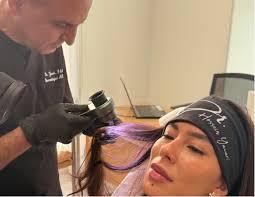
Hair plays an important role in personal appearance and confidence. When hair begins to look thinner, weaker, or less dense, many people explore non-surgical solutions that may help improve its overall appearance. PRP hair treatment in Abu Dhabi is one option that has gained attention for supporting natural hair growth and improving the appearance of thinning hair.
PRP stands for platelet-rich plasma. It is prepared from a small sample of the patient's own blood and contains a concentrated level of platelets and growth-related substances. After preparation, the PRP is carefully introduced into selected areas of the scalp.
Unlike a hair transplant, PRP does not involve moving hair follicles from one part of the scalp to another. Instead, it is designed to support existing follicles and encourage a healthier environment for hair growth.
Although PRP can be helpful for some people, its effectiveness depends on several factors, including the cause of hair loss, follicle condition, overall health, and individual response to treatment.
PRP hair treatment is a minimally invasive procedure that uses platelet-rich plasma to support hair follicles.
The treatment generally follows three main steps:
Platelets contain substances involved in the body's natural repair processes. When concentrated PRP is introduced into areas affected by hair thinning, it is intended to provide targeted support to existing follicles.
Because the treatment uses components obtained from the patient's own blood, PRP does not rely on synthetic hair-growth materials.
Hair growth occurs through a natural cycle involving different stages. Hair follicles can become weaker or less active for various reasons, including genetics, aging, hormonal changes, nutritional deficiencies, and certain health conditions.
PRP treatment focuses on supporting follicles that are still present but may not be producing hair as effectively as before.
The concentrated platelet-rich plasma is administered to areas where hair thinning is visible. The growth-related substances within PRP may help support the local tissue environment around the follicles.
The aim is not to create completely new follicles but to encourage existing follicles to function more effectively when they are capable of responding to treatment.
There are several reasons why people consider PRP hair treatment in Abu Dhabi when searching for solutions to hair thinning.
PRP is primarily intended to support follicles that are already present. This makes it particularly interesting for individuals experiencing thinning rather than completely empty areas of permanent hair loss.
When existing follicles respond well, PRP may contribute to an improvement in the appearance of hair density over time.
PRP involves injections rather than surgical incisions. This generally means there is less disruption to the scalp compared with surgical hair-restoration procedures.
The PRP used during treatment is prepared from the patient's own blood sample. This is one of the defining characteristics of the procedure.
Many people appreciate PRP because it is an outpatient treatment and generally does not require the extended recovery associated with major surgery.
PRP may be considered by adults who are experiencing certain forms of hair thinning or early-stage hair loss.
It can be particularly relevant when hair follicles remain active but appear weaker or produce thinner strands.
However, PRP is not suitable for every form of hair loss. People experiencing sudden, severe, unexplained, or patchy hair loss should first seek an appropriate evaluation to identify the underlying cause.
A professional assessment can help determine whether PRP is likely to be appropriate.
A consultation is an important first step in the PRP process. During the assessment, the scalp and pattern of hair loss can be examined.
The treatment provider may consider:
This information can help create an individualized treatment plan.
Understanding the cause of hair loss is particularly important because different conditions may require different approaches.
The procedure typically begins with collecting a small amount of blood. The sample is then processed to separate the platelet-rich plasma from other components.
Once prepared, the PRP is injected into selected areas of the scalp. Small injections are distributed across areas where additional follicular support is desired.
The process is performed carefully to target areas of concern while maintaining patient comfort.
Some people may experience temporary redness, swelling, tenderness, or mild sensitivity following the injections. These effects generally settle as the scalp recovers.
There is no universal number of PRP sessions that works for everyone. Treatment schedules depend on individual hair-loss patterns and how the scalp responds.
A treatment plan may involve several sessions spaced apart to give the scalp time to respond between treatments. Maintenance sessions may also be recommended in some cases.
It is important to follow the recommended schedule rather than assuming that one session will provide the desired result.
One of the most important things to understand about PRP hair treatment in Abu Dhabi is that results develop gradually.
Hair follicles follow a natural growth cycle, so visible improvements do not usually appear immediately after treatment. Some patients may notice changes in hair shedding, texture, or thickness before more obvious improvements in density become visible.
Individual results vary. Consistent follow-up and patience are therefore important when evaluating the treatment.
Following the recommended aftercare instructions can help maintain scalp comfort after a PRP session.
Depending on the treatment plan, patients may be advised to:
Patients should not rely on general advice alone. Their specific aftercare recommendations should always take priority.
PRP does not produce identical results for every patient. Several factors can affect the outcome.
Genetic hair loss, hormonal changes, nutritional deficiencies, stress-related shedding, and other conditions may respond differently to treatment.
PRP is generally intended to support existing follicles. If follicles have been permanently lost, PRP may have limited potential in those areas.
Nutrition, hormonal balance, lifestyle, and general health may influence hair growth and the body's response to treatment.
Following the recommended treatment schedule and aftercare instructions can help support the overall treatment plan.
Both men and women can experience hair thinning, although the patterns and causes may differ.
Men commonly experience thinning around the hairline and crown, while women may experience more generalized reduction in hair density.
PRP may be considered for both men and women when appropriate. However, the treatment approach should be based on the individual's hair-loss pattern rather than simply their gender.
PRP and hair transplantation have different purposes.
A hair transplant involves surgically moving follicles from a donor area to areas affected by permanent hair loss. PRP, in contrast, does not move follicles. It uses concentrated platelet-rich plasma to support existing follicles.
For someone with early or moderate thinning, PRP may be considered as a non-surgical option. For more advanced permanent hair loss, a hair transplant may be discussed as another possibility.
In certain situations, PRP may also be used as part of a broader hair-restoration strategy.
Preparing for treatment generally involves following the instructions provided during consultation.
Patients should share relevant information about medications, supplements, scalp conditions, previous procedures, and general health.
It can also be helpful to discuss expectations openly. Understanding what PRP can and cannot realistically achieve makes it easier to evaluate the results later.
People searching for PRP hair treatment in Abu Dhabi may be interested in a minimally invasive approach that focuses on supporting natural hair growth.
Abu Dhabi offers access to modern aesthetic and hair-restoration services, allowing patients to explore different solutions based on their individual needs.
Choosing a professional treatment environment is important because proper assessment, sterile technique, appropriate PRP preparation, and careful administration all contribute to the treatment experience.
Tajmeels Clinic can be considered by individuals researching professional hair-restoration options and looking for a personalized approach to hair thinning concerns.
PRP may be suitable for some people with thinning hair, particularly when viable follicles are still present. An individual assessment is needed to determine suitability.
No. PRP is designed to support existing hair follicles rather than create entirely new follicles.
PRP is minimally invasive, and many people can return to normal activities relatively quickly. Temporary scalp tenderness, redness, or swelling may occur.
Results develop gradually because hair growth follows a natural cycle. The timing varies from person to person.
Depending on the cause and severity of hair loss, PRP may be incorporated into a broader hair-restoration plan. A professional assessment can determine which options are appropriate.
Hair thinning can affect both appearance and confidence, but advances in non-surgical hair restoration have created more options for people seeking support for existing hair follicles. PRP hair treatment in Abu Dhabi uses platelet-rich plasma prepared from the patient's own blood and introduces it into selected areas of the scalp to support the natural hair-growth environment.
The treatment is not a guaranteed solution for every type of hair loss, and realistic expectations are essential. Results can depend on follicle health, the cause of hair loss, treatment consistency, and individual response.
For people exploring professional hair-restoration options, Tajmeels Clinic can be considered as part of their research. A personalized consultation can help determine whether PRP is appropriate and what type of treatment plan may best address individual hair concerns.