English
 Arabic
 French
 Spanish
 Portuguese
 Deutsch
 Turkish
 Dutch
Dutch
 Italiano
 Russian
 Romaian
 Portuguese (Brazil)
 Greek
Greek
Data as a Service Market Outlook for Businesses Seeking Real-Time Data Access
Other |
2026-07-16 10:48:28
 Advertise With Us
 About Us
 Terms And Conditions
 سياسة الخصوصية
عرض كل النتائج
سياسة الخصوصية
عرض كل النتائج

ترقية الحساب
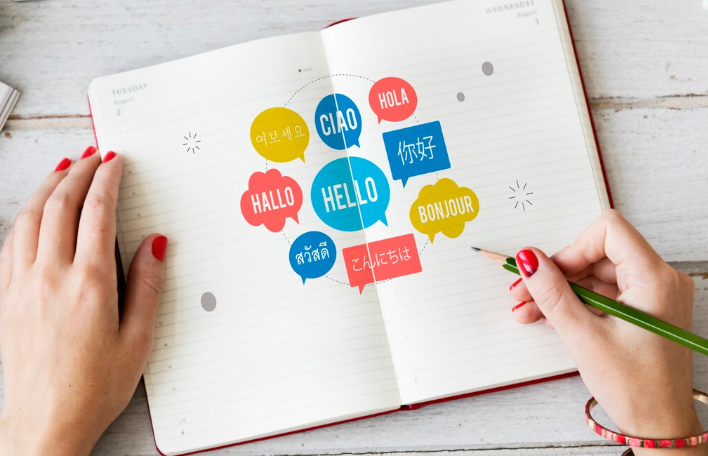
When a document is translated, the words change but the layout often breaks. Text expands or shrinks, fonts fail to support certain scripts, tables misalign, and right-to-left languages reverse the entire flow. Multilingual DTP services solve exactly this problem. They take translated content and rebuild the visual design so every language version looks professional, consistent, and ready for print or digital use.
Desktop publishing (DTP) is the process of arranging text, images, and graphics into a finished layout. Multilingual DTP extends that work across languages and writing systems. The result is a set of files that look as if they were originally designed in each target language rather than awkwardly adapted from the source.
Translated text rarely fits the original design. German or Finnish can expand by 20–30 percent compared with English. Chinese, Japanese, and Korean use completely different character densities. Arabic, Hebrew, and Urdu read from right to left and often require mirrored layouts. Without proper adjustment, documents end up with overlapping text, uneven spacing, broken tables, or missing characters.
Professional multilingual DTP prevents these issues. It preserves brand identity, improves readability, and ensures that marketing materials, manuals, reports, packaging, and training content remain usable and credible in every market. For companies that publish the same brochure, user guide, or annual report in multiple languages, consistent visual quality becomes a practical requirement rather than a nice-to-have.
Well-executed multilingual DTP delivers several clear advantages:
These benefits apply whether the project is a short product leaflet or a multi-hundred-page technical manual.
A complete service usually includes several stages of work:
File preparation Source files are checked and prepared so translated text can be imported cleanly. Non-editable text is extracted when necessary.
Layout adaptation Translated text is placed into the design. Specialists adjust column widths, line spacing, image placement, and page breaks so the layout remains balanced and readable.
Script-specific handling Right-to-left languages require reversed text flow and often mirrored design elements. CJK and Indic scripts need fonts that render every character correctly and follow local typographic conventions.
Typography and formatting Fonts, styles, numbering systems, quotation marks, and date or number formats are adapted to each language’s norms.
Quality control Reviewers check for text overflow, missing glyphs, broken links or interactive elements, consistent styling, and overall visual quality. Print-ready PDFs or editable source packages are delivered according to project needs.
Common file types include Adobe InDesign, Illustrator, FrameMaker, QuarkXPress, Microsoft Office documents, and high-quality PDFs.
Text length variation is the most frequent issue. Expanding languages force designers to reflow text, reduce image sizes, or adjust the number of pages. Contracting languages can leave large empty spaces if not carefully managed.
Complex scripts present technical hurdles. Not every font supports Arabic, Thai, Devanagari, or CJK characters. Missing glyphs produce boxes or blank spaces. Bidirectional text (mixing left-to-right and right-to-left content) requires precise control of paragraph and character settings.
Cultural and conventional differences also matter. Some languages prefer denser text; others value more white space. Quotation styles, decimal separators, and date formats vary. Good multilingual DTP accounts for these preferences rather than forcing every version into the original English template.
Production timelines and version control become important when many languages are involved. Clear source files, shared style guides, and organized review processes help keep projects on schedule.
Provide the highest-quality source files possible. Editable InDesign or FrameMaker packages produce cleaner results than PDFs alone. Include any existing style guides, brand fonts, and preferred terminology.
Decide early which languages will be produced and whether layouts need full redesign or lighter adaptation. RTL languages almost always require more structural work than Latin-script languages.
Plan for review. A linguistic or in-country check after layout can catch issues that pure visual inspection misses, such as awkward line breaks or culturally inappropriate spacing.
Treat multilingual DTP as part of the overall localization process rather than an afterthought. When translators and DTP specialists coordinate, terminology stays consistent and layout problems are reduced.
1. What is multilingual DTP? It is the process of adapting the layout, typography, and design of a document so that translated content fits correctly and looks professional in every target language and script.
2. Why can’t translation alone be enough? Translated text changes length and direction. Without layout work, the design breaks, characters may not display, and the document becomes hard to read or unprofessional.
3. Which languages and scripts are commonly handled? Services typically cover Latin scripts, right-to-left languages (Arabic, Hebrew, Urdu), CJK (Chinese, Japanese, Korean), Indic scripts, Cyrillic, Thai, and many others.
4. What software is usually used? Adobe InDesign is the most common for marketing and designed materials. FrameMaker, Illustrator, QuarkXPress, and Microsoft Office tools are also widely supported.
5. How does text expansion affect layouts? Languages that expand require reflowing of text, adjustment of spacing, resizing of graphics, or sometimes additional pages so the design remains balanced and readable.
6. Can right-to-left languages be handled properly? Yes. Experienced teams reverse text direction, adjust tables and forms, select suitable fonts, and often mirror design elements so the reading experience feels natural.
7. Is multilingual DTP only for print? No. It is used for both print-ready files and digital formats, including interactive PDFs, e-books, and materials destined for websites or apps.
8. How long does a typical project take? Timelines depend on page count, number of languages, script complexity, and file quality. Simple projects may take a few days; large multi-language packages take longer.
9. What should clients provide for the best results? High-quality editable source files, a list of target languages, any brand or style guidelines, and clear information about intended use (print, digital, or both).
10. How does multilingual DTP support brand consistency? By applying the same design rules, colors, fonts, and visual hierarchy across every language version, the brand identity remains recognizable and professional worldwide.
Multilingual DTP services turn translated text into polished, usable documents that respect linguistic differences while protecting visual quality. By managing text expansion, script direction, typography, and layout details, these services ensure that brochures, manuals, reports, packaging, and training materials work equally well in every language.
For organizations that communicate across borders, careful desktop publishing after translation is a practical step that supports clarity, credibility, and consistency. When the design holds up as well as the words, the message reaches readers the way it was meant to.