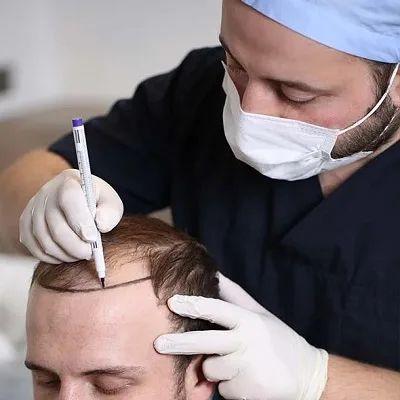
Not everyone experiencing hair loss will have the same needs or suitability for restoration. A FUE hair transplant in Dubai may be an option for some people with specific patterns of hair loss, sufficient donor follicles, and realistic expectations about what transplantation can achieve. Understanding the factors that influence suitability can help you approach the decision with greater clarity.
What Determines Suitability for FUE?
Suitability is not based on age or the amount of hair currently missing alone.
Several factors can influence whether follicular transplantation is appropriate, including the pattern of hair loss, donor hair characteristics, scalp condition, existing hair, and long-term expectations.
Each factor contributes to the overall picture.
A Stable Donor Area Is Important
FUE requires follicles from a donor region, commonly located toward the back and sides of the scalp.
The available follicles need to provide a reasonable foundation for transplantation.
Why Donor Density Matters
A stronger donor area can provide greater flexibility when planning restoration.
If donor density is already limited, there may be fewer follicles available to improve larger areas of thinning.
The Pattern of Hair Loss Matters
Different types of hair loss can create different restoration challenges.
Some people have clearly defined recession, while others experience thinning across broad regions.
A suitable restoration strategy depends partly on whether the available donor hair can provide meaningful coverage to the affected areas.
Existing Hair Can Be Valuable
People do not necessarily need to have completely bald areas to consider transplantation.
In some situations, existing hair remains but has become visibly less dense.
Additional follicles may potentially complement the existing strands, depending on the individual circumstances.
Hair Characteristics Influence Potential Results
The characteristics of your own hair can affect how much visual coverage can be created.
Hair Thickness
Thicker strands may create a stronger appearance of density.
Fine hair can require more careful expectations because the scalp may remain more visible between strands.
Hair Texture
Curly, wavy, and straight hair can produce different visual effects.
Texture influences how individual strands overlap and how much scalp is visible.
The Extent of Hair Loss Is Relevant
A small area of recession and extensive scalp thinning are not equivalent restoration challenges.
When the affected region is large, the available donor supply may need to be distributed across a broader area.
This can make prioritization particularly important.
Age Alone Does Not Determine Suitability
There is no single age at which everyone should consider hair transplantation.
The more important consideration is often the nature and progression of the individual's hair loss.
Someone with an evolving pattern may require a different long-term strategy from someone whose pattern is more established.
Why Future Hair Loss Matters
Transplanted follicles are moved to another area, but naturally growing hair elsewhere may continue to thin.
This means the current appearance should not be the only consideration.
Planning Beyond the Current Situation
A restoration design should ideally make sense if additional natural hair loss occurs later.
Using donor follicles thoughtfully can help preserve options for future needs.
Realistic Expectations Are Essential
FUE cannot recreate unlimited hair density.
The donor supply is finite, and the final appearance depends on several biological and physical characteristics.
People who understand these limitations may be better positioned to evaluate whether restoration aligns with their expectations.
What Does “Good Results” Mean?
A successful outcome does not necessarily mean returning to the exact hair density of youth.
For many people, improvement may mean:
A more balanced hairline.
Reduced scalp visibility.
Better coverage in selected areas.
Improved facial framing.
Greater styling flexibility.
The most appropriate goal depends on the individual's priorities.
Scalp Condition Can Influence Planning
The condition of the recipient and donor scalp is another consideration.
The skin needs to provide a suitable environment for follicular placement and healing.
Any unusual scalp changes should be appropriately assessed before proceeding with a hair restoration procedure.
Understanding the Difference Between Donor and Recipient Areas
The donor area provides follicles, while the recipient area is where those follicles are placed.
The relationship between these two regions is important.
A large recipient area combined with a limited donor supply may require careful prioritization.
Why Graft Availability Matters
The number of usable follicular units is not unlimited.
This means a person may be technically able to receive transplantation while still needing to adjust expectations about how much of the scalp can be covered.
Strategic distribution can make better use of the available supply.
Suitability and Hairline Expectations
Some people mainly want a lower hairline.
However, creating a substantially lower hairline can require many follicles.
A more conservative design may sometimes provide a better balance between appearance and long-term donor preservation.
Suitability for Crown Restoration
Crown thinning presents its own considerations because hair grows around a natural whorl.
The size of the affected area, surrounding density, and available donor follicles can influence whether additional coverage is likely to provide a meaningful visual change.
Suitability for Diffuse Thinning
Diffuse thinning can be more complex because existing hair remains across the affected region.
Any restoration approach needs to account for these native follicles and the possibility of continued thinning.
The available donor supply also becomes particularly important.
Lifestyle and Expectations
Suitability is not only about physical characteristics.
A person should also understand that hair restoration involves a gradual process rather than an instant transformation.
The scalp may require a recovery period, and new hair develops according to its natural growth cycle.
Patience Is Part of the Process
People expecting an immediate final result may find the process difficult to evaluate.
Visible changes can occur in stages, with early healing followed by changes in the transplanted hair and later maturation.
A willingness to wait for the natural growth process is therefore important.
Understanding the Limits of FUE
FUE is a follicular redistribution technique.
It does not create an unlimited supply of new follicles.
This simple principle is important when deciding whether the expected improvement is realistic for the amount of donor hair available.
Questions to Consider Before Treatment
Before deciding whether FUE is appropriate, it can be useful to think about:
What area concerns you most?
How extensive is your hair loss?
Is the donor region sufficiently dense?
What level of coverage are you expecting?
Could your natural hair continue to thin?
Would your desired hairline require extensive donor resources?
How much time can you allow for gradual development?
These questions can help clarify your priorities.
When Expectations May Need Adjustment
A person may have strong donor hair but want extremely high density across a very large area.
In such a situation, the desired outcome may need to be adjusted to match the available follicles.
Similarly, someone with widespread donor thinning may have fewer options for extensive restoration.
Why Individual Planning Matters
There is no universal graft pattern that works for everyone.
Hair characteristics, scalp pattern, donor density, facial proportions, and future expectations differ considerably.
A personalized approach is therefore more appropriate than comparing your situation directly with another person's restoration.
Final Thoughts
A FUE hair transplant in Dubai may be suitable for some individuals experiencing hair loss when factors such as donor density, hair-loss pattern, scalp characteristics, existing hair, and realistic expectations align with the goals of restoration. The decision should also account for possible future thinning because transplanted follicles are limited resources that need to be used thoughtfully. Understanding what FUE can and cannot accomplish can help you approach the process with practical expectations and clearer priorities. For those considering personalized hair restoration, TAJMEELS CLINIC can be considered when planning the next step.
 English
 Arabic
 French
 Spanish
 Portuguese
 Deutsch
 Turkish
 Dutch
Dutch
 Italiano
 Russian
 Romaian
 Portuguese (Brazil)
 Greek
Greek
 Advertise With Us
 About Us
 Terms And Conditions
 Πολιτική Ιδιωτικότητας
δες τα όλα
Πολιτική Ιδιωτικότητας
δες τα όλα