English
 Arabic
 French
 Spanish
 Portuguese
 Deutsch
 Turkish
 Dutch
Dutch
 Italiano
 Russian
 Romaian
 Portuguese (Brazil)
 Greek
Greek
Recommended Title Metamorphosis: A Grove Hollow Novel by Shelby Nicole
Shopping |
2026-06-29 05:50:00
 Advertise With Us
 About Us
 Terms And Conditions
 Datenschutzbestimmungen
Alle anzeigen
Datenschutzbestimmungen
Alle anzeigen

Upgrade auf Pro
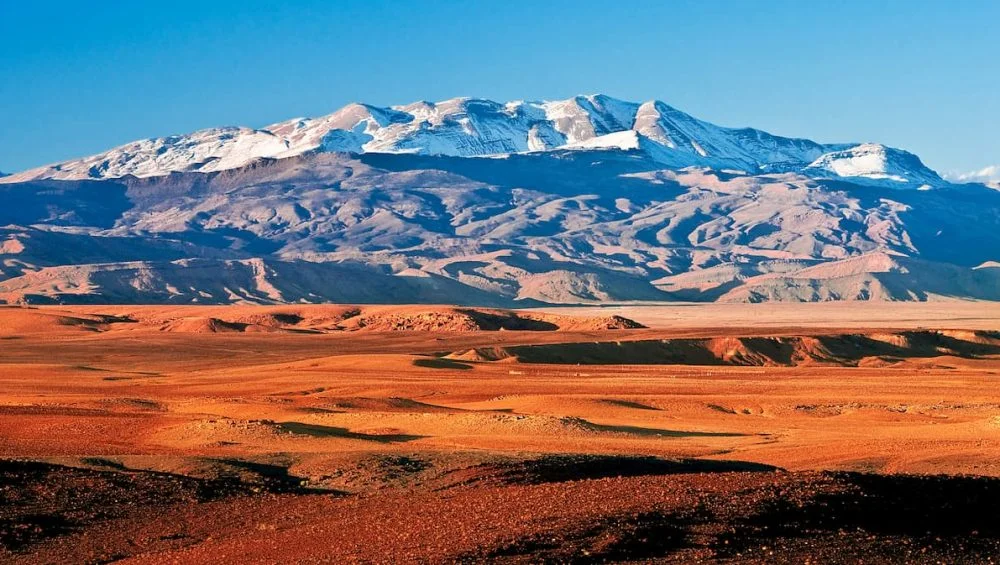
The Atlas Mountains are one of North Africa’s most impressive mountain systems. Stretching across Morocco, Algeria, and Tunisia, this vast range covers a large part of the Maghreb and creates a natural divide between the Mediterranean and Atlantic regions and the Sahara Desert. For travelers, hikers, photographers, and geography enthusiasts, understanding their location makes it much easier to plan a trip and identify the major peaks, valleys, towns, and routes.
A map of the atlas mountains in africa shows that the range is not a single straight chain. Instead, it consists of several connected mountain ranges spread across northwestern Africa. The Moroccan section is especially popular because of its dramatic landscapes, traditional Berber villages, high peaks, and easy access from major tourist destinations such as Marrakech.
Where Are the Atlas Mountains Located?
The Atlas Mountains are located in the northwestern part of Africa. They extend from southwestern Morocco through northern Algeria and into northern Tunisia. Their position is particularly interesting because the mountains sit between two very different environments: the Mediterranean and Atlantic coastal areas to the north and the Sahara Desert to the south.
Looking at a map of the atlas mountains in africa, you can see how the ranges form a broad arc across the region. Morocco contains some of the highest and most famous sections, while Algeria and Tunisia contain the eastern portions of the mountain system.
The mountains are generally divided into several major ranges, including the High Atlas, Middle Atlas, Anti-Atlas, Tell Atlas, Saharan Atlas, and Aurès Mountains.
Atlas Mountains on a Map
A map of the atlas mountains in africa is useful because it helps explain the relationship between the different ranges. The High Atlas is located mainly in central Morocco and contains the highest elevations. The Middle Atlas lies farther north, while the Anti-Atlas stretches through southwestern Morocco.
East of Morocco, the mountain system continues into Algeria. Here, the Tell Atlas and Saharan Atlas are two important ranges. Farther east, the Aurès Mountains form another major mountainous region in Algeria and connect geographically with the wider Atlas system.
Tunisia contains the northeastern continuation of these mountains, although the elevations are generally lower than those found in Morocco.
The High Atlas Mountains
The High Atlas is the most famous section for international travelers. It runs across central Morocco and contains Mount Toubkal, the highest peak in both Morocco and North Africa.
Mount Toubkal reaches approximately 4,167 meters above sea level. It is located within Toubkal National Park, south of Marrakech. The region attracts hikers throughout the year, although conditions vary significantly between seasons.
On a map of the atlas mountains in africa, the High Atlas can be identified as the central mountainous backbone of Morocco. Several valleys, passes, villages, and hiking routes surround the range.
The Toubkal area is particularly popular because visitors can travel from Marrakech toward mountain villages such as Imlil and begin trekking from there.
The Middle Atlas
The Middle Atlas is located north of the High Atlas. It is known for forested landscapes, plateaus, springs, lakes, and cooler weather.
Unlike the rocky appearance found in some parts of the High Atlas, sections of the Middle Atlas feature extensive cedar forests. The region is also home to Barbary macaques and a variety of bird species.
Cities and towns near this range include Ifrane, Azrou, and Midelt. Ifrane is particularly famous for its European-style architecture and cool climate.
For anyone studying a map of the atlas mountains in africa, the Middle Atlas is easy to locate because it lies north of the High Atlas and forms an important transition between Morocco’s northern plains and southern mountain regions.
The Anti-Atlas Range
The Anti-Atlas is found in southwestern Morocco. It is older geologically than many of the surrounding mountain formations and has a distinctive rugged appearance.
This region is known for dry valleys, rocky hills, palm-filled oases, and small traditional settlements. Areas around Tafraoute are especially popular with visitors interested in scenery and geology.
The Anti-Atlas is also important geographically because it forms part of the transition toward the Sahara and desert-like landscapes farther south and southeast.
Travelers researching atlas mountains morocco often focus on the High Atlas, but the Anti-Atlas offers a completely different experience. Its landscapes are quieter, more arid, and often less crowded.
Atlas Mountains in Morocco
Morocco contains the most recognizable parts of the Atlas system. The country's mountain regions are closely connected with its culture, agriculture, tourism, and history.
Traditional Amazigh communities have lived in these mountains for centuries. Many villages are built along valleys where water from mountain streams supports farming. Terraced fields, fruit trees, mud-brick houses, and mountain paths are common sights.
The atlas mountains morocco region also contains important tourist routes. Marrakech is one of the most popular starting points because it provides convenient access to the High Atlas.
Other important locations include Ouarzazate, Azilal, Midelt, Ifrane, and several smaller mountain communities.
Atlas Mountains in Algeria
The Atlas system continues eastward into Algeria. The Algerian ranges include the Tell Atlas and Saharan Atlas, which run roughly parallel across parts of the country.
The Tell Atlas is closer to the Mediterranean coast and contains a number of valleys and highland areas. The Saharan Atlas lies farther south and helps separate the northern highlands from the Sahara.
The Algerian portion is less internationally famous for trekking than Morocco's High Atlas, but it remains geographically important. Looking at a map of the atlas mountains in africa helps show how these ranges continue far beyond Morocco.
Atlas Mountains in Tunisia
The Atlas mountain system reaches Tunisia in the northeastern part of North Africa. Tunisia's mountains are lower than the highest Moroccan peaks, but they are still part of the broader geological and geographical system.
The Tunisian landscape includes hills, plateaus, valleys, and mountain areas that gradually connect with Algeria.
This eastern extension is a useful reminder that the Atlas Mountains are not limited to one country. They form a regional mountain system extending across much of the Maghreb.
Why the Atlas Mountains Matter
The mountains play an important role in North Africa's climate and water systems. They influence rainfall patterns and provide water for communities, agriculture, and ecosystems.
They also create a natural barrier between coastal North Africa and the Sahara. This geographic position has influenced settlement, trade routes, agriculture, and cultural development for centuries.
A map of the atlas mountains in africa can therefore tell you much more than where the peaks are. It also shows why major cities, farming areas, deserts, and traditional communities developed where they did.
Best Places to Visit
For travelers, the High Atlas is usually the first choice. Mount Toubkal offers a challenging hiking experience, while villages around Imlil provide opportunities for shorter walks and cultural experiences.
The Middle Atlas is ideal for visitors who enjoy forests, lakes, wildlife, and cooler mountain environments. The Anti-Atlas is a strong choice for dramatic rock formations and quieter landscapes.
If you are researching atlas mountains morocco before a trip, consider your preferred activities, season, fitness level, and transportation options. Mountain weather can change quickly, so proper preparation is essential.
Final Thoughts
Understanding the geography of this enormous mountain system becomes much easier when you look at a map of the atlas mountains in africa. The ranges stretch across Morocco, Algeria, and Tunisia, with each section offering its own landscapes and cultural character.
Morocco contains the highest and most visited areas, including the spectacular High Atlas and Mount Toubkal. Algeria contributes major eastern ranges, while Tunisia marks the northeastern continuation of the system.
Whether your interest is hiking, geography, photography, culture, or adventure travel, the Atlas Mountains offer an extraordinary look at North Africa's natural diversity. Studying their location before traveling can help you understand the distances between major towns, mountain ranges, desert regions, and popular attractions.