English
 Arabic
 French
 Spanish
 Portuguese
 Deutsch
 Turkish
 Dutch
Dutch
 Italiano
 Russian
 Romaian
 Portuguese (Brazil)
 Greek
Greek
Food Nutrition Enhancer Market Trends 2026: Growth Drivers and Future Scope
Food |
2026-08-06 06:11:36
 Advertise With Us
 About Us
 Terms And Conditions
 Privacy Policy
Ver Todo
Privacy Policy
Ver Todo

Upgrade to Pro
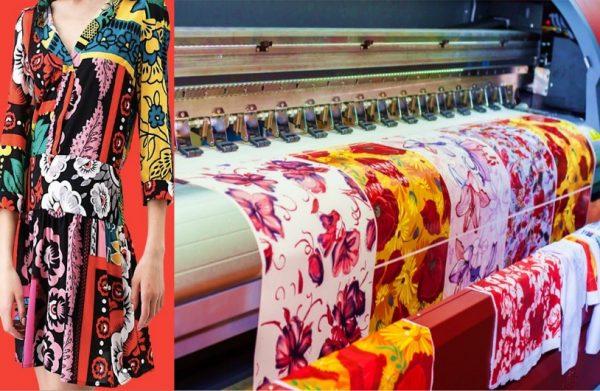
Digital printing on fabric is a textile printing method that transfers a digital image directly onto fabric using specialized inkjet technology. Instead of creating separate screens or engraved rollers for different colors, the printer reads a digital file and places precise droplets of ink onto the textile. This approach allows manufacturers to reproduce detailed patterns, photographs, gradients, logos, and custom artwork.
The demand for Digital printing on fabric has grown across fashion, home furnishings, sportswear, advertising, and interior design. It is especially useful when a business needs samples, short production runs, personalized products, or complex designs. The process can provide excellent results, but the final quality depends on several factors, including fiber type, ink chemistry, fabric preparation, color management, fixation, and finishing.
Digital fabric printing is similar to an inkjet printer, but textile printers are designed to handle fabric continuously and use inks formulated for different fibers. The printer receives a digital artwork file and translates it into instructions for its print heads.
The ink system must match the fabric. Cotton, polyester, silk, nylon, viscose, and blended textiles have different properties, so they require different approaches to achieve strong color and suitable durability.
Some printing systems require chemical pretreatment before the fabric is printed. Afterward, the textile may need steaming, heat curing, washing, or another fixation process. These steps help stabilize the color and remove materials that should not remain in the finished textile.
The process starts with a digital design. It can be a photograph, illustration, repeating pattern, logo, or custom graphic. The artwork is checked for resolution, dimensions, color settings, and repeat alignment.
Color management is important because colors on a computer screen do not always match the final printed fabric. Professional textile production often uses calibrated equipment, color profiles, and physical samples to reduce color differences.
The fabric must be clean, dry, and correctly positioned. Depending on the ink technology, pretreatment may be required.
Pretreatment controls how ink interacts with the fibers. It can affect color intensity, edge sharpness, and durability. Uneven pretreatment can cause variations across the printed area.
The fabric passes through the digital printer while print heads deposit tiny droplets of ink. The machine controls the position and volume of ink according to the digital image.
Because the design is transferred electronically, a manufacturer can change the artwork without preparing a new physical screen. This makes digital printing particularly useful for custom designs and smaller production runs.
After printing, the color usually needs to be fixed to the fabric. The exact method depends on the ink.
Reactive dyes commonly require steaming. Pigment inks generally require heat curing, while disperse dyes used on polyester are also developed through controlled heating.
Some fabrics are washed after fixation to remove unfixed dye and processing chemicals. The material is then dried and may receive additional finishing treatments based on its intended use.
Reactive inks are commonly used for cotton, linen, viscose, and other cellulosic materials. The dye forms a chemical bond with the fiber during fixation. When processed correctly, reactive printing can provide strong colors and good wash resistance.
Acid inks are commonly used on silk, wool, nylon, and other compatible fibers. They can produce vivid colors and detailed patterns and are used for various fashion and premium textile applications.
Disperse inks are primarily designed for polyester and related synthetic fabrics. Heat enables the dye to penetrate the fiber. The resulting prints are used in products such as sportswear, polyester garments, flags, and display textiles.
Pigment inks use colored particles held on the textile with a binder. They can work with a broad range of fabrics. Their final appearance, softness, and durability depend on the pigment formulation, binder, fabric, and curing conditions.
Digital printing can reproduce fine lines, intricate patterns, photographic images, and smooth gradients. A design can contain many colors without requiring a separate physical screen for each shade.
Digital technology reduces several setup requirements associated with traditional printing. This makes it practical for samples, prototypes, limited collections, and small orders.
For example, a clothing brand can print several pattern options in small quantities before deciding which design should be manufactured on a larger scale.
Each piece can contain different artwork. Names, photographs, logos, numbers, and custom patterns can be incorporated into textile products without creating a separate screen for every variation.
Digital files can be edited quickly. A designer can change colors, images, proportions, or patterns and send the updated artwork directly to production.
Printing closer to actual demand can reduce the need to store large amounts of pre-printed fabric. This can be useful for seasonal products and designs that may quickly become outdated.
Digital printing is used for dresses, shirts, scarves, skirts, jackets, and other garments. It is particularly useful for collections that depend on complex patterns or limited quantities.
Curtains, cushion covers, bedding, table linens, and decorative textiles can be produced with customized designs. Designers can create fabric patterns that match specific interior themes.
Polyester fabrics can be printed with team names, player numbers, logos, graphics, and full-surface patterns. Digital technology is useful when each garment needs different information.
Businesses use digitally printed fabric for banners, flags, exhibition displays, event decorations, branded backdrops, and promotional products.
Artists and photographers can reproduce original work on fabric for wall displays, installations, clothing, and decorative pieces.
Fabric selection should be based on both the intended use and the printing technology.
Cotton is widely used for clothing and household textiles. Polyester is common in sportswear, flags, and display products. Silk is often selected for premium garments and accessories. Nylon is used in certain apparel and technical applications.
Blended fabrics require careful testing because different fibers may interact differently with the same ink.
The required durability should also be considered. A fabric used for frequently washed clothing needs strong wash resistance. Outdoor products may require resistance to sunlight and weather, while decorative applications may have different performance requirements.
Digital printing gives businesses greater control over product development. A company can test a new pattern on a small quantity of fabric before committing to a large order. This reduces the financial risk associated with untested designs.
Sampling is also valuable for checking color, image scale, fabric behavior, and print sharpness. A test sample can identify technical problems before they affect a full production run.
Another important consideration is the complete workflow. A high-end printer cannot compensate for poor pretreatment, an incompatible ink, incorrect color settings, or insufficient fixation. Consistent results require control at every stage.
Industrial textile printers can require considerable capital. Operating expenses may include ink, maintenance, software, pretreatment, drying, curing, washing, energy, and labor.
Digital printing is flexible, but conventional rotary screen printing can be more efficient for some extremely large orders involving simple repeated patterns.
Consistent color requires careful quality control. Fabric batches, ink formulation, printer calibration, pretreatment, humidity, and finishing conditions can all influence the final shade.
Durability varies according to the fabric and ink system. The printing method should be selected according to expected washing, rubbing, sunlight exposure, moisture, and other environmental conditions.
It is a textile printing process in which digital artwork is transferred directly onto fabric using specialized inkjet printers and textile-compatible inks.
Yes. Cotton can be printed with suitable reactive or pigment systems. The required pretreatment and finishing depend on the technology used.
Yes. Samples, prototypes, limited collections, personalized products, and short production runs are common applications.
Properly produced prints can provide good wash and everyday-use resistance. Actual durability depends on the fabric, ink, pretreatment, fixation, finishing, and intended application.
It depends on the project. Digital printing is well suited to detailed designs, customization, sampling, and short runs. Screen printing can be more economical for large quantities of simple designs.
Digital printing on fabric has become an important method for producing customized and detailed textiles. It provides designers and manufacturers with greater flexibility and makes it practical to create complex artwork, samples, personalized products, and smaller production runs.
The quality of a digitally printed textile depends on more than the printer. Fabric selection, ink compatibility, pretreatment, color management, fixation, washing, and finishing all influence the final result.
For detailed artwork and flexible production, digital printing can provide significant advantages. Traditional methods may remain more economical for certain high-volume orders. By considering design complexity, fabric type, quantity, durability, and budget, manufacturers can choose the printing approach that best matches their production requirements.